ELOKA

image

AFTER THE NIGERIAN Civil War, popularly known as the Biafran War, Eloka could not find his feet anymore. He had run away from home and bluffed his way to the front where he miraculously survived. By the time the war ended however he had learnt all those slippery gripping things which are most dangerous to learn in those teenage years.

A drug addict, possessed of fits of violence and passion, and unable to focus his attention on anything serious for any considerable length of time, he became in the post-war years a source of sorrow and heart-ache to his parents and family. He was the fifth and youngest child of his parents, their baby and most beloved. His mother shed innumerable tears. His proud and stately but gentle father, a high chief of their people, bore it with a grim silence.

And then, somehow, someone hit upon the disastrous idea of sending young Eloka to America; for some reason they indulged in the logic that, at school there, far away from home, Eloka would be moulded into a man, forced to become self-controlled, responsible and mature. – And so, off he went to America.

But even many a stable and level-headed adult has been turned and broken by America, that distant continent, not to talk of this unsettled youth. Reports have it that he indeed at first attended his courses at the university, but with time Eloka gradually eased away from contact and eventually disappeared from sight.

Full of concern and agony, in which was mingled a stab of self-blame, Chief Ogbonna – Eloka’s stately father – contacted all known relatives and friends in that giant continent-of-a-country, pleading with them to help find his Eloka. But look high or look low as these people did – even with the help of police and private detectives – Eloka was nowhere to be found.

Sorrowfully his parents resigned themselves to the certainty that death must have overtaken him. Eloka’s war-torn nature, they lamented, had broken out again and done him in. Oh… that war! – Eloka’s mother’s tears flowed again, night after night, as she called his name into the unresponsive wind. And Eloka’s father again bore these times with a leaden heart of silence.

But then, as life always shows itself to be running differently from what we think it is, Eloka suddenly appeared again, not in America, but back in Nigeria. But when Chief Ogbonna gazed into his son’s eyes he saw, not the son he once knew, but a harassed stranger. And the Chief openly shed tears. And whilst others thought they were tears of joy, in truth they were tears of pain and loss. Now he really knew that his son was gone from him for good.

The others, however, only celebrated his return. His mother, though she sensed the absolute change in him, refused to acknowledge it as she clung unto her love for her returned son, and proceeded to go through the motions of being a happy mother.

But, truly, nobody knew the real reason why Eloka had suddenly and miraculously returned. He had simply been on the run from other gangsters who were after his life, and had fled to his native country to wait out the heat.

The heat did cool off, as Eloka established through telephone conversations, and then, just the same way as he had returned, Eloka whisked himself back to America.

Let me not disclose the renewed sorrow that descended upon the Ogbonna family. The years went by. For a long while nobody heard anything from or about Eloka. But then, slowly, pieces of news about him began to painfully filter through: wanted by the police here, fleeing from the law there, etcetera.

To say that all this added to the quickened deterioration of Chief Ogbonna’s health would be an understatement. Slowly he withered mortally away…

Meanwhile, on that strange distant American continent, Eloka began to slowly come to a better understanding of life and himself. The works of great philosophers slid through his fingers and across the canvas of his soul and he discovered his buried I. He began to study and to read and to think. Reading wrought a strange change upon his spirit and suddenly, as though with new eyes, looking about him he found himself surrounded by works and people that had the capacity to inspire him, and all of a sudden the country seemed like a whole different place – a land of opportunity. And then he began to think about his life.

It became clear to him that he had nigh on senselessly wasted over two decades of his life being less than he could be, less than his parents had brought him up to be, less than his father had all along been waiting for him to become. His father. His mentor. His childhood hero. He remembered the gulf that had yawned between both of them when he last saw him that time he fled home fifteen years earlier. Remorse gradually took hold of him and the urge to close this gap that had opened up between his father and himself.

To this purpose at the age of forty, Eloka’s life began anew. He turned away fully from crime and, over the next couple of years, settled his cases with the law, left the bars permanently behind and eventually worked himself into a job as a writer of newspaper articles. He wanted to step before his father as a respectable and capable son. – Once or twice he considered writing a letter home, but never did so.

But this period of transformation had not yet ended when the heavy, fateful news suddenly and abruptly filtered through to Eloka that his father had just died after a protracted bout of illness. A wild pain, laced by regret, tore through Eloka. Suddenly his life lost whatever meaning it had recently and newly found again. His only star, only beckoning light, was gone. What was he to do now? Could anything be done? Eloka was tired. For although he dearly loved his mother, his brothers and his sisters, it was his father who had always been the owner of the deepest love in his heart.

Yet why did he not even now return home? Or communicate, or something, anything, to make the pain in his heart, and in everybody else’s too, go away a little. – But, no. His life was empty now, his destiny altered. There was nothing more to strive for… – wispy thoughts that stung at night.

Yet must credit be given to Eloka however. He did not revert back to crime, nor did he ever contemplate suicide. He simply drifted on in that old new world and completely forgot his old homeland, a stranger in a land of seekers and dreamers.

Unknown to Eloka however his father was still alive and, in fact, hale and hearty. Chief Ogbonna was not dead., neither was his mother. It had been a case of misinformation, accidentally or deliberately. Both his parents lived, resigned to their loss and newly resolved to making the best of the rest of their lives. In this spirit, the Chief had kicked against the dejection that had been slowly killing him, and returned to life.

They lived over ten more happy years together and then the old Chief, in his nineties, was the first to close his eyes to a rich and many-sided earthlife. And, in accordance with the customs of his people, an Igbo village in Eastern Nigeria, though his body was interred immediately, the public funeral ceremony was fixed for a distant month.

Hardly had his body been buried, however, than private investigators in America, constantly hired over the decades to seek out Eloka, found him at last. They communicated this piece of news to other relatives of his who also lived in America and these set out to meet him.

Great, and not to be fastened in words, were the emotions that suddenly surged up in and overwhelmed Eloka when he opened the door of his apartment and gazed into familiar, long unseen, loved faces, gazing back at him.

Tenderly, ever so tenderly, they broke the news to him about the recent death of his beloved father, Chief Obinna Ogbonna. But they did not know the reason why Eloka sat so still after hearing this strange, startling piece of news. Eloka was dumbfounded, perplexed, thunderstruck, silent. Very silent and very still. But his soul was in tumult.

The realization that his father had not died over ten years ago like he had heard, like he had all the while thought, but had been alive all this time! All these years, years in which he, Eloka, had finally, even if almost nonchalantly, achieved that which only the longing to meet his father again had awakened in his heart some fifteen years ago now. To be a respectable son and capable, independent, balanced man. Years in which he could have visited the old man as often as he pleased. Ten years. All gone. For he had believed his father dead all along. Now history.

Why had fate misinformed him years ago? But whose fate? And who’s fate?

Eloka’s thoughts floated back to his childhood, to the time before the war, before that haunting turning point. How many evenings had he lain beside his father, listening to his breathing? During how many meals had he sat by the loving man’s side, pilfering solemnly slices of fish and roasted chicken from his plate? How many times had his father tickled him, made him laugh and then made him proud with tales of their ancestors, and then made his heart tremble by telling him how eager he was to see what his boy would be when he became a man. How many times had he longed again and again for his father, his father for him?…

And so, Eloka, now in his mid-fifties, who did not visit his father while the man yet lived, and longed, boarded an American plane in that distant month to go and visit him at his funeral.

– Che Chidi Chukwumerije.
 

image: 3345408/pixabay

AS YOU AGE

image

From one to the next bondage
One to the next stage of life
Strife follows on strife
As you age.

If joy was a seed
I hope you planted it
If life requested a good deed
I hope you granted it –

’Cause that’s all you’ll have
When you cross the grave.

– Che Chidi Chukwumerije.


image: wilhei/pixabay

Searching For The Right Response


I live in Germany. Just two days ago, my wife, our two kids and I were at the Christmas Market in Frankfurt. It was jam-packed, and most people seemed relaxed and happy. We had lots of fun, rode the giant carousel with the kids, laughed out loud, ate extra-large Brezels with hot steaming Glühwein for Yvonne and me, and for the kids warm Kinderpunsch.

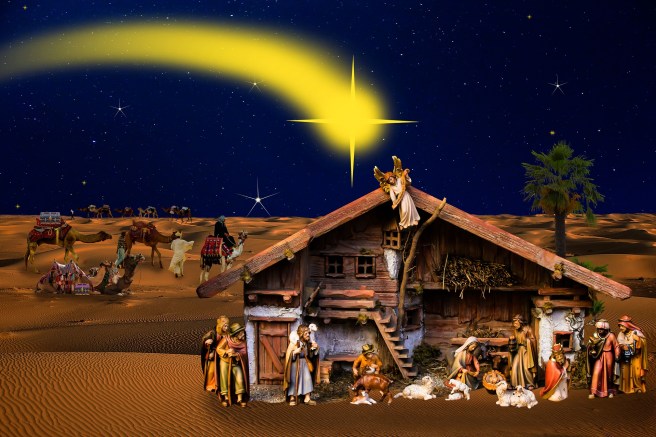
And we stood in front of a super-sized Manger and I told my daughter the story of the overwhelmed shepherd to whom a host of angels appeared and brought the glad tidings of great joy: that God had sent His Son to bring Light and Love as salvation to mankind. Pointing at each figure in the Manger, I told her about Joseph and Mary, about the three wise men, and about the Child in the crib in whose heart was Magic. Because Love is Magic. It was a beautiful day.

What religion, what philosophy, what doctrine, what hatred, what madness, what smallness makes a person drive a truck into a packed Christmas Market? How can such a thing be rationalized or comprehended?

I think of the people at the Christmas Market in Berlin yesterday – and inwardly I see the faces of the people I saw at my Frankfurt Christmas Market two days ago. The same kinds of people. Happy people. Full of the spirit of Christmas. I see myself and my family. I see mankind, up against an Evil; an Evil that is slowly uniting the rest of mankind against it. It might take long for the right response to intuite itself into conscious thought and into a visible systemic form. But one day… one day… it will.

Mankind is not perfect, it is true. But this kind of Evil… is beyond all depths.

– Che Chidi Chukwumerije.

CHRISTMAS COMING

image

The night raised its dark heavy head
And sniffed long at the wind
And then lit up with a thousand smiles
As though it had never ever sinned

Imagine that. The sinful night
And when I asked it to tell me why
It said in a gentle voice of hope
While pointing up into the eastern sky:

Once upon a time, it was
More than two thousand years ago
A radiant star appeared right there
And over a manger there glowed a halo

And thus did hope return to mankind.
And, o little poet, in a few days’ time
We celebrate again the birthday
Of the Love that inspires your deepest rhyme.

– Che Chidi Chukwumerije.


image: Gellinger/Pixabay.

I Don’t Run With The Crowd

I don’t run with the crowd.

When I got into secondary school, King’s College, at the age of 11, all of us wanted to each be the fastest runner. It’s in the nature of kids. Including me. But, to my disappointment, I was not a fast runner. Then my school father Emeka Udezue told me, “You look like a jumper. We have nobody to fill the second Triple Jump slot for juniors, because nobody wants to do or learn the Triple Jump. Anokwuru is our only jumper for now. Why don’t you fill the gap and become the second jumper? Every point counts.” I agreed, and learned the Triple Jump one day before interhouse sports and then competed in it. Anokwuru got the Gold and 4 points for Pane’s House. I came fourth and got 1 point for Pane’s House. That year Pane’s House won the Interhouse Sports Competition by just 1 point.
My school father said excitedly: “See what I told you!” And I internalized three valuable lessons in life.

1: Embrace what others avoid. The seemingly uninteresting. The difficult. The unsung.
2: Every point counts.
3: That which seems inconsequential and even like a failure at the start, might be what provides the complement that makes the difference in the end.

From then on, I concentrated on Triple Jump, and also added High Jump to it.

Five years later, in my last year in secondary school, the cycle closed. The scene was the National Interschool FedCol Games 1991. All the 45 Federal Government Colleges from all over Nigeria converged in Illorin for the competition. Again the stars were the fastest runners. The track events pulled the crowds. Every school wanted to produce the 100m champion! One got the impression that the Field events (jumping, throwing, etc) was not interesting to some sports teachers.
If there was any event even more unattractive to the students than Triple Jump, it was Discus. But this was exactly the event which Ekeinde Ohiwerei had practiced and mastered during our six years in King’s College. He wasn’t fast and he could not jump high, but he threw a mean Discus. And he threw his Discus and got the Gold for K.C.
Chukuka Chukuma was next. He too was uninterested in the sprints and had focused on what he could do well. He picked up his Javelin and speared a Silver medal for K.C.
Like Ekeinde, Chukuka too was not a crowd-runner.
Then I stepped up to my signature event, the Triple Jump. To my shock and surprise, all my six attempts were better than the second placed person. I got the Gold for K.C. – and my mind went back to my school-father Emeka Udezue and the day he told me to learn the Triple Jump, because I can jump and every point counts.
After that came the High Jump. I was up against a great jumper from Waffi, a dark wiry fellow called Toju. He had springs in his heels. We were the only two left in the end. When I missed, he missed. When I jumped the bar, he jumped the bar. On and on, back and forth. The officiators grew impatient, because they were waiting for the High Jump to finish in order to do the final event, the 4 x 400m relay and then end the games before sunset. So they started pressuring us to “Jump quickly! Jump quickly!” hoping one person would miss. I resisted the pressure, because… “every point counts”. But the pressure got to Toju. I took my time and scaled the last bar. He rushed.. and missed, and crashed the bar. That was one more Gold for K.C.
Then came the surprise of the day. The 4 x 400m relay event. It was the last. It was our chance and we threw everything at it. Dike Ugonna, Femi Sholesi, Sanusi Gambo and myself. We just ran like there was a devil after us – and we won the Silver medal. Our only sprint medal at the competition.

The real shock came when the final overall results were tallied. King’s College had won the overall first position. Everybody was baffled. They had only been calculating which schools won the sprint events. Most people’s attention had been on the sprint events. Very few people had taken cognisance of us as we were winning our “uninteresting” field events. And that’s how we climbed to the top. While 40 schools were busy fighting for 7 sprint events, we were calmly taking the road less travelled. And it led us home. We won by a single medal.

1: Embrace what others avoid.
2: Every point counts.
3: What seems unimportant at the start might be the deal-clincher in the end.

You don’t have to run with the crowd. But, if you do, may your fellow bandits be people who also have the foresight and the discipline to go their own path when necessary, even if it be a separate path.

And when you have friends or family members or partners who choose or are forced to take the road less travelled in life, show them the value in it, and encourage them to do it – and do it well. Because we are always a part of a greater endeavour, … and Every Point Counts.

– Che Chidi Chukwumerije.

COMING BACK

image by Pexels

You reap what you sow
And pay back what you owe –
Just a little rhyme to remember
When you harvest the crops in September.

Never burn the bridge you’re travelling on
For it alone will lead you back to where you begun –
Just a little thought to ponder on
Wanderer, before you wake up and wander on.

Givers never lack
Takers never give back
Because they forever lack –
The newest face has on old old back
The global highway was once a little dirt track.

We reap what we sow
And pay back what we owe –
Just a little rhyme to remember
Brother, when you await the new year in December.

– Che Chidi Chukwumerije.


(Image courtesy Pexels/Pixabay)

HOLD MY HAND

image by 851877/Pixabay

I just feel hope in my heart
Because that’s all I have left.
So I hold on to hope, my wine
And I smile even though in my heart
I harbour a river of tears
Ships adrift in rudderless cry
And I can’t find the shore

So I’m drunk on hope
And I’m high on hope
Some call it illusion
Or even delusion
But we who have a vision
We call it hope
All we have, all we need, is hope.

And then in the morning
I wake up with a hangover
Looking for new hope. Hold my hand.
My ship is looking for land.

– Che Chidi Chukwumerije.


(Image courtesy 857818/Pixabay)

JUST ME

image by kloxklox_com

I am my own forerunner
My own ancestor
The reincarnation of myself

I am the roots of my own tree
The stem, the trunk, the branches and the leaves
The flower and the fruit
The source of my own seeds

I am the beginning of my self
And the continuation and the end

The original blame rests upon me
The final victory shall be my handiwork
I am the controller of my destiny
Nothing more, nothing less
Nothing else.

– Che Chidi Chukwumerije.

(Image by kloxklox_com)

YESTERDAY, TODAY AND FOREVER

image by PublicDomainImages

Our hearts are broken in our youths,
The pain is deep and deeply buried
Beneath our adult ways and fashioned truths;
First love and first death never are forgotten…
First hopes and first dreams, of our young hearts begotten,
Within our innermost souls are ever carried.

Our hearts are shaken in our youths,
Our melodies tempered, our vision stirred…
Amidst all in the world that hurts or soothes
We sometimes slip back again into old times
And see young smiles and remember dead rhymes –
Our backward glance is never completely impaired.

Our hearts are made and formed yesterday,
And today we continue to actualise
The longing that awakened with the early morning ray…
And though yesterday is all done and gone away,
Yet we have it with us always in our hearts everyday
As we boldly heavenwards continue to strive and rise.

Yes, our hearts are awakened in our youths,
And who or what can stop a heart?
It wants to grow; like a stem it shoots
Towards light and life, towards stimulation –
And we shall make it, through trial, tribulation
And whateverelse it be that ever be on our chart!

Forever, forever, the candle is flaming…
And laughing and rising and working, remaining the same.

Our hearts are strengthened in our youths,
If we truly choose to live!
Yesterday, today and forever are booths –
We exit one and enter the next;
And hope and promise shall always be our text,
Yes, Father Above, and our gratitude to THEE we give!

Our hearts are born wild, live wild; until the taming
Gives us depth, dimension and the truth behind our naming.

Yesterday, today and forever…
Alive today, dead never –
We flower forever.

– Che Chidi Chukwumerije.


Image by PublicDomainImages

LOVE IS ALL

image by Hans

Love is all

Something else
Is something less

Love all

Love less
Is loveless

– Che Chidi Chukwumerije.


(Image by Hans)