GOLD AND DAWN, SONGS, LONELINESS AND STRENGTHS

image
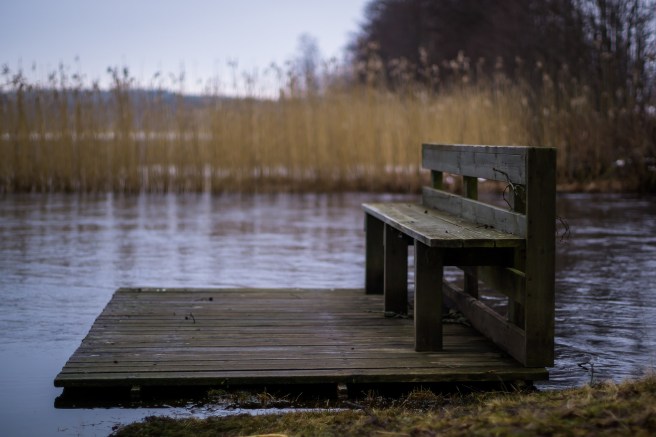
Gold glitters, but if all that glitters were gold, the world would be a place of great glitter and much emptiness.

Dawn ever arrives. No matter how dark the night, it will melt away when dawn awakens the travelling sun, and there will be laughter when you hear the voices of children playing in the morning…

Songs are a thing that are born mysteriously, and every moment everywhere hath its own songs too and there is no end to songs and games – and this has often mystified me.

And loneliness is a guest that comes and goes as he pleases, and once you get used to him, he becomes easy to live with and, together, both of you achieve many things which on your own you could not achieve, even if the whole world were to aid you.

There are some masterpieces which only lonely artists can create. There are some wars which only an army of lonely soldiers can win. There is a certain love which only two lonely hearts can share with one another. And loneliness seeks itself in you – but when loneliness goes away from you again, do not follow.

I am not strong. But when I unite with golden dawn and lonely songs, they make me the canvas on which they paint their dreams, and I am strong again. And free.

Gold and dawn, songs, loneliness and strengths.

– Che Chidi Chukwumerije.

LOVE AND POETS, FOOLS, DREAMS AND SEEKERS


image
Our dreams do not die, but when we misinterpret them, we make fools of ourselves. Big fools. But it is love again that maketh the biggest fools of us all, especially of poets and dreamers.

I dream my dreams, I write my poems, but still the nearest I come to the love in my heart are these words on paper that I write. And it is not me that you love, but my poetry. And fools continue to dream and poets continue to write love-poems and I continue to change.

But I do not believe the myth, oh no. The younger you are, I know, the deeper you love. Love does not make fools of youths, only of adults.

My chest hurts. It is cold somewhere strange and far…

How really good are the things I write? If you knew the amount of pain and loneliness, the pressure of gleaned recognition, the deep sorrow under which I write them down, my friend, you would read them gently and tenderly and with a thought for all those who labour away but are called fools and dreamers by those for whom they also write. Aye, if you knew the pain mingled with the ink which write these lines, you would weep for everybody on earth and beyond.

But do not cry for me… when I write, I shed my pain.

But she never goes away, my love, like a deer. She is only shy and a little wary of strange men, and all men are strange. I’ve been to many places, but no place ever confounded me quite like the heart of the woman I love. It was a room of mirrors and all I see was myself everywhere. But so would everybody else too who found their way into her – and yet her heart does not lie. It only reflects the truth. So I got mad and smashed her heart… and – what do you know? – instead of hating me for causing her pain, she loved me fiercely for freeing her from her loneliness and fear.

Poets seek love – and find poems…

Fools seek love – and find dreams…

Seekers seek truth – and find love…

Love and poets, fools, dreams and seekers.

– Che Chidi Chukwumerije.

FRIENDS AND CASTLES, LAKES, MOUNTAINS AND MYSTERIES

Friends are true friends when they will not go away from you in search of something which they merely sense that you can give them; and they can wait a thousand years for you, because they simply love you.

Castles are places where those who have love can live without guilt, and those who have no love cannot live without guilt, because every castle is an amalgamation of the qualities of the souls that inhabit it. Castles breathe.

Lakes, although they treasure a mystery, will only show you your own face, and if you must know what lies inside the heart, then you must break through the face on the surface of the lake. Lakes speak never.

Mountains are mighty until you have conquered them… and then they become mightier than ever, each mount, but now you know why it stands there, because you have crowned it. Even after you die, the mountain will remember those who crowned him once, and forever; and when you return again, he will whisper your name not once, but thrice… mountains live forever in my heart. You are my heart, sweet woman.

Friends and castles, lakes, mountains and mysteries.

– Che Chidi Chukwumerije.

SAVING THE HUMAN RACE

Another typhoon
Another tsunami
Another hurricane
Another earthquake
Another flood
Another fire
Another loss and pain and tragedy
Why am I still counting all this heartbreak?
We will all fall victim some day
To another natural accidental act of fate
It is our one united destiny upon this mysterious earth.

And then the wars and the migrations…
Some say they are human-made
But don’t blame only the countries involved
Many other people and governments secretly share the blame too.

We suffer as a continuum,
One humankind.

If these things don’t bring us together as one human race, then nothing will. Saving the human race is not just about saving lives. That is just the one half of it. The other is the anchor: It is about preserving the humanity in us when we let another’s suffering touch us and move us to help. We save two human beings. Them and us.

– Che Chidi Chukwumerije.

FAÇADES

When your friends frown at you, as you wonder what you have done wrong, remember that frowning can be a façade with which the supreme virtue in you masks its beauty, because of your envy or its love.

And when your friends smile, as you endeavour to smile along, remember too that smiling is the most convenient façade behind which the supreme vice in you can hide itself and remain undetected, unchecked.

And tears, even tears – our most sacred tears – cannot be trusted. For save when you cry to yourself alone, you betray. Friend, when you cry to me, you betray me, so long as you know why you are crying. And if you do not possess this knowledge, then it is your soul that betrays you. And you still betray me.

And, finally, there is Seeming, ah, Seeming… the supreme garment of all, which I weaved my very own self. Nothing is as dear to me as my Seeming, for it ensures that when I am with you I can feel at home without, at the same time, ceasing to feel completely at home with myself. Yes, Seeming is indeed the supreme garment, almost tending towards nature. Almost. If only it did not leave me divided amongst myselves – I cannot stand!

Façades. People hide behind façades, of ignorance or wisdom, of inarticulateness or eloquence, of bravery or cowardice. Human hides innocence and nakedness behind façades, for fear of being shunned by fellow human for being mad or simply different. We hide behind façades of which lying is barely even one. And the worst part of it all is that we have forgotten, forgotten going into hiding, forgotten who, forgotten what, we really are – and, in our gruesome attempt to belong, have finally become the façades behind which we die.

Think of a worse hell, and I’ll give you a clap.

 – Che Chidi Chukwumerije.

MANDELA, LEARNING FROM OTHERS’ MISTAKES: 11 – (Africa, Unite)

At independence, South Sudan’s problems were and are daunting – but no more daunting and unique than the situation in the majority of African nations at their independence also, five decades earlier. Thus, everything happening in South Sudan today – South Sudan and the African Union (AU) should have seen this coming. That an organisation which has spent decades operating as a rebel group is going to have difficulty transforming itself overnight into a legitimate, democratic, parliamentary government is self-explanatory and has antecedents in Africa and the world. That a poverty-and-famine-stricken, largely peasant, oil-rich, infrastructurally poor, multi-ethnic nation, newly sovereign, without the familiar ancient common foe to unite against, is going to need the selfless Service of a revolutionary Leadership that makes the people understand that division, egocentricity and disintegration are the new common foes which they have to unitedly defeat now, is a lesson history has taught us. Not the familiar endless paper-rounds of ceasefire agreements will bring salvation to this new State now, and salvage and build upon whatever is left of the momentum of independence, but the self-sacrificial and deeply clear will of a Leadership that sounds the bell of reconciliation and genuine participatory upbuilding across the length and breadth of the land, in every South-Sudanese soul. Now more than ever, South Sudan needs leaders who think and act like Nelson Mandela.

No-one can tell if in the near or distant future, new African states will or will not break out of the existing, arbitrarily created, states of tension left behind by colonialism and in turn become “independent”, or whether a deeper calm will gradually set in within these countries of myriad states as they meld into functional united nation-states – but in the unpredictable nature of human history, who can tell? Yet one thing is for sure: no matter what happens, each state of tension will either bend to the gentle force of “Mandela-like” minds within its polity that push towards painful and tedious reconciliation, unity and harmony, or it will disintegrate sooner or later into internal chaos, like the majority of “independent” African nation-states all did, and like South Sudan is also now going through. There are those that will tell you that chaos is the necessary precursor to order; but six decades of African independence would also suggest that chaos, unchecked and unpacified, simply continues to beget even greater chaos.

The African continent is a kaleidoscope, a jigsaw puzzle, of hundreds of tribes and ethnic groups. If the continent does not intend to end up ridiculously splintered into innumerable mostly micro-mini single-tribe pseudo-nations, at odds with one another, weak, open to rape, exploitation and so-called “intervention”, then our countries and nations are bound perforce to remain multi-ethnic, multi-lingual, multi-religious and multi-ideological. There is nothing we can do about it – this is the state in which we crossed path with the modern world. Of all continents, Africa above all is damned to unite or perish. Africans have no choice but to learn how to live in unity if they do not want to self-destruct and be eventually gradually re-colonised, steps towards which are already being actively, if surreptitiously, undertaken – economically, militarily, politically. Re-colonised by all those loving donor nations, East and West, who like to break bread into crumbs and miraculously shower us with fish, but never really teach us how to fish. Because, I guess, why should someone else teach you how to fish? –

But, watch fisherfolk when they go out to sea: to be successful, they do it in unison, in unity.

Christian or Moslem or Animist or whatever other faiths we differently follow, whatever our different tribes, our different tongues or our different races, our orientations, our ideologies, or our classes… the song is simple:

Africa, unite.

Che Chidi Chukwumerije.

Preceding Chapters:
MANDELA, LEARNING FROM OTHERS’ MISTAKES: 1 (Preamble)
MANDELA, LEARNING FROM OTHERS’ MISTAKES: 2 (Egypt’s Modern Pharaohs)
MANDELA, LEARNING FROM OTHERS’ MISTAKES: 3 (Tunisian Troubles, Libyan Losses, Ethiopian Woes)
MANDELA, LEARNING FROM OTHERS’ MISTAKES: 4 (Sudan and South Sudan)
MANDELA, LEARNING FROM OTHERS’ MISTAKES: 5 – (Ghanaian Black Holes & Ivorian Time Bombs)
MANDELA, LEARNING FROM OTHERS’ MISTAKES: 6 – (Nigerian Nightmare & Congolese Chaos)
MANDELA, LEARNING FROM OTHERS’ MISTAKES: 7 (Ugandan Up-n-down)
MANDELA, LEARNING FROM OTHERS’ MISTAKES: 8 – (Angolan Angers, Zimbabwean Tragedy and a host of others)
MANDELA, LEARNING FROM OTHERS’ MISTAKES: 9 – (Sharing Power and Passing it on)
MANDELA, LEARNING FROM OTHERS’ MISTAKES: 10 – (Jasmin Revolution and repeated mistakes)

MANDELA, LEARNING FROM OTHERS’ MISTAKES: 10 – (Jasmine Revolution and repeated mistakes)

(Lessons from the first (mis)steps following modern Africa’s independence)

Some say that Mandela, by doing the right and revolutionary thing in South Africa, has placed upon that country’s shoulders the heaviest burden ever borne by an African nation, certainly the most historically unusual. The burden of responsibility. To preserve, protect and build upon… PEACE. Today’s South Africa has no antecedents in Africa, no African sister States to learn from. Instead, the others will study and learn from the curves, triumphs or failures and vicissitudes of South Africa’s socio-political path, post-Mandela. Whatever challenges modern South Africans still have to master in the generations going forward – just like every country has challenges to master – they started out under the guidance of a visionary leadership that not only set the political framework, but also socially and morally set the tone for a continued sustainable upbuilding. In their new beginning was the pronounced will to forge a more just and perfect union, a reconciled nation-soul, one in which the blessings of liberty are secured. The value of such a beginning cannot be over-emphasized. Every and any diversion that may ever occur in the future has a corrective reference point, like a compass needle, to which it can return. Mandela gave to South Africa, and to Africa as a whole, a special gift. He took a chance on peace, reconciliation and absolute democracy. Of modern Africa’s foundational leaders, Nelson Mandela – whose country obtained freedom last – was the one who took the leap of faith. The last became the first.

True, it is not an easy example to follow, Mandela’s. Infact it has few precedents in known human history, not just in Africa. On such a large national scale, to checkmate a slide into civil strife and bring about the mutual pacification and unification of bitterly warring nation-subgroups, guiding them into a voluntary fusion of patriots, the large majority of whom want to make the nation project work – and he achieved this feat purely by the force of pragmatic forgiveness and well-defined reconciliation, aided by the iron power of persuasion, diplomacy and tact, full of farsightedness and a sense of history. TO crown it all, he secured it by serving one term in office and then stepping down. In the twenty-seven years he spent in prison, he had watched with frustration as one African nation-state after another squandered the momentum of independence and liberation, and failed to start the rotating engine of democracy, or build the institutions that lay the foundation for patriotic, enthusiastic, inter-united upbuilding. Instead they degenerated into national fratricide, due to the inability of even the most well-meaning and most intelligent leaders of politics, leaders of military and leaders of thought and of faith, to forsake vengeance for reconciliation; unilateralism for universal inclusion; suppression and oppression for liberty of rights and free will; arbitrariness for the rule of law; rigid ideology for a flexible approach to a real and changing world; personal power for nation-wide empowerment; personal wealth for national enrichment; past grouses for present peace and future progress; selfish desires for national interests; and demagoguery for democracy. Economic projects without political emancipation is the same as building on shaky ground. You need politics to protect the economy. As true as it is that economic troubles can destabilise a country, so is it also true and all the more important to have stable politics in place to safeguard country and economy. Whether the economy is flourishing or is fragile and floundering, you need stable sustainable politics to protect it. Stable sustainable politics, however, goes deeper then even a constitution. It is a moral contract that a society has with itself. Yes, ‘tis true indeed: peace is harder than war. And Mandela learned from history. Not only did he politically reconcile black and white in South Africa; but, even more impressively within the African context, he pacified native Black groups, convincing adversarial African tribes that there was more gain in cooperation than in conflict, and the path to peace does not always have to pass through the flaming gates of war. Why don’t others learn from that?

Today, in modern North Africa, five years after popular revolutions via which their peoples maneuvered their countries into position for a new beginning, Tunisia, Libya and Egypt have been unable to manage the momentum that began with the so-called Jasmine revolution. In Egypt, the newly democratically elected Muslim Brotherhood President, with the backing of his supporters, immediately set about repeating all the historical errors of the past, ostracising and repressing different parties, groups and ideologies, disempowering the judiciary and trying to strong-arm a new constitution into place, thus triggering furious and vicious waves of resistance. The nation, in the middle of a sensitive, tentative search for unity, was immediately and bitterly divided again, and then army General el-Sisi pushed aside Mursi, setting a new sequence of events into motion, the end-result of which no-one can yet say, and North Africa too is still troubled. All of this on the same continent that had recently produced a Nelson Mandela, a beacon of light, and a shinning example to all on how to turn years of persecution into the moral authority to reconcile a nation within, and with, its many selves.

Be it religion, be it ethnicity, be it race, be it class, be it ideology, be it orientation, or one thing or the other… there has always been something to divide Africans. And there have been pitifully few strong spirits with the courage, voice, moral and political authority to empower a reconciliation of the peoples.

Che Chidi Chukwumerije.

… continued in Part 11/11:
MANDELA, LEARNING FROM OTHERS’ MISTAKES: 11 – (Africa, Unite)

Preceding Chapters:
MANDELA, LEARNING FROM OTHERS’ MISTAKES: 1 (Preamble)
MANDELA, LEARNING FROM OTHERS’ MISTAKES: 2 (Egypt’s Modern Pharaohs)
MANDELA, LEARNING FROM OTHERS’ MISTAKES: 3 (Tunisian Troubles, Libyan Losses, Ethiopian Woes)
MANDELA, LEARNING FROM OTHERS’ MISTAKES: 4 (Sudan and South Sudan)
MANDELA, LEARNING FROM OTHERS’ MISTAKES: 5 – (Ghanaian Black Holes & Ivorian Time Bombs)
MANDELA, LEARNING FROM OTHERS’ MISTAKES: 6 – (Nigerian Nightmare & Congolese Chaos)
MANDELA, LEARNING FROM OTHERS’ MISTAKES: 7 (Ugandan Up-n-down)
MANDELA, LEARNING FROM OTHERS’ MISTAKES: 8 – (Angolan Angers, Zimbabwean Tragedy and a host of others)
MANDELA, LEARNING FROM OTHERS’ MISTAKES: 9 – (Sharing Power and Passing it on)

MANDELA, LEARNING FROM OTHERS’ MISTAKES: 9 – (Sharing Power and Passing It On)

(Lessons from the first (mis)steps following modern Africa’s independence)

History is the teacher of the wise. The irony of the squandered momentum of African independence is that many of our first generation independence leaders, like Nyerere, like Nasser, like Nkrumah, like Selasie, Senghor, Houphouët-Boigny, Kenyatta and the list gets longer, were unquestionably deep-thinking, patriotic, well-meaning, ideologically clear, passionately driven and courageous personalities and leaders, conscious of their calling and fired by a sense of mission. Their gravest mistake, however, was the one that Nelson Mandela was determined not to make. They disobeyed a law best expressed by a very simple African proverb: A tree does not make a forest. No matter how deep, great, and whatever other superlative you are, you alone cannot move your country forward. Everybody must be involved. Their deepest error was not economic, ideological or military – it was political. Politically they became, at best, one-sided; at worst, unilateral. But you cannot build upon a divided house. Especially when it is your calling to be the first in a new time. You must chaperone the building of the foundation for the future and lasting peace and unity of your country’s peoples. The most important first step for a newly dependent African country is unification, not divide-and-rule; reconciliation, not vindictiveness; healing of wounds, not continuation of ancient feuds. Like a practised reverse parker, the first duty of anyone who gets into power is – almost contradictorily – to prepare to relinquish that power. Only then will such a one wield that power wisely in all its poignancy and brevity. For power is always brief in the end.

In such a tribal kaleidoscope as Africa is, the primary light filter is unity. Politics derives its strength from unity and solidarity. But the leadership style of practically each of the first and second generation nationalist leaders and regimes in power almost invariably was a one-man or one-group show, authoritarian or dictatorial, forcefully exclusive of all opposition and adversary. Most of them stayed on in power endlessly until either they died there, were killed, overthrown or forced by events to hastily stage-manage a belated exit. The few who were able to avoid serious civil unrest, did it largely by their own mercurial powers of diplomacy, or sometimes by economic policies that uneasily delayed the effects of political disenfranchisement. Economic progress without political integration is a game of Russian roulette. Every downward swing simply reminded the people that they are not united – and each time, they placed the blame on their long-winded leaders. Ultimately even the most devoted, apparently successful leaders also had to make way in order for the democracy experiment to take their place. Democracy’s joke on those who wish to bring progress is that it requires of them, above all, simply to get out of the way. And thereafter to join in and participate in the building and maintaining of a system that ensures that others too, in their own turn will get out of the way also. Politics is not kind to permanent guests.

Re-enter Nelson Mandela, in South Africa – ten years after Zimbabwe, thirty years after the euphoric year of African so-called independence – a sadder and a wiser man. And a more determined one too. If ever, in the wilderness of history, the right person was at the right place at the right time, it was Nelson Mandela. History’s quiet thoughtful student. He knew what needed to be done, and he had the heart, the intellect, the character and the experience to not just do it, but also to inspire his people to go down that road with him. The road of inclusion. The path of reconciliation. The anchoring of democracy. A bold attempt at Peace, unity and democracy. The historical chance that Mugabe, despite the benefit of hindsight, had been unwilling or unable to grasp, Nelson Mandela hungrily and wisely did. Africa needs peace, not war. Upbuilding and liberty, not oppression and suppression. Unification, not fracturisation. Reconciliation, not vengeance. Because if we go down the path of vengeance, there will be no exit from its downward spiral – for everybody has also wronged somebody else irreparably somewhere down the line. But while Africans squabble with one another, the rest of the world is rushing ahead, not waiting for them to get their act together. And now they are encroaching back on Africa, economically, politically, militarily.

Che Chidi Chukwumerije.

… continued in Part 10/11:
MANDELA, LEARNING FROM OTHERS’ MISTAKES: 10 – (Jasmine Revolution and repeated mistakes)

Preceding chapters:
MANDELA, LEARNING FROM OTHERS’ MISTAKES: 1 (Preamble)
MANDELA, LEARNING FROM OTHERS’ MISTAKES: 2 (Egypt’s Modern Pharaohs)
MANDELA, LEARNING FROM OTHERS’ MISTAKES: 3 (Tunisian Troubles, Libyan Losses, Ethiopian Woes)
MANDELA, LEARNING FROM OTHERS’ MISTAKES: 4 (Sudan and South Sudan)
MANDELA, LEARNING FROM OTHERS’ MISTAKES: 5 – (Ghanaian Black Holes & Ivorian Time Bombs)
MANDELA, LEARNING FROM OTHERS’ MISTAKES: 6 – (Nigerian Nightmare & Congolese Chaos)
MANDELA, LEARNING FROM OTHERS’ MISTAKES: 7 (Ugandan Up-n-down)
MANDELA, LEARNING FROM OTHERS’ MISTAKES: 8 – (Angolan Angers, Zimbabwean Tragedy and a host of others)

MANDELA, LEARNING FROM OTHERS’ MISTAKES: 8 – (Angolan Angers, Zimbabwean Tragedy, and a host of others)

(Lessons from the first (mis)steps following modern Africa’s independence)

Next to South Africa and Rhodesia, the Portuguese colonies remained for many years a rallying magnet for panafrican liberation passions and efforts. In the seventies, as a result of sustained armed resistance, coupled with a sharp socio-political mood swing in Portugal, they eventually got their independence. But even they did not fare much better in the management of the riddles of independence. In oil-rich Angola, for instance, three groups had engaged in the colonial war against Portugal. As independence approached, they each laid claim to the leadership of the country and proved unable to recognise the gravity of the situation. They failed to bring up the serious will to negotiate a difficult but necessary compromise on power sharing, of anchoring the principles of democracy as well as building the institutions that support it. Instead they turned their guns on each other and, with the same fervour with which they had fought a patriotic colonial war, plunged the country into a selfish and unpatriotic civil war. Shamelessly, each side called upon both sides of the Iron Curtain for arms and help, to help them kill their fellow Angolans. The U.S. sent arms and European mercenaries, the U.S.S.R sent arms and heavy artillery, China sent arms and logistics support, Cuba sent training instructors and special forces, apartheid South Africa – launching from its South West Africa base – sent whole columns of fighting troops, Zaire and Zambia sent advice and moral support. And the Angolans made war on each other. Angola, who had just obtained liberation from Portugal, made herself into a proxy battle theatre for the Cold War, with a mix of apartheid strategic interests. Angola thereafter became the reaping fields of decades of internal unrest, bereft of the will towards the essence of democracy – i.e. compromise and power-sharing.

These are just a few examples. The list goes on, of historical examples of what happens when independence or liberation are not followed by the constitutional upbuilding of a political system, rooted in conciliation, unification and equitable sharing of power, the democratic spirit, to which the leadership – terminal and law-abiding – submits itself; leadership by example. Guinea, Libya, Togo, Benin, Central African Republic, Rwanda, Burundi – … fill in the blanks – all also went a similar way. Or be it even capitalist Kenyatta in Kenya who ruled for fifteen years until he died in Office; or socialist Nyerere in Tanzania who ruled for twenty-four years before handing over to a hand-picked successor; or Senghor in Senegal who bowed out only after twenty years and five terms in office; or Kaunda in Zambia who relinquished power after twenty-seven long years as President – all strong personalities during whose tenures, like with Houphouët-Boigny, their countries avoided the violent descent into some of the extreme forms of chaos that manifested in some other countries – their reigns nevertheless all exhibit one common feature, homogeneous with the rest of the continent. The long, autocratic nature of these foundational presidential tenures or regimes in Africa undermined the nurturing of a democratic political tradition of broad parliamentary participation, separation of powers, the repeated cycles of free elections, change of governments and regimes, rotation and sharing of responsibilities.

For more than two decades after independence, the military held Algeria in the iron grip of a one-party dictatorship that controlled political, cultural, social, religious and intellectual life, but offered no solution to the pertinent Algerian riddles. The french-algerian question, the Algerian-Berber question, the military-democracy question, the religion-state question. All these conflicts tormented the soul of the nation. Every side is convinced of its own superiority, even to this day. The concept of a solution that contains – voluntarily – a bit of everything, remains, for many, a challenge in contradiction.

“You have inherited a jewel. Keep it that way.” These were the words of advice that Tanzania’s Julius Nyerere is reported to have given to Robert Mugabe as he became the first democratically elected leader of the new free state of Zimbabwe. And yet… even Zimbabwe, which, dropping the oppression-name Rhodesia, became free and independent a full twenty years after the African year of independence, did not learn anything from the events of those two previous decades. As though Africa had no recent history from which she could learn, Zimbabwe promptly repeated the mistakes of other African nations before her. Robert Mugabe had been in power for ten long years by the time Mandela was released from prison in 1990; for fourteen years by the time Mandela became president of South Africa; for nineteen years by the time Mandela stepped down; and is still the leader of Zimbabwe even today, after Mandela’s death. In this year of 2016 Robert Mugabe celebrated his ninety-second birthday, and yet, despite internal and external pressures on him to let go of power, in the face of decades-long manifold accusations of bigotry, nepotism, oppression and bias, he continues to insist on the perpetuation of himself in office. In quiet moments what must he think when he reflects upon how his friend and mate – Mandela – handled his own country’s transition? Mugabe himself was also once a freedom fighter who endured eleven years of imprisonment at the hands of his people’s oppressors before independence. Yet, when he became president of a liberated Zimbabwe, he also ended up squandering the momentum of independence, doing everything other than create a broad-based conciliatory democratic upbuilding that could have harnessed all the strengths and potential of this great country’s diverse peoples. Today he presides over an impoverished, divided, isolated, tense Nation.

UPDATE: In Nov 2017, One year after this article was written, the Zimbabwean Army unceremoniously ousted old man Mugabe from Office as he continued trying to clutch onto power. He was deposed, and died two years later in the well-equipped hospitals of a foreign land.

Che Chidi Chukwumerije.

… continued in Part 9 of 11:
MANDELA, LEARNING FROM OTHERS’ MISTAKES: 9 – (Sharing Power and Passing It On)

Preceding chapters:
MANDELA, LEARNING FROM OTHERS’ MISTAKES: 1 (Preamble)
MANDELA, LEARNING FROM OTHERS’ MISTAKES: 2 (Egypt’s Modern Pharaohs)
MANDELA, LEARNING FROM OTHERS’ MISTAKES: 3 (Tunisian Troubles, Libyan Losses, Ethiopian Woes)
MANDELA, LEARNING FROM OTHERS’ MISTAKES: 4 (Sudan and South Sudan)
MANDELA, LEARNING FROM OTHERS’ MISTAKES: 5 – (Ghanaian Black Holes & Ivorian Time Bombs)
MANDELA, LEARNING FROM OTHERS’ MISTAKES: 6 – (Nigerian Nightmare & Congolese Chaos)
MANDELA, LEARNING FROM OTHERS’ MISTAKES: 7 (Ugandan Up-n-down)

MANDELA, LEARNING FROM OTHERS’ MISTAKES: 7 – (Ugandan Up-n-down)

(Lessons from the first (mis)steps following modern Africa’s independence)

Often, all independence did was reveal that the only force that united the self-acclaimed nationalists was their drive to get rid of the oppressors or colonial usurpers. Once that was done, ancient grouses along ethnic, tribal, class, racial and religious lines – and sometimes even more modern ideological ones, like the capitalism-socialism conflict, or the democracy-unilateralism question – bobbed up to the surface and threatened to tear each country apart from within. But largely the cracks were caused by ethnicity, ideology and class, powered by fear and greed, lubricated by corruption, blinded by feelings of messianic grandeur, fortified by an absurd sense of entitlement, in the spirit of vengeance. The foolish belief – of each person, each clan and each group – of being better than the others, and the primitive insistence that one side must rule over the others or there shall be no peace and no progress. One-party states and governments emerged or strove to emerge, ruthlessly crushing opposition endeavours – and since most parties were built around ethnic, class or religious blocs in the first place, this only served to further exacerbate tribal tensions, ethnic hatreds, religious rivalries, group suspicions and ancient racial animosities. Class and wealth exhibited ethnic features. Before long, coups began to occur and dictatorships became the order of the day. And, before Africa knew it, the sixties and seventies had given way to the eighties and the nineties and, all over the continent, Africans were still trying to figure out to whom they owe their political allegiance: to tribe, religion or country? And they still remained and remain unable to move forward unitedly.

Uganda undertook initial tentative steps to reconcile and accommodate the different northern and southern tribes of the nation, amidst flourishing exports and per capita growth, in the spirit of confidence and optimism in the wake of independence. A few years into post-independence, everything broke down when President Obote suspended the National Assembly and introduced a new constitution in which he accorded himself wide and sweeping powers. Here again the cynical African quandary showed its face. Ostensibly in a bid to prevent the tribalisation and factionalisation of national politics, the president centralised power under his command and insisted on a one-party state, thereby unleashing the very destructive and centrifugal forces of inter-sectional chaos and confrontation he had claimed he wanted to prevent. Uganda’s fate was sealed when, in order to secure himself against all internal opposition, Obote relied more and more on the army, under the command of Idi-Amin, the megalomanic self-proclaimed “Conqueror of the British Empire and true heir to the throne of Scotland”, who eventually overthrew his boss. Idi-Amin’s regime ravaged, raped and wrecked Uganda. After Idi-Amin fled in 1979, Obote regained power and Uganda descended into civil war. Here too the mismanagement of the explosive momentum of independence, and the refusal to foster and nourish democracy, brought decades of death, impoverishment and socio-political disjoint to Uganda.

Che Chidi Chukwumerije.

… continued in Part 8 of 11:
MANDELA, LEARNING FROM OTHERS’ MISTAKES: 8 – (Angolan Angers, Zimbabwean Tragedy and a host of others)

Preceding Chapters:
MANDELA, LEARNING FROM OTHERS’ MISTAKES: 1 (Preamble)
MANDELA, LEARNING FROM OTHERS’ MISTAKES: 2 (Egypt’s Modern Pharaohs)
MANDELA, LEARNING FROM OTHERS’ MISTAKES: 3 (Tunisian Troubles, Libyan Losses, Ethiopian Woes)
MANDELA, LEARNING FROM OTHERS’ MISTAKES: 4 (Sudan and South Sudan)
MANDELA, LEARNING FROM OTHERS’ MISTAKES: 5 – (Ghanaian Black Holes & Ivorian Time Bombs)
MANDELA, LEARNING FROM OTHERS’ MISTAKES: 6 – (Nigerian Nightmare & Congolese Chaos)