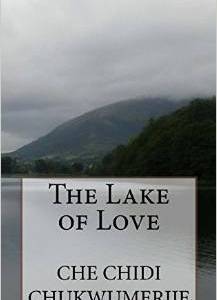
An excerpt from "The Lake of Love"

The Lake of Love: A Philosophical Journey

As he descended the plateau, he exalted in nature. He saw the azure-blue skies stretching protectively above his head, and around him he saw beauty unveiled. The green of the grass was of a tone he had never before quite seen. It seemed to have a restorative effect on him. The flowers were beautiful. Multicoloured, as if a rainbow had exploded in the skies and the little splittings of colour had showered themselves upon the fields. Was this real? He thought back to the world of men. Had he ever seen anything so beautiful? No. Not ever. Not once.

He strolled through these fields briskly. Much as they delighted his eyes and watered the garden that was his soul, he could tarry not even for a single second. His eyes were focused yet detached. Paradise was still in front.

And then there was a lake…

As he approached the valley …. suddenly and for the first time, he noticed a lake that nestled right in the heart of the greens, stretching wide into the woods on either side, but perhaps only about forty or sixty strides across. He hesitated for one second, his eyebrows lifted. He had not seen the lake from the top of the plateau.. He had not been looking into the valley, but only up at the Land of Bliss.

But only for a moment did he hesitate. His strides picked up speed and certainty once more and he headed straight for the lake. After crossing seven seas, amongst other things, a little lake was not going to bother him in any way now that he was so close to the Land.

As he neared the lake, it suddenly dawned on him that nature seemed to have changed. It appeared to have come alive. Suddenly the grass was whispering, but whispering what? He could tell not. The leaves were talking, but talking to whom – to him, or simply to themselves? The wind sang a song, a wordless song, and from the sides of his eyes he thought he could catch the flashy movements of little things. Almost like little human beings. Little human-like beings? He swung his head sharply on all sides…nothing. Only the green, beautifully decorated fields. The enchanting woods.

In him something began to stir. He knew that there was a discussion going on in nature, a conversation, an exchange of opinions…or, wait, a message?
Again Scimarajh hesitated. He wanted to find out what was going on around him. Or, rather, a part of him wanted to – the curious part…or, is it, the cautious part? But the larger part of him, the adventurer who had surmounted high and low, the seeker who had journeyed tirelessly, was impatient.

Move on! The command thundered forcefully within him, borne of a long–persevering hunger, a long-unfulfilled desire. So he tore his attention away from the mysterious, imperceptible activity going on around him and quickly took the last brisk strides that brought him to the edge of the lake.

The lake was silent. Motionless. Clear as the surface of a perfectly-polished mirror. Still.

Scimarajh gazed at it, equally silent, equally still. His mind ticked. A deep seriousness, immense and grave, settled over his beautiful countenance.
There was something about this lake on which he could not place his finger. Something mysterious. Something as yet unfathomed. Unravelled. And yet, why did he get the impression that he had seen this lake before? He looked at the lake and the lake looked back at him with his own eyes, his own face, his own self. Who knows himself? Scimarajh?

But other thoughts than these occupied him. How deep was the lake? How safe? He was not deceived by the apparent calm of the lake. The last months and years of his life had brought him danger in all forms, at unexpected turns, and he had learned to take nothing for granted. Not even a little lake.
He looked about. Nature’s voice had increased in volume. So Scimarajh calmed down. By his feet lay a long, thin pole. He picked it up and, holding it at one end, slowly immersed it into the water of the lake. Nothing. Presently he revolved his hand, stirring the water and all the while peering pin-point sharp into it, tense and concentrated.

After a long time of testing and watching, investigating, checking and waiting, his body slowly relaxed; the skin around his eyes, formerly tightened, smoothened out again and he let the faithful pole back out of the lake, carefully replacing it back down by his feet where it had formerly lain.

The lake was safe, just like any other.

Now that he had become satisfied of that, his movements again became brisk and sure. Speedily he took off his garments, knelt down in the soft, mossy grass and folded them. Then he opened up his little back-pack and gazed with delighted eyes at its contents.

Three beautiful precious stones, his sole possessions and objects of his deep love. He had acquired them laboriously through his long, long journeys. And he guarded them with all his might, for without them he would never make his way into the Land of Bliss. His former teacher, the Master of the Sea, had told him so himself. And he was going to present them to the King of Joy when he finally made his entry into the Land of Bliss.

He could not suppress the cry of joy that escaped his lips as his heart soared in these thoughts. Then he came back to the moment. To work! To work! Quickly, but very neatly, he folded his faithful garments one more time and arranged them inside the back-pack. Then, arising anew, he strapped the pack unto his back and prepared to dive in. He concentrated.

Suddenly he heard it. Loud and clear!

A voice.

“Do not dive into the Lake of Love!” –

Scimarajh started up, whipped his head around, saw nobody. He looked and looked. Nothing stirred. Nature had quietened again. Had he heard wrong? He listened hard and heard absolute silence communing with itself.

The silence filled him like a wave.

His head began to swim. Not for a second did it occur to him to immerse himself in the feeling. To know what it was. Rather he resisted it. What?, he thought. After getting so close?! … No way! …

He shook his head vigorously and sharpened his eyes on the silver-surface of the lake. I must have heard wrong, he told himself repeatedly, remembering the mirages he once used to see in the deserts and the imaginary sounds he once also heard in the forests when tension was high. It must be the same phenomenon, he assured himself, and the nearness of the end of my journey is making me dizzy.

In his heart of hearts, however, a contrary intuition stirred, but he drowned it with the clamour of his thoughts, and his desire.

Bent at the knee … tensed his muscles … breathed in … and dived in …

– Che Chidi Chukwumerije.

AWAKEN, MY FLOWER

ONCE UPON a time, here beside your heart, I waited.

I waited and waited, but you did not open up. Why? I thought you said you loved me. Finally I knocked on the door, but the door did not open up. So I knocked on the window, but the window remained shut. Then I peered in through the glass-pane of the window. The curtains were drawn aside, I had a clear view into your heart.

You were lying on a couch, a soft couch, you were sleeping. What were you dreaming of? I did not know. Whom were you dreaming of? I did not know. Your eyes were closed, just like your door and your window, there was a peaceful look on your face.

You looked so restful that I did not want to disturb you. I would gladly have remained outside rather than disturb the serene sleep of your heart. But, you see, it’s cold outside and it’s getting dark, and strange figures approach me and call me by strange names to which I know that I must never answer or I’ll be caught and I’ll be dead.

Won’t you open up the door? Won’t you awaken from your sleep?

So I began to sing. It was a song that I had never sung before, a new song that arose unbidden from my heart. The song entered into your sleep and entered into your dream and showed you the way out of your subconsciousness, and led you out of the hall of dreams… and, as your eyes opened, you saw me at the window and I saw the love and the fear in your eyes. Love because you love me. Fear because the monster is standing over me.

But if you rush to the door on time and open it quickly, I will escape the monster and you and I will become one heart.

Hurry up, dear, I’m almost dead.

– Che Chidi Chukwumerije.

THE OLD POET

amazon cover copy there is always something more 2015

THE OLD poet stood silently upon the highest peak of the Jos plateau and sensed, for the first time in his long life, that it was time to finally put into words the yearnings, the stirrings and the recognitions that had ravaged his heart through the course of his life’s wanderings.

His eyes were raised to the sky, but he saw sky not, nor cloud, nor bird, nay, nor sun, for he was blind. As blind as blind can be. So who shall write down his poems on his behalf? – With a heavy heart he descended the Shere hills, his faithful brown mongrel, leashed, leading him into the valley.

It was two long unbearable weeks later that he encountered Bingel, a young boy, stout of body and heart and perpetually serious, strolling, eyes hooded, in these savannah fields. He stopped. He stopped too:

“I see you not, yet know I that you but a child still are: Your step, though slow, is untempered… your breathing, though measured, is free. Yes, though I see not, indeed I know that though you be young, at heart are you a man; for your step, though untempered, is slow, and your breathing, though free, is measured.”

The young wanderer looked at this old poet who said things he almost understood.

“And what do you want from me?” queried Bingel.

“Once I was a youth like you, wandering through these very same fields, pondering true over those very same questions that course right now through your heart! The answers I found, I did not understand; the answers I would have understood, I did not find. Thus had I to journey through life, learning through experiencing, finding not by thinking but by acting. And now that I, aged and blinded by life, stand before you today, it is with the ironic recognition that I have learnt nothing new in my old age which I did not already silently know in my youth, but now the knowledge I have, I understand, because the knowledge I would understand, I have. And yet the strange gap remains: I am still not complete.

“Above that, a certain peace eludes me still for I yet must ink into readable words the river of thoughts flowing in my soul; but how can a blind man write when he cannot see what he once could see when he could not write? Thus has destiny brought you to me today, my friend, to be my hand and to be my eyes, to write down on my behalf what I shall dictate to you, all I have to give, which is nought but that already in your own ancient heart, my son! This might sound strange to you now, but I am the answer you came here seeking today, for there are no accidents in life.”

Now the youth Bingel gazed long and hard, long at the old poet and hard at the ground, and then slowly began to speak:

“I fathom not one word which you have spoken, yes, not one. And since you say that all you know, already I know too, and yet I experience thus that I understand not what you say, then truly you have erred and I am not the one you seek! A blind man cannot see and so cannot see me! I cannot write down words which are alien to me and which will perhaps render me just as blind as you are, hobbling askance in lonely fields day and night, speaking double-sided words unconstruable to all but you.”

And so saying, the young philosopher walked off and walked away, the tremulous pleas of the old poet dying away unheeded behind his upright retreating form.

The blind old poet found no-one to write down his heart’s poems on his behalf and, just as he had lived with them, died with them veiled, untilled, still deep within his lonely heart.

Jos 2

The young boy grew up, still trying to understand those same strange, vague longings that took him into those lonely savannah fields in his youth. However, like the old poet, he found answers which were no answers, but only newer questions. And so, just like the oldman-poet, he experienced a very turbulent earthlife – one in which violence, bigotry and lack of understanding among the peoples grew from generation to generation. A life which, by its end, had made a poet of Bingel and rendered him blind too – full of the urge to write in words the poems weighing bright in his heart, but hoping for a willing hand to be his needed tool.

This morning he stood upon the very same peak on which, eighty years ago, the old poet had once also stood, and understood the very same strange and simple things the old poet had once grasped, for he had also become a blind old poet. For him too, the gaps remain and he is conscious of his incompletion.

Slowly he descended the Shere hills of the Jos plateau with his dog, his only companion; silvery tears glistened in his sightless eyes as he painfully remembered a friend he met, decades ago, on these very same rustic, primeval planes.

And so did I meet him, broken, upon his knees, blinded and in tears – the old poet. I stopped… And then made to continue, but he held me with his trembling old hand. And…

“What do you want from me!?” I demanded.

Gently Bingel began:

“Once I was a youth like you, wandering through these very same fields, pondering true over those very same questions that course right now through your heart! The answers I found, I did not understand…”

– Che Chidi Chukwumerije.
Buy the full collection of stories here: “There Is Always Something More.”

ỊHỤNANYA

I STAND upon a cloud, detached and unnoticed, and look down at the gentle green hillocks of Isuochi, those last scattered foothills of the Udi hillrange in south-eastern Nigeria. On one of the most secluded and hidden hinter knolls is a hut. No, a cave. Masterfully blended into the mounded cocoon of the hummock with that subtle touch of which only nature is capable, it bears on its rough back an assembly of wild-haired ụdara trees huddled as though in conference about the destiny of the old man in the cave beneath their roots, one who has for decades made this removed grotto his home. Around the cave, all is still. Nothing stirs; nobody in sight. But I know he is there, in the cave, silent, communing with himself, the old man in the hills. I know it well, feel it deep, for once upon a time, I was he.

But that was long ago, before love seized his heart and ground it to bits, scattering the gold-dust of his longings into the gathering arms of the wind who collected them greedily only to scatter then again with childish abandon, hoping he would never again find them. He blew them to the ends of the earth… where they simply re-gathered, recollected, his love and pain, his yearning heart, glued together by remorse; like phoenix, arising anew. Slowly, with time, they found their way back to him, their origin, as though pulled by a memory magnet. Like a guardian they float above his cave in the harmattan sunset of his life now, steering him… even though he does not know that I do so. Yes, once upon a time we were one.

But now he is much wiser. The substance of his life and the love that purified him, purified his inmost soul in excrutiating pain, had been so powerful that when it was over he had been freed of passion and pain, desire and death, reduced in the crucible of experiencing into a wise man. While I, his passion and pain, the living form of his invisible regret, watch now over him from above his head, yearning for release and dissolution even as much as I yearn for him, the lonely old man. No, not lonely, only alone. The wise man in the hills. A long story of love and pain brought him to this place and this state of being, a long story that cleansed his heart and then poured runes of recognition from the vials of Solomon into the emptied coffers.

As I stand upon the cloud today I feel more heavily than ever the pain of all the experiences we went through, the ache of glaring clarity. Oh, could this agony but ease off a little… a moment of teaching mediated to another wanderer at the crossroads where we too once stood. What is the essence of love? When it has conquered you, you understand.

Dusk approaches, the sun sets, the beautiful sun. I watch him silently depart into the graveyard of night. Always, he keeps his thoughts to himself. The sun has just disappeared… night has fallen. Riding atop my cloud, I descend lower, closer to the cool night earth. The warmth of the buried sun’s radiance still permeates my being like the memory of a delicious meal. I sense that tonight there’ll be a difference. I sense movement within the cave. The old man stirs, awakens, seeking fulfilment.

And then he appears. Tall, firm. Strong, erect. He holds his head up like the noon sun, but cocked slightly to one side. He walks slowly, with easy deliberation, like a king, away from the trees, into the open. His eyes look into the distance, filled with a searching look that arose out of his vast heart. When a man has sinned and in the process set a wrong precedence, maybe through his children or grandchildren an opportunity will one day present itself through which he may atone. Like tonight. I see it coming and I wait. Years have passed since he made the grave mistake that gave birth to me, his love and pain juxtaposed. Will I finally dissolve again tonight? I wait.

And then I see from far away a figure, a shadow of light, approaching, ascending the gradient.

Who?

It is Kulie, walking slowly, but resolutely. It takes him almost an hour. But finally, he arrives the tor. He looks up at me, but he sees only the cloud. Me he sees not. I am higher than eyes can see.

I study Kulie as he stoically traces the tracks of the lonesome wise man in the foothills. I observe Kulie. A handsome, young man. Spitting image of his great-grand-father, the mad man in the foothills.

A moment of silence… then Kulie comes upon the wise man, my wise man, standing iroko-erect, backing the world.

Kulie stands still. He speaks not. All his life he has heard of the madman in the foothills, his great-grandfather, unseen by human eyes now for almost two decades, fuelling speculation that he had finally died. But Kulie’s inner voice had told him that he lived yet. And now he saw him here standing before him. Why have I come?, Kulie thinks to himself. He cannot answer himself. Yet he knows that he acted right.

Slowly the wise man turns. His eyes, burning like the red hot coal in the bowels of these ancient hill-range, pierce Kulie’s soul. Kulie yields not, stares back. Before him he sees a tall, thin, very dark complexioned and very old man. His shirtless torso hangs thinly on his proud skeleton above half-trousers that reach down to just below his knees. His feet are bare. His cheek bones stick out like hard balls upon an impassive face. Only the eyes burn.

“Kulie…” begins the wise man, “Gwam! Tell me. Why have you risked your life and reputation by coming here?” Kulie is at first taken aback by the old man’s directness which leaves no room for a proper traditional greeting. And how come the man knows his name?? All this shoots through his mind as he takes in this voice which seems to spread out, as though trying to permeate the world. “You want people to castigate you for communing with an outcasted, mad, man?” His igbo is refined, royal.

Kulie bows his head for a second. Still he shifts not. Promptly he raises his eyes again.

Nna anyị… our father,” says Kulie in a strong voice, “I am confused.”

“And what confuses you?” asks the wise man softly.

“Love, sir…” replies Kulie, “Only love. Ịhụnanya.”

Calm, like the closing of an umbrella when the rain is done, descends anew upon the wise man. Yes, now he is sure. Kulie is the promised one.

“Speak your heart, son,” says the wise man, “Simply your heart.”

Kulie decides to say it simply, the best way to say some things.

“It is the Cause, father, the one that was first started by you. It has awakened in my heart too. It has landed on the table of my destiny and I don’t know what to do. A great love for the people has seized my heart. It has become my cause, like it once was yours. I am ready to work just for the people, to live and die for them. I have proven this to them many times. They know my love, and they have loved me back.

“But… hurtful has been their love, father. They have often turned away at decisive crossroads; often reciprocated my sacrifices, now with gratitude, now with scorn; often chosen empty promisers of illusion over me, until their hopes were dashed, and then come running back to me… until the next liar showed up again. This has been the cycle for years now, such that now… now… I do not know any longer whether or not this Cause and I really belong together. Maybe I am not the right one for it, nor it the right one for me. And yet I cannot abandon it. I just cannot stop trying to get the people to wholeheartedly follow the path of development and growth. They say yes to me with their lips, sometimes with their eyes too… yet the harder I pull, the more lukewarm they seem to become. From afar they cheer me on. But none wants to walk the path with me. I doubt that they really appreciate the effort, yet my love is so great, I keep on accommodating their lukewarmness.

“And I ask myself: This thing that sits so uneasy in my hand, is it really mine, or am I just forcing the whole issue, pushed by selfish ambition? It obsesses me, but I can’t seem to make any headway. Do you understand? I want it, but does it want me?”

A moon appears from behind a cloud and brightly illuminates the wise man’s face… briefly. The sharp, burning, deepset eyes… the flared, angry nose… the rugged lines of fate running down his forehead, knifing their way into the bridge of his nose… the rocky cheek bones… his glowing countenance was an ebonine wood-carving hung on eternity’s canvas.

And his voice says something very simple. Something he once read but did not understand when he needed it the most, something he has always wanted to plant, like a seed, into the heart of someone who stands too at the crossroad but, unlike he, will understand:

“Kulie… when you love something, set it free,” his voice rises, trembles, his eyes look up, “If it comes back to you, son, then it is yours. But if it does not, then it never was.”

For long, long moments, as silence whistles through his heart, Kulie stands looking at a man who has turned round again, backing the earth afresh. In Kulie’s heart he understands. But it’s so painful, too difficult… letting go. He opens his mouth to complain, to quest further –

But the voice of the wise man suddenly rips through the hilltop anew.
Ngwa, Kulie! Go… and be a man! Free yourself.”

And as though the words were a presence by themselves, a force propels Kulie away. He hurries down the incline, his heart burning for his cause.

When you love something, set it free!

Higher climbs the moon, full. Midnight approaches. Maybe Kulie will do the right things. The words were sparse, but the wise man knows that they are exactly what Kulie needs, that he will understand the message at the heart of them. The wise man is free of half of his burden.

Now the other approaches. He bounces up and down the foothills, slowly mounting up the gradient. I look into his face – I see selfishness and inconsideration. I feel a pang of pain stab through me. I seek for the gentleness and love of Kulie in his soul, find them not. Finally, he arrives the hummock.

Again, like Kulie, his eyes first seek the cloud upon which I stand, detached and unnoticed. His name is Jideofor. I know him well, the absolute reflection of that which I used to be. If Kulie is the wise man, then Jideofor is me.

He charges straight for the wise man who faces the moon. I notice an air of reluctance hanging around him.

“Yes?” Tersely. “Ọ gịnị?” Without turning around.

“I knew that I had to come here. So I did.”

Now the wise man turns, looks. Yes, it is he.

“And what is your problem?”

Jideofor grimaces. “It is the people, your people! I love them but I am tired of it all. Why do they complain all the time? Why do they demand all the time. I give and give all I can, yet they never stop demanding, like a bunch of greedy, ungrateful children. They are always irritable. I have outwitted all their enemies, all our enemies, and brought development to the community, and yet they keep demanding, demanding. In other places, people would worship me if I gave them just half of what I have given this people, our people, your people! Fighting your lost cause. But they remain unsatisfied. Truly, I have come to the end of this road!”

The wise man’s voice is cold as ice:

“Jideofor! Gee ntị. Listen very carefully, I will say this only once. When you love something, cherish it. Keep it close to your heart. Cherish it. Do not even slightly ease up your hold on it… or it will fly away and never come back back!

“Do you understand?”

Like a thunderclap his voice slams into Jideofor’s soul, sending him careening down the hill like a dislodged boulder, seeking his fate.

When you love something, hold it tight!

The wise man sighs. His life is over. He has atoned. The two faces of love have been voiced and released into two hearts and into the ether, never to die again. He walks back to his cave. The fire in his eyes, it has died. His body lets out its last breath. His spirit flies away. Home. His remains will have his hill for a grave, his cave for a gravestone. The wild arms of his beloved ụdara trees wave him goodbye in the harmattan wind.

In the sky above the ghostly silhouette of trees on the knoll there glows a lovely fullbloomed moon; riding beneath it on his cloud, slowly dispersing at last, is my pacified self; the shadow of the wise man’s heart; his regret; his remorse; his longing to atone; his burning desire to make good, thawing at last. Reflecting these two so different explanations to love, seemingly contradictory – to let go, or to hold on.

Two views, two songs, two sides.

And the people, trapped in the cause, understand not as Kulie and Jideofor relate and act out the differing messages they each claimed to have received from their great-grandfather in the same night. It seems like a contradiction to the people, another evidence of that old outcast’s state of mind. The different voices of this one simple truth told by the wise man elicit divergent responses from various souls.

Some call it insanity. A few dub it amnesia. Others call it agony, pain.

But I, I call it the Understanding.

– Che Chidi Chukwumerije.
amazon cover copy there is always something more 2015

THE BRIDGE ACROSS THE RIVER

niger bridg 5

THERE IS a bridge across the River Niger. A cold, old steel bridge across the long-travelling river. It is to this busy bridge that once the painter came everyday, every evening – oblivious, as one drugged, to the noise of the hawkers around, and the cars behind, her – as she stared into the hurrying water, and tried to exchange her sorrow for joy.

Unfortunately she was rarely ever able to achieve this, but just as she had come with her sorrow, she would depart with it as well.

Life is especially uncomfortable for artists, living as they do in their two worlds – the tangible world we normal people see and the other, invisible, one seemingly perceivable only by the inner eyes of artists. They cannot help it. It is their destiny, their perpetual calling, their fate. It seems as though the Divine has assigned to them the painful task of bridging for mankind groping blindfolded on earth the gap of the river of sightlessness which flows between that which was, that which is and that which will be, the perceived and unseen.This, they say, is why artists suffer, torn in different directions by irrenconciliable forces.

Ijeoma the painter had had quite a happy childhood on the other side of the river, in a small town called Obosi. She played with her brothers and sisters and was all but completely unconscious of the adult life around her. Her most insistent love manifested itself in the urge to gaze upon pictures – in books or in nature or even upon the faces of her fellow human beings. To paint however she had never attempted, never contemplated. Neither the urge nor the idea had ever occurred to her.

Until she became an adolescent and the strange, irresistible longing and pain gripped her and forced her to spread out upon plain, empty waiting sheets the pictures of the secret knowledge which she found that she already, unaccountably, bore inside her mysterious soul. And she painted…
Painting made Ijeoma happy. Gave her release and, simultaneously, gripped her inexorably. A caged, skyfree bird. The bane of artists, their incentive, their riddle, their sorrow, their reward.

But then she fathomed the world no more. And in return the world fathomed her no more too, gradually proceeding to pin such labels upon her as queer… funny… disturbed… unbalanced… mad. She however, she knew that those labels fit not her but the world which sought to stick them on her. Like they also say, in the society of mad people, the sane one becomes crazy.

river niger 2

Ijeoma drew away from people and drew herself into art. Loneliness became her companion. She tried to understand herself. Was her heart a running stream that flowed into the sea? Was her heart a sky upon which angels had painted since forever? Or was it a universe, a meeting place of forces, a tended garden, blended carefully? Or just another ordinary human heart?
Then arrived the time in which she had to begin to fend for herself, for as childhood becomes youth, so becomes youth adulthood. And adulthood must hold its head high, and be self-dependent.

She had learned no other trade but the trade of images, illustrated moods and pictures. So she began to frame and sell her paintings. But nobody bought them; nobody bought these paintings which one day in the future would suddenly become masterpieces. But artists, who see well humanity’s future, are notoriously incapable of seeing their own.

Life became to Ijeoma like an empty desert. If she could eat once a day, she was lucky. She moved to the other side of the river, to a town called Asaba where she lived alone, away from home. But somebody once said that home is inside.

Her family, although they did not understand her, continued to communicate with her every now and then however, as families like to do. And to offer help, if…
She did not always reply, as offsprings and artists are wont to do. But whenever she did she never dwelled upon the fact of her poor financial and living conditions, but deliberately insisted she was fine. Ijeoma sent home tiny pretty parcels every once in a while, parcels she had bought with her few small savings, not because she wanted to buy them, but because her pride would not let her project any other but this picture of herself to those from whom she wanted no pity.

And then things came to a peak. In order to be able to hang on, it turned out that she would have to open her heart to the well-meant charity of a certain man who had met her and who could not help but love her with his whole wide soul.

It was not that she did not want to, or that she felt it would be wrong to do so with regards to this particular man in whose eyes she saw distant, radiant things that made her heart jump, for then her compulsive resistance would have been understandable. It was just that she did not want to let go of her tenacious pride.

She was sad, angry, bewildered and embittered by the fact that her paintings were not loved, sought after, bought. It hurt her deep within her soul.
She took to visiting the bridge across the river every evening, standing on its central spot and staring into the non-chalant waters, like many lonely people do.

And one day as she stood there, under a humid sun, a lurid idea with which she had long toyed gripped her anew with near ineludible force.
Her head swam, she became dizzy. She was aware of herself toppling over the railing into the river of blindness, but she made no effort to arrest her fall; silently she gave herself up to that fate which she had decided would be hers. The water rushed up fast.

She fell voluntarily into the river and drowned and died so that everything would at last come to an end…

river niger 1

And this is where the story begins. I have spoken to many a native who hawks upon this bridge or casts the net from his fishing boat into the waters of River Niger, and they all swear that this is true.

Ijeoma was very surprised, after she dumped herself into the river, to experience that everything did not come to an end. Although her body died, she herself continued to drown in the watching water, drown but not die, drown and yet not die, unremittingly.

Meanwhile Okeke, that man with the distant, radiant things in his eyes who loved her more than he had ever believed one human being could love another, came to look for her at the old bridge, her bridge of sighs, seized of a sudden and inexplicable apprehension. Amidst the agitation of the crowd that had gathered on the bridge, pointing in consternation into the river, he saw her scarf hanging from the railing, but her he saw no more…

Decades later, Ijeoma watches an old man emerge from a parked car by the side of the road and slowly limp his way up the bridge. The hawkers, peddling everything from smart phones to impotency-curing ointments, seem to know him well, they make way for him. He takes no notice of them, or of the hustle and bustle of traffic and trade, the stench of sweat and exhaust fumes. In one hand he holds a scarf, faded yellow, with his other hand he rubs his tired old eyes wearily. Finally he gets to where Ijeoma is standing, in the middle of the bridge, peers briefly at her with a confused, introspective look in his eyes, blinks, then turns and stares quietly down into the river.

niger bridge 1

Standing beside him, she watches him, says nothing, so as not to disturb the solemnity of this ever-recurring magic moment. She drinks in the love that emanates like waves with his thoughts. After a while, he lets out a soft long sigh, straightens up, rubs his thigh where the old shrapnel is still embedded, and looks at the sky. This is her cue; she decides to try again. Taking a deep breath, she raises her hand, places it on his shoulder and says gently:

“Okeke…”

He does not stir, does not react.

She shakes his shoulder again, and again; her voice is laced with resignation as she utters his name. She knows he will not hear, yet she can’t help but try. Each time. Each evening. The same words…

“Okeke… thank you… but move on. My burden is mine alone to bear… to make good.”

… she reads in his thoughts that the few finished works she left behind on earth are now masterpieces. In his heart she sees his memories of a proud and beautiful eighteen year old lady from decades ago when he was just a young eager man of twenty.

Before he walks away, he looks at the river again, an introspective, philosophic look on his face, softening the longing in his eyes. As always the last thing he does before he goes is to whisper her name…

“Ijeoma…” Safe journey.

Then he turns and limps away, a phlegmatic old man. With tears in her eyes, she watches him walk away, wants to follow, to try one more time. In vain she looks around again for the invisible chain that holds her to this spot, this spot to which she has cumbersomely dragged herself after decades of struggle, of laboriously climbing out of the water and struggling up the bridge.

They have been decades of cavernous emotion. Unnoticed by any, she watched the civil war that brought down the old bridge and catapulted the souls of the many massacred out of the realm of flesh and bone. She was there when the bridge was rebuilt and the war survivors, walking reservoirs of devastated trust and defiant hope, slowly repopulated the bridge.

And still, the longing to fulfil her art burns in her heart. Often has she tried to turn around and return to some distant luminous home… but she cannot. She is held here as by an invisible chain. Destiny unfulfilled, she must cross the bridge again, one day.

niger bridge 2

And soon she will be born anew into the earth as a baby. She will grow into a deep dreamy teenager and then mature into a restless and intense artist. Perhaps she will cross your path. Attract you with her art, intrigue you with her nature and remain incomprehensible. If she does, do meet her with understanding. She is a bridge. She paints for you and me.

– Che Chidi Chukwumerije

For more stories and thoughts that touch on the deeper threads that run through our lives, read my book “There Is Always Something More”.
amazon cover copy there is always something more 2015

THE FLUTTERING

OUTSIDE MY WINDOW there fluttered a bird…

I opened the window and in it flew. It alighted upon my table and became a story, a book of many pages full of emotion and history. Poet, poet, you anchored the story and it became a masterpiece that fed and accompanied human hearts from generation to generation.

There is an old book that began at the dawn of history and has no end, for from generation to generation there is always a poet to receive its next pages, humanity’s rebirth, return of inspiration and guidance. The mystery, it seems to me, comes always in the shape of a bird and survives in the shape of a flower in the desert.

The bird kept on singing, narrating; I kept on listening, the poet kept on writing, the poet in me. When the last page emerged and the bird disappeared, a day of sharing passed, and I fell asleep.

A century of slumber passed again. Again again the night dawned and swallowed up the world. From the depths of my sleep a sound extracted me, the flutterings of a bird. Outside the window, woman or bird? Woman and bird? A woman stands behind the bird. With sleepy eyes I her behold, a waif of moonlight, standing outside my window, an ephemeral beauty, a strange maid…

I desire her. My desire becomes the magic wand with which she hypnotises me. I lose interest in the bird, the bringer of my stories, the being of my inspiration. Instead, I open the window and walk to the woman. Dimly I was aware of the bird that flew in through the open window of my soul into my chamber of secrets even as I walked out of it, into the hungry night. The glass door shut behind me, Noah’s ark sailed away sans poet. There she stood before me, the night’s promise, unfulfillable. A thousand pleasures she would give to me, but none quenched my thirst… Until it dawned that she was the thirst itself, cyclically renewing itself, fawn Sisyphus.

Wearily I dragged myself back to my window; shut. It was shut, long shut, with me on the outside. Looking in I make out, upon the table, another book, another distant story, buried in my heart. Like a visitor at a glass tomb, thoughtfully I look back in time.

It used to be a bird, a bird that once flew to me. Sadly I gaze at the scroll through the infinity of a glass window. I can see the book deep within my soul, but I cannot reach or read it. I stretch forth my yearning hand, but all I manage to do is scratch the window pane with with my fingernails. Poet, poet, awakened and then distracted, unable to anchor your story, the very reason for your awakening. How does it feel to gaze upon your calling and be unable to enter it?

Weary and more you search until you find the door, and re-enter your inner home, but generations have since passed… the table, it is empty.

So here you go, sleeping again. A century and many more of restless dreams. Then, one day, you hear it… a familiar sound… outside your window… the Fluttering…

The night is dark, the moon is pale and sceptical, the glass is scratched, the witch is calling and the bird is fluttering…

Do you remember? It has been a long sleep. Memory has become a distant memory. Who is this moon? What is this woman? Why is this night? When is this window? How is this bird?… Even yourself you do not know anymore. Long was this sleep.

Poet, poet, you move in my heart, like a bird fluttering outside my window. Time is my window. If I open it and let the bird fly in, I will see and remember that it is no ordinary bird, it is a memory being, a fountain-pen, a poem, a story which, anchored, will grow wings and fly into the hearts of those who are thirsty outside…

Poet, poet, you speak in my heart. Forget that woman and face your true love.

– Che Chidi Chukwumerije

A PRIVATE AFFAIR

WE DECIDED TO let her have her affair, and pretended not to know.

We all work in the same office, she sits in front of her computer right at the back of the office, and computes away. We all sit in front of our computers, computing away.

I saw one of the first emails. It was one of those accidents that happen in the workplace. I don’t know where she went to, I don’t know what compelled me to get up and go to her empty desk, and click on. I shouldn’t have. Seeing that she was not there, I should have just walked away; shouldn’t even have gone there in the first place. But I was in a hurry, she should have forwarded the email to me an hour ago, I needed information in it to help me finish the contract I was drafting for an agent, and the deadline was noon. Without thinking, I grabbed the mouse and began to browse her inbox which surprisingly was open on the screen. Normally she always locked her screen before she left her seat.

Suddenly I hesitated. She was a person who guarded her privacy intensely. She was a bit different from the rest of us in the office, at least in this regard. With any other colleague it would not have mattered, but she was… Hmm… Come to think of it, what did she have to hide anyway? Why was she always locking her screen? Mchw!

My annoyance at knowing I would have to let go of her PC without getting what I wanted, thereby facing the risk of not meeting my deadline, almost rubbed me of my morals. But still I hesitated, which in itself irritated me all the more. She was the only one in the office who guarded her privacy with such tenacity. But the moment of hesitation had done its job. I sighed. Don’t be a jerk! I told myself, she’s different from the rest of us, just let her be. I shook my head and started to turn away…

Then I saw the name. The email at the bottom of the page. It rang a shrill bell. I did a double-take. That name! But, even more than the name, was the subject title of the email. “Babycakes, can’t wait”. Almost mechanically, without any conscious effort, I pointed the mouse at the incomprehension and clicked. The clarification came. I closed the email, returned the inbox to the face of the monitor and walked away, thoughtful, to my seat. She was having an affair. With him. It hit me like a thunderbolt.

For the better part of the next hour, my mind was in turmoil. Needless to say, I missed my deadline. Even when she returned to her seat five minutes after I left it, and eventually forwarded the email to me, I couldn’t work. It took me a long while to find my composure.

For some reason I kept it to myself. Over the next couple of weeks, I began to observe her more closely. Such a quiet, shy, unassuming, unobtrusive personality. Babycakes, can’t wait. How had it started? Every once in a while I would turn around, steal a glance at her, or watch her as she walked by. And each time, the wedding ring on her finger would catch my eye, and I would think of her four year old son who she once brought with her to the office. Babycakes, can’t wait. What was she doing? I noticed that she began to receive lots of phone calls. Private phone calls on her mobile phone. Each time, she would jump up and hurry out of the office; and in between the phone calls, frequently, the buzz of incoming text messages. Babycakes, can’t wait.

I don’t know how the others came to know, truly I don’t. Maybe because of all the sudden personal phone calls. One day, while she was out, we were all talking, and the conversation gravitated to love and affairs… and it turned out that we all knew she was having an affair… and with whom.

Maybe because none of us had ever met her husband. Maybe because all of us liked her, liked her quaint, quiet, modest personality. But we never discussed it again amongst ourselves. For some reason hard to explain, we all hushed it up.

The months passed. No one came to visit her in the office. Was she still having the affair? She remained her usual self, quiet, generous with friendly smiles. The phone calls and the text messages kept on coming, an insistent flood of private vibrations.

One day, her husband came to the office. I think that was when the pain of conflict drove all of us into intense inner reflection. He was a nice guy, with an unassuming, almost self-deprecating air, greeted everybody with a wide smile, an eager handshake. In the following days, we started to talk about her affair again. It was moral, it was immoral, life is a mystery, she needs salvation, maybe he’s doing it too, who knows how it really is in their home, it is a sin, everybody has free will, monogamy is unnatural, polygamy is unnatural, judge not, love thy neighbour, trust nobody, watch out for the devil, what a man can do a woman can do better, are we sure, maybe we’re mistaken, stop gossiping, stop spreading rumours, it is true, I have the proof, the world is coming to an end, he must be doing her well, maybe her husband has stopped performing, it’s his money she’s after, but she’s such a good girl, we must put her in our prayers, there must be a reason, love is a mystery… As always we only spoke about it when she was not there. Was she still having the affair? I didn’t know. I didn’t ask.

And then came the day when everything changed. Her phone burped. A short conversation. A loud gasp. An ominous pause… and then it broke out: a frightening, low, howl that gripped every heart in the office. It seemed as though we all started up at once. I turned around. Her face was in her hands, she was sobbing. Wracking, ugly sounds, primitive and real.

I jumped up and hurried with the others towards her. It took a long time to calm her down. After she had shut down her computer and left, I walked into the toilet, to avoid the chatter of the colleagues. I put the seat down, sat on it, closed my eyes and watched again in my head the scene that had played out after we all rushed to her.

“What’s wrong?” someone asked.

She sat frozen, staring at her mobile phone, as if hoping it would ring again. Her voice was a whisper:

“A friend of mine… just died… he took part in the fuel protest in Lagos today… he got hit by a stray bullet… his best friend was with him… “

Silence.

“What’s his name?” someone whispered gently.

A pause.

“Kulie Oto.”

“The artist?”

“The activist?”

“The lecturer?”

All three questions came at once.

She answered mechanically.

“Yes…, the sculptor. He is… was… my husband’s cousin.”

“Really?” Even I felt my eyebrow rise. She was still mumbling softly, almost to herself.

“He’s the one who just called… I mean my husband… to tell me… there was some shooting… people ran… Chiya… was hit… fell… his best friend found him… I don’t understand… he flew to Lagos yesterday evening… he was to travel back to Abuja this evening…” Her eyes travelled from mobile phone to PC screen and back again.

Babycakes, can’t wait.

A very uncomfortable silence followed.

She breathed out slowly, very slowly. As if she was letting something out. She shook her head.

Silence. Longer.

And then:

“I’m so sorry for his wife and three children,” someone said, evenly.

Months have passed again. The calls don’t come anymore. Her smiles are few and far-between. Somewhere in the quiet depth of her heart, her secret, her loss and her pain continue to rest, unshared. In the office nobody talks about it anymore. Silence has encapsuled it once more, like a matter that has been put to rest.

– Che Chidi Chukwumerije.

TWO PAINTINGS

A YOUNG MAN. Alone. Poverty-stricken. What shall he do to survive? He has only one talent, much unused: he can draw and paint. He had done it all his short life, since that moment when he first saw the paintings of that legendary artist who killed herself as a young woman, long ago in the old Nigeria, before the war. Her paintings seemed to have torn open wounds within his heart from which, ceaselessly, it gushed forth.

Growing up in the mad heady dash to afro-modernity that was Lagos, he had forgotten to back himself up with an alternative education while following with audacious self-will his crazy passion and living his dream. Now he stood on the brink of starvation and understood her. But he also knew that if he had armed himself with an alternative, he would today in hungry desperation betray everything he believed in, and he was glad he had not. For this one thing he knew: he would never give up. One day, the tables would turn. So the struggle continued. And then one day arrived in which he had absolutely nothing left and knew not what to do.

Finally he mixed his last paints and, full of anguish, loneliness and a something else not easy to define, wrought two paintings upon two round, flat surfaces, and stood with them beside a mechanic workshop on one of the busy roadsides in Lagos, to peddle them, and eat.

A woman passing in a car beheld the two paintings and the hawker. In Nigeria, people hawk any and all things which they can lay their hands on. Therefore, the woman never even gave thought to the notion that that ragged bony pauper might have actually painted those works himself. All she knew, straightaway, was that they were masterpieces. So she stopped and bargained them down to a cruelly small price and bought them off him, believing in her mind that he must have stolen them from somewhere, thus whatever amount he sold them for would still mean a profit. She bought them for the price of a day’s meal.

But as she was driving away she chanced to glance into the rear-view mirror and noticed the hawker still standing there, gazing after her with a strange, intense, burning look on his face. Suddenly she just knew that he was the artist, the painter who executed these works personally.

She began to do a u-turn but before she was done a sportscar had gone out of control and hit the dreaming painter and sped off. He was on the brink of no return by the time she got to him, and then, after exchanging a look of unwordable intimacy with her, he died, in her arms, his two eyes open, still looking at her.

And suddenly she wondered why he looked so strongly familiar.

She hung his two paintings in her home, for she felt an irresistible connection to these her only connections to that unknown pauper. There was something about the paintings…

One was about women bathing in a stream…

The other was about women lying dead in the woods…

In both paintings, outside the woods, was a single gravestone, with an old woman standing beside it, looking towards the woods with a worried expression on her wise old face.

The paintings held her like a spell.

One day, another woman, one with whom she was bound by quarrels and disagreements and tensions, came calling on her for the purpose of continuing an old line of altercation and settling an old debt. She was one of her bitterest foes.

But then her eyes fell upon, she saw and fell in love with the two paintings, this other woman too. Her heart fell upon them. When the first woman still proved unable to pay back the huge financial debt she owed her, she asked for one of the paintings instead. With anguished heart, the first lady surrendered one, the one where the women lay dead in the woods.

Her foe took it away and hung it up in her home. A few days later she called to ask after the painter of this work, for it seemed to her so familiar. Together they visited his grave, and, for some reason, bitterly wept.

With time they began to call on each other more often, each wanting to see the other painting and to discuss the effect they had on them. So did their bond become mystic, the two women. Each feels an intense connection to the paintings and, through them, to the unknown artist who wrought them, he who seemed so familiar. Their feud came to an end, replaced by a sense of kinship older and deeper than words could explain.

Two paintings. One artist, dead and buried; but his works live on.

And both women still cannot understand what the two paintings mean, nor why they move them both. They only know that the artist had deposited more than just two masterpieces on earth. Verily, he seemed indeed to have also deposited two mistresses and peace on earth, and then departed. –

– Che Chidi Chukwumerije.

GOODBYE – WELCOME

ONCE UPON A time three ants ran across a wall. They all got crushed by the same hand and died. The hand put itself into food and fed the mouth, and the owner of hand and mouth died because the ants were rare and poisonous. Those who buried the corpse fell ill and died too because the poison was spreading. Nobody buried them. Birds of prey fed on them and later fell down dead from the sky. Goats and cows fed on the grass near the dead birds and, before they died, men drank of their milk; the goats and cows died and the disease was back in the lives of men.

People were dying left and right everyday. From where had this unknown disease come? Where was it headed? Would it move on and leave us alone or would it stay or would it take us along?

But there was a breed of people who did not die, against whom the poison held no sting, in whose land the power of the disease was broken. And all those who knew, or found, and walked the way into their land, this inner state of being, overcame the death that lives through our folly.

Goodbye.

Welcome.

– Che Chidi Chukwumerije.

METAMORPHOSIS

THERE ONCE lived a girl called Vanity. It was in that strange country where newborn babies are left unnamed – simply being referred to as so and so’s first son, so and so’s third daughter, etc – until they have grown into childhood. Only then would their parents and relatives, having up to this time carefully studied the character (for early dawns day) of the one to be named – finally confer upon the child that name which they believed best captured the essence of its core personality.

And so did this girl, from an early age, come to be called Vanity, for she was as proud and vainglorious as a peacock. Vanity believed that the whole world was there just to serve and admire her. She did not care much for others, nor could she tolerate, in her vicinity, another receiving more attention, admiration and adoration than herself. This she simply could not bear. She thus constantly went to all and any lengths to make sure that the attention of everybody would always and only be riveted upon only her. Vanity dressed in the most beautiful of clothes, wore the most attractive ornaments, learned the most alluring manners of self-expression, perfected the most sensational methods of walking and swinging, and – being the scion of wealthy royalty – made it very obvious to the gentry that she had a lot of wealth to spread around. The inevitable consequence of this was that the world divided itself into two groups before her – those who crowded themselves around her and those who avoided her. Great was her pleasure, for ‘her side’ verily outnumbered the other side.

As she grew into a teenage adolescent, a spectacular beauty happened to grow out upon Vanity’s features and fitted itself around her form. Naturally this pleased Vanity extremely  and only served to confirm for her and her court her egotistical claim to prenatal supremacy. And at this point her name changed spontaneously from Vanity to Beauty. Beauty became the rave of her time, the talk of town, the object of the envy and idolisation of the women, the desire of the men – exactly what she wanted. Beauty wore her outward beauty like a trophy and used it ruthlessly to acquire everything she wanted, most of which she indeed also got. For people practically worshipped Beauty; they made her their idol, their goddess, their queen. She controlled all.

Such was it that by the time she had become a young woman her name had changed once more – and now everybody called her Power. Power exalted in this name granted to her by her fellow human beings and proceeded to have a crown manufactured for herself on which her name was inscribed for all to see. She became so full of herself that there was no space left for her in which she could continue to expand, nor could her bloated ego grow any further. It neared its peak, its limits. Her ways became stiff and cold, lifeless. She could not find any further height to reach and claim. She became an ornament herself.

And very soon her name became Rigidity. For rigidly fixed was she to the dogged attachment to vanity, beauty and power. She bore no love for other human beings. Frightening and strange became her ways. Rigidity detested her new name intensely and tried to rigidly hold on to the previous one and to thus force the people to keep on calling her by it, but the people, like people like to do, persisted in calling Rigidity by the newest name they had given to her. And the harder she resisted it, the louder they called it.

It happened that, at this time, owing to her persistent attachment to old forms, her health broke down. By the time she recovered, her face, older, less beautiful, remained marked by the deep scars of her illness and struggles, and there was a tired ring to her voice. And, for some unknown reason, the people at this point began to call her Lesson. They pointed at her and said: “Lesson, Lesson, Lesson!” And Lesson saw that they were but pointing her out to the new, young beauty in town and pointing out her own destiny to her too. Lesson was very dejected. Sadly she sneaked out of town in the dead of night and wandered lost and lonely, trying to put a finger on what exactly had gone wrong in her life. And Lesson spent many years trying to understand life. Many lonely years.

And during these years of her travels, fellow wayfarers who saw her simply dubbed her with the name Simplicity, for she walked silent and alone and appeared to do all her things simply. When Simplicity found out that this was her new name, it seemed to her that there was a hidden message and clue in this name. She then began to consciously strive to do all things simply, to think simply and to cultivate true simplicity of the soul. Finally Simplicity settled down in a little hut in a little village where she cultivated farms and gardens and grew to love children and nature.

The people of the village loved exceedingly this obviously aristocratic yet so modest, archaic stranger who had come to live amongst them and, inspired by her ways, they named her Humility. This name struck the surprised Humility with such great humbleness that she again, using it as a guiding star, started striving consciously after true humbleness and humility in her life, in order to become worthy of the name. Humility was ever ready to carry out even the lowliest of tasks and was never too proud to speak up for the truth when she saw it being denied, or even to fight for it, no matter how much of a fool she might appear in the eyes of others for doing so; for in her newfound humility it no longer mattered to her what others thought of her. Because true humility is strength, not weakness, as we all know.

The people of the village learnt much from Humility, who was by now rather an old woman, and gradually they recognised the absolute magnificence of the beautiful female spirit that occupied her old body – which revealed to them the essence of true inner beauty – and, unanimously, they agreed to change her name to Beauty! And so, for the second time in her life, Beauty was called Beauty again, but now for a genuine reason, for the truest of beauty is the beauty of the heart.

Many more years has Beauty now lived amongst the people of this dear and beautiful village, and it is Beauty herself who is now writing down her own long and eventful story. Except that now – now that this village has become a place of that true heavenlike peace and beauty which she has always borne hidden, deep, within her maturing soul – Beauty’s name is no longer Beauty, but she now bears an other and final name which will be the one that will be etched unto her grave tablet when this old, warm body of hers is finally returned to earth. And what do you think this her ninth name is? – It might be Service; or Leadership; or Strength; it could be Love; or perhaps Peace; or even Heaven. It may also be Purity; or Guide; or Guardian; or maybe it could be Mirror. Choose for yourself, every woman out there, do.

I am simply what I should be.

Emptiness always makes the greatest noise. Would that emptiness could learn to become silent, that it may be true and become filled.

Goodbye, Earth. – – –

The beautiful old woman died two days after writing down her own story; and when she was buried, the grateful village people inscribed upon her grave stone the single word…:

HOME.

– Che Chidi Chukwumerije (from my collection of short and inspiring stories and essays titled „There Is Always Something More“)
Available on all Amazon stores.
amazon cover copy there is always something more 2015