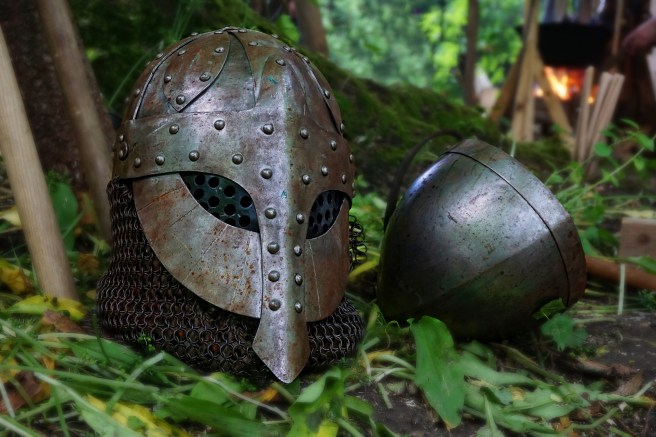
KNIGHT’S TRAP

image blitzmaerker/pixabay

I fell into the knight’s trap
Of trying to protect my mother
From my father

Nay
Of seeing things from her point of view
And refusing to look at them from his
Forgetting that he and I are the same –

A feathered castle is the strongest prison –

When I became a man too
Then I knew
That wittingly or unwittingly
She had simply divided father and son
For decades of lifetimes
And
Brought me together with my father
In my heart
Today.

A knight should free the maiden –
But then
Thereafter
He should remember
To free himself too
From the maiden
And ride back home
To his own castle.

Never stay.

– Che Chidi Chukwumerije.


image: blitzmaerker/pixabay

MANDELA, LEARNING FROM OTHERS’ MISTAKES: 9 – (Sharing Power and Passing It On)

(Lessons from the first (mis)steps following modern Africa’s independence)

History is the teacher of the wise. The irony of the squandered momentum of African independence is that many of our first generation independence leaders, like Nyerere, like Nasser, like Nkrumah, like Selasie, Senghor, Houphouët-Boigny, Kenyatta and the list gets longer, were unquestionably deep-thinking, patriotic, well-meaning, ideologically clear, passionately driven and courageous personalities and leaders, conscious of their calling and fired by a sense of mission. Their gravest mistake, however, was the one that Nelson Mandela was determined not to make. They disobeyed a law best expressed by a very simple African proverb: A tree does not make a forest. No matter how deep, great, and whatever other superlative you are, you alone cannot move your country forward. Everybody must be involved. Their deepest error was not economic, ideological or military – it was political. Politically they became, at best, one-sided; at worst, unilateral. But you cannot build upon a divided house. Especially when it is your calling to be the first in a new time. You must chaperone the building of the foundation for the future and lasting peace and unity of your country’s peoples. The most important first step for a newly dependent African country is unification, not divide-and-rule; reconciliation, not vindictiveness; healing of wounds, not continuation of ancient feuds. Like a practised reverse parker, the first duty of anyone who gets into power is – almost contradictorily – to prepare to relinquish that power. Only then will such a one wield that power wisely in all its poignancy and brevity. For power is always brief in the end.

In such a tribal kaleidoscope as Africa is, the primary light filter is unity. Politics derives its strength from unity and solidarity. But the leadership style of practically each of the first and second generation nationalist leaders and regimes in power almost invariably was a one-man or one-group show, authoritarian or dictatorial, forcefully exclusive of all opposition and adversary. Most of them stayed on in power endlessly until either they died there, were killed, overthrown or forced by events to hastily stage-manage a belated exit. The few who were able to avoid serious civil unrest, did it largely by their own mercurial powers of diplomacy, or sometimes by economic policies that uneasily delayed the effects of political disenfranchisement. Economic progress without political integration is a game of Russian roulette. Every downward swing simply reminded the people that they are not united – and each time, they placed the blame on their long-winded leaders. Ultimately even the most devoted, apparently successful leaders also had to make way in order for the democracy experiment to take their place. Democracy’s joke on those who wish to bring progress is that it requires of them, above all, simply to get out of the way. And thereafter to join in and participate in the building and maintaining of a system that ensures that others too, in their own turn will get out of the way also. Politics is not kind to permanent guests.

Re-enter Nelson Mandela, in South Africa – ten years after Zimbabwe, thirty years after the euphoric year of African so-called independence – a sadder and a wiser man. And a more determined one too. If ever, in the wilderness of history, the right person was at the right place at the right time, it was Nelson Mandela. History’s quiet thoughtful student. He knew what needed to be done, and he had the heart, the intellect, the character and the experience to not just do it, but also to inspire his people to go down that road with him. The road of inclusion. The path of reconciliation. The anchoring of democracy. A bold attempt at Peace, unity and democracy. The historical chance that Mugabe, despite the benefit of hindsight, had been unwilling or unable to grasp, Nelson Mandela hungrily and wisely did. Africa needs peace, not war. Upbuilding and liberty, not oppression and suppression. Unification, not fracturisation. Reconciliation, not vengeance. Because if we go down the path of vengeance, there will be no exit from its downward spiral – for everybody has also wronged somebody else irreparably somewhere down the line. But while Africans squabble with one another, the rest of the world is rushing ahead, not waiting for them to get their act together. And now they are encroaching back on Africa, economically, politically, militarily.

Che Chidi Chukwumerije.

… continued in Part 10/11:
MANDELA, LEARNING FROM OTHERS’ MISTAKES: 10 – (Jasmine Revolution and repeated mistakes)

Preceding chapters:
MANDELA, LEARNING FROM OTHERS’ MISTAKES: 1 (Preamble)
MANDELA, LEARNING FROM OTHERS’ MISTAKES: 2 (Egypt’s Modern Pharaohs)
MANDELA, LEARNING FROM OTHERS’ MISTAKES: 3 (Tunisian Troubles, Libyan Losses, Ethiopian Woes)
MANDELA, LEARNING FROM OTHERS’ MISTAKES: 4 (Sudan and South Sudan)
MANDELA, LEARNING FROM OTHERS’ MISTAKES: 5 – (Ghanaian Black Holes & Ivorian Time Bombs)
MANDELA, LEARNING FROM OTHERS’ MISTAKES: 6 – (Nigerian Nightmare & Congolese Chaos)
MANDELA, LEARNING FROM OTHERS’ MISTAKES: 7 (Ugandan Up-n-down)
MANDELA, LEARNING FROM OTHERS’ MISTAKES: 8 – (Angolan Angers, Zimbabwean Tragedy and a host of others)

MANDELA, LEARNING FROM OTHERS’ MISTAKES: 6 – (Nigerian Nightmare & Congolese Chaos)

(Lessons from the first (mis)steps following modern Africa’s independence)

Nigeria’s case, considering her human and natural resource potential, is especially pathetic. One of the most mineral rich countries in the whole world and probably the most educated nation-space in Africa, high hopes were pinned on her future. Before he died in 1946, Herbert Macaulay had already for more than two decades championed, stoked the fires and laid the political foundations of Nigerian nationalism. But Nigeria’s greatest strength was also her most paralysing weakness: Diversity in number. A mind-blowing total of over three hundred tribes speaking as many or more languages, additionally split between Christians, Muslims and Animists, with a long pre-colonial history of competition, are indigenous to the most populous black country on earth. As victory in the push for 1960 independence from British rule approached, politics blatantly and shamelessly degenerated into ethno-regional-religious do-or-die contests. Macaulay’s successor, Zik of Africa, eventually abandoned the national canvas and, following the examples of the other regional leaders, retreated into ethno-regional partisanship. From all sides of the federation the message was clear and unambiguous: Pan-nationalism and one-nigerianness were henceforth dead and buried. Political leaders, including the Prime Minister, were seen each by the other regions as simply representing the interests of their regions, tribes or religions. From then on, the Nigeria project became purely a treacherous, mistrustful, coalition poker, a serpentine dance on shifting sands, a volatile cake to be unevenly divided or stolen whole, a mad dash for power. Corruption and selfishness flourished. Nigeria’s stupendous mineral wealth turned into a curse. In the contest for political, economic, resource and military advantage, there was no loud, strong, unifying, pacifying, blending voice. Instead there was a deafening dearth of Will to see themselves as one great people, to detribalise and de-religionise the nation-space, to inculcate national values, to forfeit any right-to-rule mentality, to foster trust amongst one another. There was no leadership effort to awaken in the peoples a sense of being one people, a purpose to being one people, a will to become one people in an equity-based democratic independent African nation. Like an unstable atom, Nigeria wobbled and broke down. Rigged elections, violence, coups, pogroms, civil war, military dictatorships, failed democracies, tribalism, religious violence, calls for cessation from all sides, annulled elections, distrust, disunity, accusations and counter-accusations, all underlined by corruption and financed by Nigeria’s oil reserves – this would consequently be Nigeria’s fate for the next forty years after independence. Wounds and positions from the past still plague the national dialogue, unreconciled, even to this day. Great problems need great minds. Great opportunities require great courage. On independence morning, Nigeria’s leaders proved themselves unable to dream big and visionary, to grasp the spear of destiny inadvertently handed to this unique black nation and to overcome the temptations of regionalism. Nobody was willing to be the one to forfeit regionalism in the interest of nation-building. No-one was brave enough to bell the cat. Nigeria was not plagued by one lifelong dictator; she was and is plagued by one lifelong streak of power-lust and plunder.

Congo, another stupendously mineral-wealthy country, did not even make it past the first few months of independence before intense internal disunities thrust it into the path of civil war, coups and dictatorship. Lumumba, quite simply, never had a chance. Belgian interests and American intelligence were bent on his demise. In the face of outside opposition, the only chance of survival anybody ever has is the unity, support and backing of his people. But, of all the independence era African leaders, probably none was a greater victim of the internal disunity of his country’s tribes and peoples than was Patrice Lumumba. But he was not victim alone. His fiery, fearless and forthright nature – his greatest asset as a freedom fighter and anti-imperialist champion of independence – became his tragic, if heroic, Achilles’ heel once the Congo attained independence and was left to itself, with him as its executive head. Not reconciliation and de-escalation were his modus operandi – such were not in his revolutionary nature. His message was resistance, retaliation, elimination and conquest. His fazit: Congo was full of local and foreign enemies, and they all had to be eliminated or booted out. Fullstop. When the U.N. – whose peace-keeping troops had, at his behest, come into his country with lightning speed – seemed unwilling to help him squash his enemies in the manner he desired, he loudly turned to communist Russia for help, inadvertently touching a raw nerve in global Cold War politics. He was punching way above his weight. Thus, his fate – and that of the Congo – was sealed right from the start. His fellow Congolese, aided by Belgian troops, captured him, held him without trial, tortured and executed him, and hacked his body to pieces; but that too brought no peace. The rest is history. The Congo, alias Zaire, has since then been the plaything of coups, interventions and dictatorships, the most infamous – but not last – of which was under Mobutu Sese Seko. After once suffering and surviving the dark horrors of Belgian oppression and exploitation, the mineral-rich Congo today still remains a tricky multi-ethnic hotbed of internecine guerrilla activity, civil war and internal disunity.

Independence, again and again, is followed by national disorientation and national soul-searching, by disagreements, civil strife and civil war. Even after the fight for political liberation has been won, the acteurs march on in the same spirit of war – hunting saboteurs, persecuting opponents, sidelining adversaries, undermining competition, underdeveloping out-of-favour regions, and taking revenge on defeated former oppressors. In Africa, rather than triggering a united, popular, constructive march towards self-dependent development, political independence exposed and fed a glaring unwillingness or incapacity to unite, to make use of the various strengths of the various components of the nation, to apply the pragmatic common sense and make the tough sacrifices and compromises required to achieve a functional political unity. What became visible was a frightening failure to grasp the concept of the one, big, strong, united Whole, shared by everybody and not just dominated one-sidedly by a few. An integrated Whole to which, and for which, each individual is responsible and free. Instead, under the conditions as they were, all that could flourish were OPPRESSION and CORRUPTION, DISTRUST, CONFLICT and, eventually, DISINTEGRATION. Independence, in the cruel irony of the ways of fate, brought with it more challenges than colonialism ever faced us with, and we were not prepared for them at all. Just as today also, despite the benefit of historical hindsight, South Sudan too was not prepared for the internally disruptive forces that are always set free by independence.

Che Chidi Chukwumerije

… continued in 7 of 11:
MANDELA, LEARNING FROM OTHERS’ MISTAKES: 7 – (Ugandan Up-n-down)

Preceding Chapters:
MANDELA, LEARNING FROM OTHERS’ MISTAKES: 1 (Preamble)
MANDELA, LEARNING FROM OTHERS’ MISTAKES: 2 (Egypt’s Modern Pharaohs)
MANDELA, LEARNING FROM OTHERS’ MISTAKES: 3 (Tunisian Troubles, Libyan Losses, Ethiopian Woes)
MANDELA, LEARNING FROM OTHERS’ MISTAKES: 4 (Sudan and South Sudan)
MANDELA, LEARNING FROM OTHERS’ MISTAKES: 5 – (Ghanaian Black Holes & Ivorian Time Bombs)

MANDELA, LEARNING FROM OTHERS’ MISTAKES: 5 -(Ghanaian Black Holes & Ivorian Time Bombs)

(Lessons from the first (mis)steps following modern Africa’s independence)

There is a brief moment of opportunity, in the hour of freedom and liberation, when the momentum that is presented by the formation or regeneration of a nation-state gives to its chief policy-makers, its opinion-shapers and its mass-leaders the rare chance to hammer a brave new impulse deep into the orientation-seeking psyche of the nation and shift it unto a path of mutually supportive and constructive upbuilding. It is a moment in time, a window of opportunity. If missed, a sequence of events is set into motion which makes it progressively difficult to recapture the momentum and the opportunity. If grasped, however, the same occurs, in the opposite, positive, direction. Nelson Mandela and South Africa recognised it and took a chance on it. The leaders of South Sudan, so far, seem blind and immune to it. South Sudan has simply joined the long list of African nations in which independence was followed by disorientation, dis-unification, breakdown and destabilization. Examples, as I said, abound.

In Ghana, Africa’s black star, Kwame Nkrumah weathered hefty colonial resistance and, even from within the walls of his unjust imprisonment, forced and triggered Ghanaian independence, and then came to power in a blinding blaze of glory that inspired nationalistic fervour all over the continent, further fuelling the thirst for independence in Black Africa. Nkrumah’s impact on the socio-political psyche of Black Africans then and now cannot be over-emphasized. No other African independence leader so charismatically inspired, articulated and harnessed revolutionary zeal, Black intellectual nationalistic self-confidence, and absolute disdain towards all forms of dependence and imperialism like Nkrumah did. He championed the search for innovative solutions to Africa’s economic problems and went ahead trying to implement his. He recognised the danger of tribalism and put forward policies to reduce its detrimental effects. He was the very spirit of pan-africanism, a driving force behind the forming of the OAU. But, while calling for pan-african unity on the continental stage, in his own country he banned opposition political parties, nationalised as much of industry as he could, put price controls in place, centralised power and placed his faith, like his friend Nasser did, in his own indigenous socialism hybrid. The toast of praise-singers and sycophants, he trusted no-one and placed the entire country under his personal control. He sunk huge sums into forward-looking industrialization schemes, but most got mismanaged by a dizzying number of state corporations that sprung up like mushrooms. Convinced that these and other unilaterally decreed measures would lead Ghana to the promised land, he never wavered in his fervour. The speedy decline of the Ghanaian economy which followed in the ensuing years was staggering and painful to all lovers of Africa and Ghana. Six years after independence, Ghana’s reserves stood at a shocking £500,000. Patronage and corruption flourished, discontent, division and internal resistance grew, the unwanted was ostracized, opposition elements imprisoned and silenced. There was no blueprint for an alternative solution or for a reshuffling of executive responsibilities. In Ghana, all roads led through Nkrumah. Less than ten years after his triumphant entry, in a country that had become riddled and debilitated by corruption and poverty, Nkrumah was unceremoniously overthrown in a coup d’etat, which was followed by another coup d’etat… then eventually by another… and Ghana was spiralling down a pit of retrogression unimaginable as at the time of her trail-blazing independence in 1957. It took decades before Ghana understood the painful lesson of the bitter pill of militarism and one-sided pseudo-democracy, and gradually began to build anew a new truer democracy, a wasteland of wasted decades scarring its history.

In Cote d’Ivoire, Félix Houphouët-Boigny, feeling himself to be ideologically superior to Kwame Nkrumah, made a bet with Nkrumah as to which of their two nations would be better developed within the decade that was to follow. And, at first he might have seemed to have won the bet. He avoided communism like the pest and predicted, already way back in the sixties, the Chinese invasion of Africa. He was one of the few independence era leaders who went the way of economic liberalism. Spurning nationalistic zeal, he stayed in close contact with the French, his country’s former colonial masters, and gave French capitalistic endeavours a freehand in the Ivory Coast. Apart from that, he did nothing different from all the rest. The self-acclaimed Crocodile kept a steely grip on government, permitted only a one-party state, devoid of democracy. He made no attempt to anchor democratic principles of equity, opinion-sourcing, power-sharing and broad engagement. No empowered participation, rotation of responsibility, the sharing of leadership responsibilities, socio-political unification of differing tribes and religions, the internal blending of a nation into one people. For twenty years no elections were held in Cote d’Ivoire, as Houphouët-Boigny cleverly left the country under the hypnosis of French economic control while perfecting the art of neutralising his opponents and critics by giving them tantalizing little morsels of pseudo-power in a system utterly dominated by him and him alone. For over two decades it seemed to work. When the collapse came, it was swift, brutal and sobering. Global prices of Ivorian exports like cocoa and coffee plunged. Oil prices shot up. French businesses repatriated their money to France. The Ivory Coast was bankrupt. Inspite of all his efforts, Cote d’Ivoire’s economic self-reliance never materialised; and now that the bubble had bust, the missed opportunities in true political and democratic maturation became apparent. As Houphouët-Boigny’s health declined, “heirs” to the throne began to jostle for position. By his death, in office, in 1993, as the third longest serving leader in the whole world as at that time, the long ignored internal chaos and disharmony was all he left behind. What had once seemed like a model became exposed as a mirage. It was simply a case of delayed reaction. Cote d’Ivoire too eventually went the way of Nigeria, Ghana and so many others – coups, corruption, unrest, civil war, militant dictatorship, ethnic enmities, religious rancour, and division. Neither Cote d’Ivoire nor Ghana was better than the other. They were in the same boat.

Che Chidi Chukwumerije

… continued in Part 6 of 11:
MANDELA, LEARNING FROM OTHERS’ MISTAKES: 6 – (Nigerian Nightmare & Congolese Chaos)

Preceding Chapters:
MANDELA, LEARNING FROM OTHERS’ MISTAKES: 1 (Preamble)
MANDELA, LEARNING FROM OTHERS’ MISTAKES: 2 (Egypt’s Modern Pharaohs)
MANDELA, LEARNING FROM OTHERS’ MISTAKES: 3 (Tunisian Troubles, Libyan Losses, Ethiopian Woes)
MANDELA, LEARNING FROM OTHERS’ MISTAKES: 4 (Sudan and South Sudan)

MANDELA, LEARNING FROM OTHERS’ MISTAKES: 4 – (Sudan and South Sudan)

(Lessons from the first (mis)steps following modern Africa’s independence)

Those who have a knowledge of post-independent Africa will, sadly, not be surprised by the turn of events in South Sudan today. Macabre, but true. Indeed, they would have expected it and, like Mandela and his team, and they would have prepared for it, to try and avert it. South Sudan’s road to independence has been long and winding. She began her life in the modern African world as a region of an arab-dominated Sudan which was herself the joint colonial property of Egypt and Britain. Even before their first modern independence – that of Sudan from Egypt and Britain – Sudan was divided into an arab-speaking islamic north on the one hand, and on the other hand a south full of a myriad black tribes speaking different tongues, mainly Christianised, partly adherent still to ancient African religions, and basically lacking a sense of united nationhood amongst themselves. What united them was their wariness of the north in the face of a long history of slavery and jihadic wars; whereas the north itself was focused on achieving independence from its external colonisers. And independence indeed eventually came, but it did not bring peace with it. Acrimony between military and politics, disputes between Marxists and non-Marxists, moslem-christian religious animosities, and the distrust between north and south, ensured that years of coups, civil wars, genocide and violent disunity would follow. Decades after independence, seemingly unable or unwilling to find a lasting workable peace between north and south, in 2011 they parted ways acrimoniously. Soon after, in the newly independent and sovereign South Sudan, the very same quarrels, accusations and maneuverings that had plagued newly independent African countries five decades earlier, reared their stubborn heads here too and South Sudan degenerated into a hydra-headed civil war. Finally, the tribes of the South, lacking any other external adversary, seemed all too willing to turn their guns on each other and destroy what it now seems that they never had nor ever really tried to cultivate during the decades of tribulation: internal Oneness, inter-tribal political unity. And, unfortunately for them, it seems that they, too, have no Madibas amongst them.

Take any African region, north, west, east and south, and study its collective post-independent or post-liberation history. Examples abound, enough of them. The wound cries out like a disjointed pack of scattered wild voices screaming from a burning house: the lack of reconciliation; the lack of representative, inclusive democracy, of socio-political unity. Some will call it the lack of national common sense. In Africa, for some reason, political office is not voluntarily terminal, whether or not the constitutions stipulate such, and power is not shared. Leaders seem to love only the concept of their country, the fact of having a country, but do not also love all the peoples of the country, their welfare, their liberties and their peacefully united future – not if it requires that the rulers and their support groups themselves equalise themselves with the rest of the country and subject themselves to a rule of law that stands above everyone. Instead, everybody wants to grab the crown, and sit on the throne, and then ostracize, under-develop and punish his enemies. No matter what effects this has on the country in the long and short run.

– Che Chidi Chukwumerije.

… continued in Part 5 of 11:
MANDELA, LEARNING FROM OTHERS’ MISTAKES: 5 -(Ghanaian Black Holes & Ivorian Time Bombs)

Preceding Chapters:
MANDELA, LEARNING FROM OTHERS’ MISTAKES : 1 – (Preamble)
MANDELA, LEARNING FROM OTHERS’ MISTAKES : 2 – (Egypt’s Modern Pharaohs)
MANDELA, LEARNING FROM OTHERS’ MISTAKES : 3 – (Tunisian Troubles, Libyan Losses, Ethiopian Woes)

MANDELA, LEARNING FROM OTHERS’ MISTAKES : 3 – (Tunisian Troubles, Libyan Losses, Ethiopian Woes)

(Lessons from the first (mis)steps following modern Africa’s independence)

In Tunisia, in the so-called French Maghreb region of North Africa, Habib Bourguiba endured imprisonment and persecution, bravely kept up the struggle for liberation, and eventually led the country to independence in 1956, pushing the French out of the political helm of affairs in Tunisia. He applied himself to the economic betterment of his country, experimented with socialist models and, when they did not yield the desired results, switched to more liberal economic strategies. Internationally he was very concerned about securing an Israeli-Palestinian peace deal. In the mean time, however, politically he set about instituting himself as the sole authority and system in Tunisia. He pushed through a constitution that gave him near dictatorial powers, and was eventually elected “president for life”. He maintained an authoritarian regime until, after more than three decades as president, a doctor declared him medically unfit to rule any longer. Ben Ali, his minister, succeeded him and he too applied himself to Tunisia’s economy, more than tripling its GDP within a twenty-year period. Politically, however, he too went down the road well trampled. He spent the next twenty-four years refining and perfecting his control over state and government, stage-managing elections, persecuting opposition, blocking free speech and incessantly perpetuating himself in power. But the long arm of the people’s fury, come to fruition in the Jasmine revolution, eventually caught up with him and his cohorts, at long last, in 2011.

Apart from in Egypt, the Tunisian revolution also triggered a similar revolution in neighbouring Libya, which historically has also not fared better, plunging that country too into riots, bloodshed and conflict, leading to the overthrow and death of their own once-liberator turned lifetime-dictator, Gadddafi. Today, more than five decades after modern independence, the present generations of these countries have to struggle desperately and painfully in a volatile, polarised, changing world, to attain what their Independence-generation failed to do: to motivate all sections of their populace into finding, anchoring and practicing a sustainable self-rotating form of representational constitutional democracy, one in which tolerance and reciprocal respect of differing wishes, inclusion, reconciliation and rule of law, within the context of a global modern world, hold sway.

In Ethiopia, Emperor Haile Selasie enjoyed the reputation of being the head of the only nation in Africa that was never successfully colonised. In the 1930s he courageously resisted Mussolini and the Italian invasion and then continued to rule Ethiopia, as Emperor, for many more decades to follow – until in a 1974 coup he was overthrown and dethroned, and then imprisoned in his own Grand Palace by his own people, where he died a few months later, a lonely old man. In his many long decades as leader of the Ethiopian Empire, he had fired the imaginations of Africans and Blacks all over the world, and hosted and reigned as founding chairman of the Organisation of African Unity. He inspired religions and movements, stood as a bastion of global racial equality and dignity, abolished slavery, and pumped much time, effort and the scarce financial means available to Ethiopia into a forward-thinking infrastructural modernisation and industrialization effort. Only one thing he did not do: show any interest in a political game-changer that would replace the monarchy with a true representational democracy in which all the different peoples, classes and sections of the nation would have, and unitedly administer, a joint stake. Civil wars with Eritrean, Oromo and Somali liberationists destabilised the state; a state in which Selasie ruled over and decided everything – administrative, adjudicative, financial, military and ministerial – an autocratic monarch. After the Wollo droughts and the famine came in the late sixties and early seventies, the disconnect between the leaders and the peoples tore the old establishment down. The army mutinied, popular revolts tore through the streets, and strikes and demonstrations paralysed the land. Emperor Haile Selasie was eventually deposed – after almost six decades as Ethiopia’s leader – and a new dictatorship under Major Mengistu took his place. Post-Selasie Ethiopia was then plunged into years of coups, dictatorship, Red Terror, uprisings, dispute, war and violence – all compounded by drought and famine. The Emperor had never built or championed a political system that could harness the patriotic, broad, representative efforts of the whole country’s peoples towards peacefully and constitutionally finding and executing a joint self-sustaining, rotational solution to their problems. He left a divided, politically adrift nation behind. Ethiopia was thus cruelly and ironically sent back to square one, despite its great history and iconic leader.

Che Chidi Chukwumerije

… continued in Part 4 of 11:
MANDELA, LEARNING FROM OTHERS’ MISTAKES: 4 – (Sudan and South Sudan)

Preceding Chapters:
MANDELA, LEARNING FROM OTHERS’ MISTAKES: Part 1 (Preamble)
MANDELA, LEARNING FROM OTHERS’ MISTAKES: PART 2 (Egypt’s modern pharaohs)

MANDELA, LEARNING FROM OTHERS’ MISTAKES: 2 – (Egypt’s modern pharaohs)

(Lessons from the first (mis)steps following modern Africa’s independence)

History is the teacher of the wise, and Mandela himself proved to be a good student – for he had many dramatic examples to learn from. Long before South Africa’s struggles for liberation from apartheid yielded fruit, other African nations had shot out of the starting block, propelled forward by the momentum of independence and freedom, to grapple each with the daunting task of forging a modern nation-being. It reads like a soap opera, one unresolved episode after another, with dependable repetition. A few examples suffice:

In newly independent Egypt, the leader of the revolution Colonel Nasser, despite his political victories against Britain, his Suez heroism and his Sinai vicissitudes, despite his enduring popularity at home and abroad, his inspiring effect on colonised nations worldwide, his influence on the afro-arab stage and the cultural boom that his tenure occasioned, was reluctant – when it came to internal affairs – to allow or foster the blossoming of a political system in which his personal power was anything less than absolute. He crushed all opposition parties, be they communists, capitalists, muslim brothers or any other grouping critical of him. He imprisoned thousands of opponents, including some who had been his comrades in the revolution. He centralised the planning of the economy, nationalised industry and everything he could nationalise, controlled both state and government, and placed a tight grip on all types of unions and institutions, from academic, to religious, the media, to the youth. He became, in effect, the modern-day pharaoh. By the time he died, in office, in 1970, after fourteen years as president, he had written his name eternally into the history books of not only Africa, and had attempted to industrialise and modernise Egypt; but also, portentously, he had practised largely only political repression during his reign. He did not use the momentum of liberation to propel all sides of the country into the forging of a political culture of unity and inclusion. Very simply, he had omitted to lay the foundation for a balanced political system of representative, rotational, shared democracy – an omission, the after-effects of which still plague a restless, internally unreconciled Egypt to this day. Nasser was succeeded by another military veteran, Sadat, after whose assassination many years later another soldier, Mubarak, took over. In 2011 the people arose in a popular revolution against him. The Revolution culminated in the election of the Muslim Brotherhood’s Mursi who, after more violent protests, was ousted in a coup-d’etat by his own head of Armed Forces Abdel Fattah el-Sisi who in turn a year later transformed from Military leader to civilian president in an election boycotted by most other political parties. Despite being one of the most ancient civilizations of mankind, and an independent modern nation, Egypt is today still struggling to find internal reconciliation, peace and socio-political harmony.

– Che Chidi Chukwumerije

(Continued in Part 3 of 11:
MANDELA, LEARNING FROM OTHERS’ MISTAKES : 3 – (Tunisian Troubles, Libyan Losses, Ethiopian Woes)

Preceding Chapter/
MANDELA, LEARNING FROM OTHERS’ MISTAKES: Part 1 (Preamble)

MANDELA, LEARNING FROM OTHERS’ MISTAKES: 1 – (Preamble)

(Lessons from the first (mis)steps following modern Africa’s independence)

It sounds like a myth now. They say South Africa was on the brink of civil war after the release of Mandela and the collapse of apartheid. Civil war? Really? The Zulus and the Xhosas were heading for tribal war? And, simultaneously, the blacks against the whites in racial massacre? Well, it is true that it all sounds a bit far-fetched to some people now… because it did not happen. Because Mandela opted for reconciliation and spearheaded an intense drive to find a common basis for all to live, share power and face the future together. But, as far-fetched as all this may seem today, it was actually the most likely turn that events would have taken, based on the history of African so-called independence. This is a history that Mandela, and those who thought like him, knew all too well and, like wise people do, gravely feared. It is a history replete with the educative one-two punch of the strong heady wine of independence, liberation and freedom, eventually followed by the bad-tempered and moody hangover of disorientation, destabilisation and crisis.

Independence, all too often, is followed by civil strife and civil war. On all continents, in different eras, there abound records of great and small nations who have been unable to avoid this cliff in the arch of their history. When a nation-space has been oppressed or suppressed for a long time, it exhibits the properties of a socio-political pressure cooker. Once the lid of suppression is lifted, tumultuous explosions sooner or later follow as the various agendas and sensibilities of its component parts push to the fore, each demanding fulfilment. It requires strong-willed, knowing, conscious leadership to harness the liberated energies and channel them into constructive upbuilding. The opposite would mean a repetition of the same wild implosion into self-destruction witnessed after independence in many African countries, and as is happening right now in South Sudan. It is a pity that more than two decades after the fall of apartheid, Mandela’s example has not been understood and internalised by many other African peoples, personalities and groups still trying to find the most conducive forms of post-independent co-existence.

– Che Chidi Chukwumerije

Continued in Part 2 of 11:
MANDELA, LEARNING FROM OTHERS’ MISTAKES: 2 – (Egypt’s modern pharaohs)

HERDING INTO AN UNKNOWN FUTURE

Last year, President Buhari arrested Nnamdi Kanu, accusing him of urging Easterners to arm and protect themselves.

Today, ARMED herdsmen from our president’s own ethnic group have started falling on those same unarmed Easterners and on other unarmed peoples of Nigeria, killing, maiming, raping and slaughtering them and forcefully taking over their land. The spike in these activities has been all over the news for months, and rumours now abound that there is even a secret bill in the making to legalize the unconstitutional one-sided freedoms of these armed herdsmen.

President Buhari has not arrested or brought to justice any of his own armed kinsmen and fellow herders. Infact on this issue he has been uncharacteristically soft-spoken for an ex-soldier who has severally fumed of how he will use the military might and intelligence of Nigeria to crush any violent or armed groups within the country.

If this is not the cold cynical Conspiracy that it looks like, then it is a case of a president turning out to be more clueless, inefficient and inadequate than he accuses his predecessor of being. Choose one.

The world is moving ahead, leaving Africa behind to continue to wallow in our ancient small-minded animosities. The OAU was founded in 1963, yet Africa is still not united and still not honest with itself. The Biafran War ended in 1970, but Nigerians still don’t trust one another. We are in the fourth republic, but the law and the constitution are still being interpreted selectively. Caught between the opposites of Meritocracy and Federal Character, we have not yet solved the basic puzzle of what form our democracy should take in order to succeed long-term.

The Age of Oil is slowly coming to an End. During these decades of global oil-dependency, certain Non-African oil-producers have used the proceeds of the Oil Trade to catapult their nations from the dregs of primitive rural backwardness into mind-boggling heights of beauty, industry and technology. Today while we pathetically and anxiously monitor the price of oil daily like mindless helpless victims of a system beyond our control, some scientific nations are investing heavily in New Energy, rushing at a feverish pace to hurriedly create a parallel technological space that will eventually replace the fossil-fuel-based technology and infrastructure of yesterday. The economic dynamics of tomorrow will not be kind to Nigeria and Africa.

In the arena of social and cultural engineering, upheavals are rocking the universal human soul which will shape the global social dialectics of tomorrow. Displacement, migration and integration have become issues facing more and more nations and societies. Peoples and ideologies that have always been strangers to one another and seemingly mutually incompatible are now locked in an intense discussion on how to co-exist peacefully within the different contexts of their different social systems and nation-types. Those who bring the solutions will be those who rule the future.

Rapid advances in the synergising of equally dizzying advances in new forms of information and communication technologies keep opening up wider and more customisable possibilities for any person, groups of persons, peoples or nations who really want and are committed to progress – to source out, engineer and implement the solutions they need. Living in the transitional era of the matrix of all these forces, the times could not be more conducive for progressive African minds to finally achieve the leap out of the state and the sad image of a non-producing, non-inventing, self-oppressing, corrupt, beggarly continent to a self-dependent, socially secure, rights-protecting, technologically inventive part-carrier of the future. Knowledge, once the rarest and most sought-after power-broker in the world, has become a cheap commodity easily available to any serious seeker.

In the midst of all this, it is the more primitive problems that continue to bog us down. Ill-health, lack of education, corruption, power-abuse, tribalism, broken infrastructure, the lack of basic amenities, the lack of social security, the lack of a tourism industry, the lack of a culture of incubation of ideas and new technology, issues of human, civil and minority rights, insecurity, and the list goes on. And at the top is the baffling question of the paradox of why Nigeria, an African country, should make herself the crude battleground of two imported world-religions. At these present cross-road where only UNITY gives us a fighting chance to catch up with the global shift in technology and social re-engineering taking place. My favourite song in my village has very simple lyrics – “Idinotu, o bu ya bu ike.”: UNITY IS STRENGTH. When will African “Muslims” and African “Christians” figure out this little trick?

In an integrated world in which diasporan Africans globally are increasingly looking to the motherland as a source of inspiration, a fountain of ancient knowledge, a bedrock of self-respect, and a field of new progressive activity, self-mockingly the continent is momentum-wise worse off now than at the dawn of independence.

And now Fulani herdsmen have joined the fray in expansionistic dimensions last seen only before colonialism, taken up their walking sticks and their new sophisticated firearms and started brutally doing everywhere in the country the very thing the President said he would never condone or allow under his watch. Lailai.

We are watching. Africa is watching. Quietly?

– Che Chidi Chukwumerije.