NEEDED: QUANTUM LEAP IN OUR LIFETIME

Nigeria IS a Crisis.

It‘s been almost 50 years since the civil war ended; … and today someone was dejectedly complaining of being without electricity for 24 hours straight – and of just feeling as if she was still in the civil war devasted Biafra zone where everything broke down under the onslaught of war. Sitting in the dark. Feeling unsafe. Not knowing when the Danger will manifest. But you know it’s out there, coming at you, waiting for you. Nervous about the present and the future. All you have is just your resolve to survive, and the depressing certainty that the difficulties are far from over. You struggle to find hope. Only the super rich can afford a more or less uninterrupted self-supply of the basic necessities. Normalcy becomes a luxury. But this is not Biafra 1969. This is Nigeria 2019. On the day on which you should celebrate in exhilaration, you just feel miserable as you see the state of your country.

Almost 50 years after the Civil War. From Gowon to Murtala to Obasanjo to Shagari to Buhari to Babangida to Shonekan to Abacha to Abdulsalami back to Obasanjo on to Yar‘adua on to Jonathan … back to Buhari. It‘s like we have just gone round in a vicious circle back to darkness and hopelessness and sadness. On Independence Day, on Nigeria‘s 59th Independence Day – and in fact a full 121 years after street lights were first installed in Nigeria – millions of people in Nigerian towns and Nigerian villages are sitting in darkness in their homes on Independence Day 2019. This is Nigeria‘s sad and shameful report card.

People, we need a QUANTUM LEAP forward. But this is the question: Who will trigger it? Who will chaperone and manage it? Who will deliver and anchor it, and safeguard it and programme it with the software of the internal logic of self-perpetuation, so that it will keep on leaping forward henceforth? The people who created Nigeria did not design it for the people who live in Nigeria today. We were not on their minds. Nigeria was designed to function as a Colony, not as a self-governing Entity. At so-called Independence in 1960, the White leadership of that Colony was simply replaced by Black leadership. But a Colony by nature it remained and still remains until today.

And because Nigeria, at its heart, in its design, in its internal logic, and in its set-up, is still a Colony and is still wired like a Colony, it thus lends itself most easily to be conquered by and to be subservient to imperial leadership, to ANY imperial Leadership. And that is why any tribe or clique or gang or cabal that is versed and experienced in the ways of Imperialism will always find it easy – both in military and in civilian times – to work their way into the center of government and snatch the power and keep it to themselves, and there will be no mechanisms or dynamics or institutions in place to stop them from doing this. Even Democracy by itself will not stop them. Because Nigeria was designed for just this purpose: to be ruled by an Imperialist. The foundational nature of the animal itself, Nigeria, is that it was designed not to be a free King in the jungle, but to be the broken, driven, crazed and manipulated servant of an Imperator. Always remember this. This will explain to you why power, real power, always keeps returning to or remaining with a certain type of people. This is the DNA of Nigeria. Imperialists understand this. Republicans don‘t.

Until this system is broken up, a new kind of nation-being will not break through from our midst. A new kind of leadership will find no space to emerge. A new philosophy of followership will not be able to manifest itself. The united upbuilding will not take place. We all feel the right way things should be done – but the system just keeps on sabotaging every new attempt to correct Nigeria.

How much longer can Nigeria bear the weight of this chain? The World is galloping ahead. And one day the difference between where Nigeria is and where Nigeria should be, will tear Nigeria apart. If it ever comes to that, which would be the worst catastrophe that would have ever hit Africa, then, from the broken parts left behind, Biafra will strive again to rise again out of the darkness into which war once plunged her, rise again, rise up like the Rising Sun.

And I bet you, others will do the same too. Unless Nigeria can make that Quantum Leap, in our lifetime, away from the imperialism-prone colony-at-heart country she still is, and restructure herself into a balanced continuum that liberates her peoples’ internal powers of invention, organisation, self-correction and equal-footed association which can propel her forward. Forward into that future that is about to leave us behind.

– Che Chidi Chukwumerije

A SPIRIT YOU CANNOT TOUCH

Nigeria bears the stigma of being a foreign Creation. This might not be clear to many Nigerians today. But one day, way into the future when a critical mass of a more mature and self-aware crop of Africans have arisen in that space today called Nigeria, then the contradiction and the insult embedded in the concept of „founding fathers“ will become clear to them. Especially when they ask: so who exactly was the first, the original Founding Father? Lord Lugard?

He created One-Nigeria, as a concept and a constitutional unit, and pieced and put it together. But what other creative forces lurk behind the pieces of what he put together?

Now, ever since 1914 Africans have tried to usurp Lugard‘s creation, to give life to it according to their understanding of what they feel should be the best way that this creation can work for them – each according to his own idea – and to steer the ship of its destiny. In doing so, however, they often disregard – as though it were unimportant – the very REASON why Nigeria was put together. The assumption of some that this reason is now obsolete or only of historical importance is however very fatal, because it prevents them from understanding why Nigeria still functions today the way she functions and will continue to function – driven by her internal foundational dynamics and aided by her European creators and other foreign friends – unless this raison d‘etre, which translated into her very modus operandi – is substituted or outgrown.

In Frederick Lugard‘s famous words:

„What we often call the Northern Protectorate of Nigeria today can be better described as the poor husband whilst it’s southern counterpart can be fairly described as the rich wife or the woman of substance and means. A forced union of marriage between the two will undoubtedly result in peace, prosperity and marital bliss for both husband and wife for many years to come. It is my prayer that that union will last forever”.

This well-known colourful quote, however, although it theatrically spells out the economic raison d‘etre of Nigeria (North, keep your wealth; Southern wealth will be used to finance both them and you), it distracts from another – even more vital – piece of information, and that is: the WAY and MANNER in which this coup was to be maintained. Namely, not the southern system of administration was extended north, but – more tellingly – the northern system was extended south. Much to the chagrin of Southern intellectuals, who did all they could to resist it – in vain. It was thus the British who subjugated the South to the North.

The very philosophy and ideology of Nigerian government, from the start, was based on that which the British Colonial authority had devised in harmony with the Northern traditional structure. Basically: in the North, unlike in the South, the British Colonial Power never took away actual sovereignty from the Northern rulership structure. It allowed them to keep it and then ruled the area indirectly through them, allowing them to act as willing agents to the extent that they the Northerners allowed. This is what we learn in school as having been „indirect rule“ in the North. This is why the Northern Protectorate always had a fiscal deficit and was always broke – because the Northern Emirs resisted the British imposed taxes. It is important to understand this: It was not the NORTH itself that was poor; the North was never poor, even though – yes – greater mineral wealth lies South, it seems. But it was the British-created BRITISH PROTECTORATE OF NORTHERN NIGERIA (i.e. the administrative entity) that was poor, because the subjects (Northern traditional rulers and their merchants) refused to fund it, but rather kept their wealth and taxes to themselves. Thus the needed money for running the Protectorate had to come from somewhere else: namely, from the South.

Now we come to the South. Here, in the South – unlike in the North – the indigenous primordial sovereignty of Southern Rulership was broken as a power base and replaced with direct British rule. Thus, here the Colonial Government had direct access, backed by direct force, to the mineral and labour wealth of the South. Thereafter they handpicked mostly malleable agents as their servants in the execution of this direct rule in and direct plunder of the South; a portion of the spoils was used to run the South, a large part of the loot was sent North, and the rest they kept to themselves and Britain. In other words, whereas they had adjusted to accommodate unmalleable Northern Leaders further inland in the North, they crushed the easily accessible Southern Leaders in the South and largely replaced them with malleable stooges. This caused great unrest and created a permanent internal instability in the South that has remained to this day, whereas it was the opposite in the North: Under the frail cloak of pseudo British colonialism, the primordial indigenous sovereignty of the North not only stayed intact, but retained the self-established form that had over a long time concretised mainly under Fulani dominion in those approximate areas.

When decades later in the aftermath of WW2 the independence struggle grew exponentially and it became clear to the Colonising power that some form of visible withdrawal from the driving seat had become inevitable, the question now was: Within which power dynamic should Nigeria, their creation whose modus operandi they understood best, be situated and then left behind. – In the hands of the unstable, wealthier, South into the Heart of whose authority-structures the departing British would have no reliable link or hold? Or in the hands of the stable reliable North with whom they had built up a working relationship perfected around an understanding and a system of joint subjugation and plunder of the South? It was an easy choice to make. Thus one can say: the British conquered the South on behalf of the North, in order to leave the South in the hands of the North and then share the South with the North. It seems the southern woman of means was never meant to be honourably married at all, but simply to be a free-for-all double-penetrated Geisha.

The lack of unity in, and naïvety of, the South after independence played even further into the hands of the North. The squabblings, the distrust, the well-meant coup, the naive constitutional change. Like inadvertently pushing a tiny splinter of wood deeper into the sole of your foot the more you try to remove it.

The question however might then be: WHY did the British find it hard to conquer the North, but easier in the South? Was it just because of the distance inland from the Atlantic Coast? Partly. But there was another, and more fundamental reason, and it‘s this: The North had ALREADY been conquered and was under a uniform authority. Islam had already conquered the North and held it together via its agent of conquest, primarily the Fulani of the Sokoto Caliphate to the North-East, and partly also the north-westerly Bornu Caliphate. It was at its core thus an Islamic resistance of Christianity that took place in Northern Nigeria, in continuation of the thousand year old battle for global supremacy between these two foreign religions. The North had a long memory of Islamic martial wisdom to draw from in their intelligent cohesive strategy behind their resistance to and manipulation of the British.

What this also means, is, the Independence that was achieved decades later in 1960 was simply the attainment of a partial independence from the Christian West, but a remaining subject to the Islamic East. Indeed: Independence from the Islamic East is yet to come to Africa generally.

But, back to Southern Nigeria. One common Religion – this overarching glue – was missing in the South, whose additional proximity to the Coast as well as possession of stupendous mineral wealth, made its conquest by the British almost inevitable. Indeed and ironically it was now British Colonialism that gave to the South, via Christianity and wide-spread western education, a semblance of the bond which the North – in the form of Islam and Arab-Islamic schooling – already long had. The difference being that in the North this religion-based bond was and is also entrenched in a traditional system of government which survived western colonialism. The South has only the religion, but not the uniformity of traditional authority. Nevertheless, this shared Christianity – especially in the South-East/South-South – even without political authority, still provides a sufficient bulwark of resistance against the imperious Islamisation attempt of the Fulani in this last region of true resistance in Nigeria. This is the Spirit of Biafra. Fuelled by primordial indigenous indignation. Again what we are seeing here – parallel to the meaningless ethnic scuffle and jostle for power – is the over-arching continuation of the millennium-old battle for global supremacy between Judeo-Christianity on one hand and Islam on the other. Situated within the theater of unfortunate and meaningless African inter-tribal conflicts. The Fulanis are experiencing in Biafra Land the same stubborn resistance that the British experienced in Arewa Land over a hundred years ago. Africans never really surrender. They survive and thrive. Islam is experiencing in Biafra Land the same resistance that Christianity experienced during the crusades against the Moslems. A refusal to be conquered and converted by cunning or by force. The Crusades are reversed in Nigeria today.

Nigeria bears the stigma of being a foreign creation – in so many ways. Much more complex than the few contexts touched upon in this write-up can throw up. The socio-political salvation for the Africans in this region of the continent lies in two things that might seem contradictory, but which are only two complimentary sides of the same golden coin. One: to re-identity with their own original African indigenous ethnic nationalities and consciousness, free from all the brain-wash of foreign religions and an acquired Nigerian identity. Two (and even more importantly): to NOT let these actual African ethnic identities participate in Tribalism against each other. That is: Be your true self and then unite with each other as your true selves. Say yes to Africa. Yes to Intertribal Love. No to tribal hatred and Tribalism.

Tribalism is the death of Africa. Not the Tribalism of love of one‘s ethnic group, but the Tribalism of hating, or feeling superior to, or not wanting the progress of other ethnic groups. It‘s just the greatest Smallness on earth today. If Africans – educated and non-educated – can really conquer Tribalism in their hearts, no foreign-come religions or colonially manufactured identities would be powerful enough to divide them and make them fight against each other. The day Panafricanism is based on pan-tribal-unity, and not on shifty talks in the amorphous halls of the AU, from that day Africa will start to progress.

The day the internal workings of Nigeria become based on inter-ethnic love and Cooperation – free of attempts at ethnic or religious conquest – and based on Inter-tribal Cooperation, accommodation, respect, love and unity, that is the day Nigeria will start to progress. Until then, BIAFRA will continue to live – more than a call for a state, more than a resistance movement; above all, an undying dream of freedom, indigenous development and sovereign identity. Biafra is the code word for Survival. Indigenous Survival. Black Survival. And it is anchored deep in the hearts of millions and millions of Africans. Survival.

– Che Chidi Chukwumerije.
www.facebook.com/686560623/posts/10162562156620624

ALLES WAS GLÄNZT

Sie gaben uns eine geschriebene Verfassung
Haben selber aber keine

Sie verhinderten den Austritt Biafras
Wollen aber selbst ihren eigenen Brexit aus der EU

Sie labbern uns ständig Demokratie an
Schließen aber selbst ihr eigenes Parlament

Sie brachten uns ihre Religion
Treten selber scharenweise aus ihr heraus

Wer sind hier die Dummen?
Sie oder wir?
Wer die dunklen krummen?

Wir glauben alles
Schlucken alles
Folgen alles
Ahmen allem nach –
Wir armen.

Che Chidi Chukwumerije
2019: Das Jahr der deutschen Dichtung

NIGERIA: IN NEED OF LEADERSHIP

It’s serious. More serious than we think. Nigeria is a rudderless ship out on a stormy sea. Forget all the rhetoric; in truth most people do not want Nigeria to break up. But we need new Leadership. Intelligent Leadership. Dynamic Leadership. Progressive and vision-filled Leadership. Above all, fair Leadership that does not want any one part of Nigeria or any ethnic group or any demography to suffer or be left behind. We need the Spirit of Panafricanism in our Leaders.

It is the absence of all this that brokers the separatist volition. Nigerians are survivalists by nature. If they feel Nigeria is not working, they immediately start looking for an alternative. Either outside the country or within the country. It is the same impetus which makes people run away to distant countries that also makes them long for secession or, at least, restructuring. One way or the other, we all want to live in a new country, to hail from a new country, to belong to a new country, different from this Nigeria the way it is today and the way it has been going – getting ever worse – since independence. People want a new home, a real home, preferably in Africa. You think Biafra is a cry of war? You err. Biafra is a cry of help. A cry of desperation. A cry of despair about the state of Nigeria. A search for a better Africa. Biafra is a safety plan, in case the ship sinks – and I‘m sure Arewa and Oduduwa are exactly the same thing. It all depends on Nigeria.

Nigeria needs new Leadership. Badly! Leadership that really cares about ALL its people. Leadership that really understands the psychology behind the process and mechanism of growth. The growth of a society. Of a nation. Of its morals. Of its union. Of its capacity. The growth of its peoples. A Leadership that will champion a FAIR AND EQUITY-BASED AND GROWTH-FOSTERING CONSTITUTION. In the end, everything comes down to the Constitution.

The Titanic, unsinkable, sank. Rome, unconquerable, fell apart. The Dinosaurs, top of the food chain, went extinct. The sun set on the global British Empire. Never ever make the mistake of thinking that a country cannot fail and cannot break up. History has proven over and over again that it can. People need to wake up and take things seriously. Nigeria, the most populous Black Nation in the World, is in bad shape and needs a complete redesign, recalibration and re-orientation.

– Che Chidi Chukwumerije

BIAFRA IS A STATE OF BEING

Biafra is a state of being.

Until we have achieved that state of being, the desired geopolitical region remains at risk. So we must pursue both tasks together.

And the State of Being is as follows:

We have to do as the Catalonians do in Spain.
When they realized that the Castelianos (Madrid) will never voluntarily or easily give them Independencia, the Catalonians (Barcelona) decided to turn inwards and develop their region Technologically, Economically and Infrastructurally – and now they are the economic powerhouse of Spain.

The same thing is with Bayern in Germany. When Germany was declaring itself as a nation, Bayern (Bavaria) had the choice to stay out and be a country on its own (like Austria did) . Instead it opted to stay within a greater Germany and become it’s best part. Today Bavaria is the most technologically and economically powerful region in Germany – and it has the whole of Germany now as its primary and biggest market.

The same thing is with California in the USA.
It’s not only the biggest economy WITHIN the US, it’s also the 6th largest economy in the World! However, this is only because it is within the US and can leverage on all the synergies that come with that, that it can be so powerful. If it were suddenly to try to break away overnight to stand alone, as a competitor against the rest of the US, things would not be so easy.

Nigeria does not fear IPOB as it is. In fact, they WANT IPOB to challenge them, so they can militarily wage war on the Igbos. IPOB at present is not the Biafra that Nigeria fears. They fear the Biafra that becomes like Catalonia, like Bavaria, like California. That’s the Biafra they fear. So they NEED this militant IPOB to give them an excuse to come and reduce Ala-Igbo to a wasteland again and turn back the hands of our clock once more to Zero, like they did in the last Civil War. Even if we don’t want and don’t start any hostilities, they will use the slightest excuse or provocation or accident to send in their troops. Britain will support them and in the end USA will establish a military base in Igbo Land, to keep the peace. And that is how we will become occupied territory.

We have to be smart, and shift the battle to the field where we can win.

What I am saying is this: yes we will continue to ask for Referendum, like Catalonia does in Spain, like Scotland does in Great Britain.
But it is not Referendum that will give us the Biafra we need. And of course It is not guns that will give us Biafra, that we know. As Igbos, we have to conquer our chronic INDIVIDUALISM – and we have to pool our wealth, intelligence and efforts together to turn Ala-Igbo into a First World region, right here and now. But this is the most difficult thing for us because we are individualists! It is easier to protest.

The second point is: Our Governors. As much as we don’t like them, we have to work on them and with them.

If IPOB mobilises the people against the Governors, the same way it is mobilising them against the Federal Govt, you will see how fast things will change. What will the governors do? Start shooting their own people? If any governor does that, where will that governor run to hide from the people’s revenge? They have nowhere to hide. Your State is your home – so they MUST listen to the people. If the people are united, (and IPOB can unite the people because IPOB is very powerful), they MUST start DEMANDING ACCOUNTABILITY from EVERY elected official in the South East.

Demand that they invest in INFRASTRUCTURES. Roads and transportation. Potable water. Drainage systems. Housing. Health. Education. Tax breaks for small businesses. Regional economic integration. Constitute expert groups accross every field from within and the diaspora to develop and advice on the framework for regional development.

Instead of going to Abuja, the Governors should come together, put money together from their budget and start building a second Niger Bridge. Start dredging the River Niger at Onitsha. Start developing the dry port at Abia. Start NOW and make it mandatory that EVERY South East governor prioritize regional integration. Taxes and tarrifs for business MUST come down to encourage investors.

Computer Village in Lagos is full of Igbos.
The governors and leadership should put their moneys together and build TECHNOLOGY TOWN in Aba. Follow up on the likes of the Geometrics power project in Aba, with a view to completely electrifying Ala-Igbo. And many more of such things.

Put their money together and elevate Enugu Airport to a level HIGHER than Lagos or Abuja airport. Things like that. Developing the Owerri Airport to a full international cargo airport and take advantage of the central location of Owerri in the South East.

Quality educational institutions are lacking in the East even though we constantly produce the highest number of applicants to universities. Let us build more by collaboration with our foreign diaspora. They’re the best in many parts of the world. Lets harness this advantage.

We need a world class Stock Exchange in Ala-Igbo. We can achieve that without the Federal government, because we own trading. Encourage our diaspora to work with government to establish and run QUALITY WORLD CLASS HEALTH CARE institutions in Ala-Igbo.

IPOB has already come up with a blueprint for an Igbo-wide democratic customary government, the people’s government, very republican in nature, and this is good. THIS IS POWER. Ironically, it might even be in accordance with the Nigerian constitution. If peacefully achieved, this can be the leverage with which to control the elected executive and legislative levels, if Nigeria stays together. And if Nigeria falls apart, then automatically we already have a framework state in operation.

However, IPOB must win Igbo people over by championing their welfare with their own governors and officials. Threaten them with no re-election and criminal prosecution if they fail to serve their people. They must also encourage the training, standardization, integration and sharing of information by the different state security groups to stamp out crimes like robbery, kidnapping, human trafficking, etc. We are Igbo. We are in the communities and we know those who are into crime. People MUST start explaining their sources of wealth. IPOB can utilize its huge following to ensure crime is wiped out and good governance is entrenched in the South East.

Then IPOB and Nnamdi Kanu would forever be remembered kindly by history.

If we are doing things like all these, Arewa will not need to issue quit notice – NDIGBO will come back in droves to build up Ala-Igbo.

Is it beyond the Igbo to venture into modern and very lucrative cattle rearing and be the leaders in all of Africa? Are we not known to come late into any venture and excel beyond those in it for centuries?

The governors in Ala-Igbo should AS A MATTER OF URGENCY introduce RANCHING across Ala-Igbo for prospective and enterprising IGBO CATTLE FARMERS, after which they will enact, implement and execute ANTI OPEN-GRAZING LAWS in their States, then call on all indigenes and States security groups to participate in monitoring its implementation. This will empower all Igbos and we will rid ourselves of these gun-totting Fulani Herdsmen in no time.

*This is priority. Every passing day is too much.*

Ekiti State did it. Benue State has done it. It’s not impossible. Why cannot the States of the South-East ALL do it as ONE? *Anti Grazing Law.* This will shake the Nigerian Govt more than asking for referendum.

IPOB has power. If they use it wisely they can bring about tremendous change in Ala-Igbo without a single blood shed. They are uniquely positioned at this period in time to use their massive following and break the individualistic Igbo trait to bring about change that will positively shape Igbo history for generations. If they misuse it by going the route of war, that didnt work decades ago, then it would be a great loss indeed.

If Nigeria stays together, Ala-Igbo can become the most advanced region of Nigeria if we START NOW. If Nigeria breaks up, we have to be ready to survive on our own. And at this moment, we are not yet ready. This is where we need to put our eyes into. Because the ball is already rolling.

What we want is for people to come and start investing in Ala-Igbo, from all over the world. They will do this massively if they see the political will and infrastructures being laid down in Ala-Igbo. If that happens, everybody will protect Igbo land. Biafra will grow from within. Let Nnamdi Kanu, all Igbo leaders and thinkers read this and run with it.

Che Chidi Chukwumerije (Ogbuehi)
August 2017.

REALPOLITIK: AFRICA, THE REAL AFRICA

01C4E175-5A82-4DE4-904A-D4D84B7BA94D
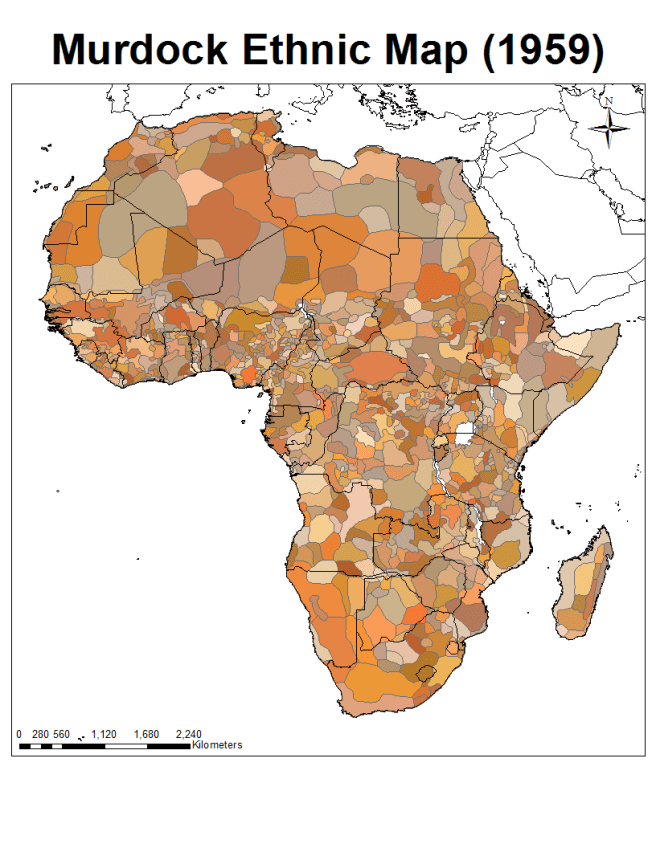
African Unity is Inter-ethnic (not Inter-national) in nature. Unlearn Africa. Learn Africa. Know the tribes and ethnic groups, their languages, histories, cultures, sentiments, traditional friends and enemies. Then you will suddenly see the real Africa and the real African boundaries and borders. They are very different from what was left behind by colonialism. Still unresolved.

African peoples and ethnic units, the real ones, not the national mirages. Any African countries that scrap their tribal languages are taking a lazy defeated step backward, not forward; suppressing forces that will still break out one day again – with even greater force. You can not deny Ethnicity in Africa.

But it does not have to divide us. On the contrary: the acknowledgment and knowledge of it helps us to form natural bridges across ethnic lines. This leads to more – and true, natural – peace and understanding. On the other hand, ignoring it has led to us over and again walking blindfolded and naively into pogroms, genocides, wars at worst – or just never-ending fractures at best.

However, in our need to find peace we have often taken the self-destructive path of sand-papering all our ethnic identities away in order to reduce us all into one amorphous history-less post-colonial European-speaking being. But we thereby go backwards, or sideways, not forwards. We lose, in the illusion of gaining. You have to know your tribe and your fellow African’s tribe; and allow the ethnic part of you to forge ties and forms of understanding with the ethnic part of them. Because our ethnic identities is what we on our own developed for ourselves over the course of millennia. They are not just surface-identities and nothing. Our colonial identities, however, were imposed on us and still sit on us like ill-fitting clothes.

It is ironic that when we associate with non-Africans, we make room for differences based on race and ethnicity. We acknowledge their race and take it into account in the bridge we build between us and them. This then smooths the way to a firm relationship and makes it easy for the shared humanity in us and them to link up with each other. But when we progressive Africans are associating with our fellow Africans, we carelessly believe the colonial white-wash of the irrelevance of our original ancient ethnic identities, and we try to build a relationship on an illusory foundation within which we have not yet reciprocally understood and arranged our minor but important ethnic differences according to their natures. But: Once done, harmonisation becomes very easy and in fact inevitable.

One of the reasons why Igbos and Yorubas, for example, quarrel so much and seemingly find it so difficult to unite politically is that they each keep on expecting the other, unconsciously, to be like them. To be the same end-product of colonialism. To be another version of themselves across the Niger. Especially politically. But since this is not the case, they CRITISIZE that which is different in the other. However only when they have have acknowledged and accepted not only the differences, but the fact that it is natural and complimentary to be different, will they – upon then understanding how to harmonise those differences – begin to see their vast Similarities too.

Despite being the victims of the same conditions all over Africa – corruption, mismanagement, abuse-of-power, and indiscipline – yet we find it difficult to form a strong fist to punch against these situations; and we don’t know why, although the answer is staring us in the face and we are living it everyday. We bunch ourselves into our ethnic groups and then say that tribalism is the problem. But tribalism is not the problem, because most people will always be true to their ethnic identity. It is natural. The problem is that the template for African Unity was created by non-Africans for economic purposes – today we call these templates “African Countries” and they are the member states of the so-called AU (formerly called OAU).

However we Africans need to create alternative theaters and templates of unification and conflict-resolution where the ORIGINAL African identities (today called ethnic groups or tribal families) can themselves work out the rules of engagement or disengagement. Then they can do away with Tribal or Ethnic BIAS. Denying this fact will change nothing, as the Realpolitik in Africa will nevertheless calmly continue to run along those lines and be powered by those forces. Thus, there needs to be a theatre and a dynamic where and whereby this reality can interact with itself and sort itself out.

That is what is still missing: an African self-made Inter-Ethnic OAU. An AU of the original ethnic families. Because the truth is this: the different constituent parts of it are already there. Look at Nigeria: Biafra, Arewa, Oduduwa, Bini Cosmos, Middle Belt. Some even extending naturally beyond the borders of Nigeria. They are all there, the true power blocs and centers of force; the true African identities of the Africans living there. Their FIRST socio-political and cultural identity. Nigeria is in this regard only their second identity. But as long as the first identities find no platform to engage according to homogeneity and share power equitably, the second identity will also know no peace and will remain unstable.

– Che Chidi Chukwumerije

MITTEL ZUM MEHR

Manchmal blicke ich über
den Teich nach Hause
Mit Sehnsucht in mir
Nach Hause

Nein mit mehr als nur
Sehnsucht
Aber ich glaube, eben
Das ist Sehnsucht

Zwei Herzen beseelen
Ach meine Brust
Aus Lust wird Frust
Aus Frust wird Lust

Je mehr ich hier ankomme
Desto mehr
Fehlt mir ein Land südlich
Vom Mittelmeer.

Saftiges grün
Rote Erde
Akzeptanz
Pflicht es werde.

Che Chidi Chukwumerije
2019: Das Jahr der deutschen Dichtung

NIGERIA 1914

1914: It was a new country. Ogbonna felt it. But he did not know how to convey this sensing to his fellow Igbo people, to his fellow Africans; because he could not really explain, with words and in concepts, what he so clearly perceived – this was a new country. There was something in the air.

He saw it in the Colonial Officer’s gait. It was the bearing, comportment and carriage of someone who was striding expectantly, imperiously, across new found land. The man’s eyes glittered shrewdly, tempered by surprise and wonder, intensified by ambition and greed, crowned by the realization that this was a jewel, this moment, this place, this new country he and his kind had created and finally pieced together. His mind swept over the large vast area stretching from the desert edges up North to the Atlantic down South, and he still could not believe how easy it had been to play all these tribal nations against each other, using some to subjugate others and others to infiltrate some; and never once had they thought of uniting. A man of greed knows how to manipulate the greed in others. His thin lips bore a faint smile.

Watching him, Ogbonna had the impression of observing a farmer who threw udara seeds into a field and, when it was time to reap, found not udara trees but fields of gold swimming before his bewildered eyes, behind which in his mind the realization dawned that that soft dark red soil had been no ordinary field of activity, this was a fertile land of opportunity. He had created a state of limitless possibilities. And while he stood and admired his work, shrewdly trying to figure out in his mind how to retain his hold on it and what to do with it now and in the future, it burned in Ogbonna’s mind, watching him, that this land, this field of possibility, was his own country. It was not the old clan or ancient tribe in which he lived, from which he hailed, and which was itself trapped within the borders of this new entity, henceforth a part of it. Nay, it was something else. Another place within the same space. Another state of being. A different nation. A new country had been built on his native land.

In this new country, new laws would govern, new thinking would hold greater validity. The old would stay and continue to struggle to stand its ground; but over and above everything, master of all, would be – already was – a new reality, a new game, and a new way to play the game if you wanted to get to the top. This new country was not going away, this new order was here to stay. The magical mix of heterogeneous parts had reacted with itself under the catalyst of a ruthless clever chaperoning, and had disappeared into and yielded an improbable, vibrant, new whole. A strange and powerful virgin. Daughter of improbability, mother of possibility. Familiar yet different. A whole new thing. A new, strange, country called Nigeria.

It is a frustrating thing to feel all these things within you but have no words with which to express them, and nobody with whom to further develop these thoughts. They did not come gradually upon him, but rushed in in one flash of clarity the very first time he saw the Colonial Officer in his village. He just knew. This old ground I am standing on, everything, is new territory. We have not just been conquered – reversing that would have been easy. No, our very world has changed. Something of deep monumental significance has taken place, something irreversible.

We cannot reverse it – but if we are clever and united, industrious and fortunate, we might take control of it. It will never take us again back to where we were, but we can take it away from those who made it, and we can take it in a direction of our own choosing. Because something new has arisen on Igbo soil and, as he had heard, on many other African peoples’ soils far away too, but no African has any control over it. We are all powerless subjects of our own Kingdom.

And there the two men stood, staring into the distance. One contemplating how to subjugate this land forever. The other plotting how to get it back.

That was the moment Ogbonna made the decision, at first instinctively, intuitively, and then consciously, deliberately, clearly, to move away from his old life, from the old order. It was a movement of that intuition which had always been an active part of his inner consciousness. This was the way forward. The way out of the past, for the past had been a world of its own… something else entirely. In order to arrive safely into the future, he had to get into the heart of the system that had broken their heart.

And from that moment he began to strive and to struggle, reluctantly yet resolutely, to move away from his world and move into the Colonial Officer’s world. He would take as much of his past along with him as he could smuggle aboard the ship of change. He would serve the system, learn the system, master the system, would disappear deep into the heart of the Colonial Master’s system and re-emerge a completely new, different person, a Nigerian. He would build a foundation for the future repossession of his home, and he would become the grandfather and great-grandfather or great-great-grandfather of you and me.

– – – – –

2019: Nigeria is on the brink of another round of elections, and they still have not thought of uniting, still have not made a serious attempt at forging true unity, nor at fairly and equitably sharing power. Individual sections or power cliques still want to conquer, control and subjugate all the rest. And Greed remains their Master.

The Colonial Master’s descendants still bear a faint smile on their haughty lips.

– Che Chidi Chukwumerije.

BUHARI: THE BETRAYAL OF PANAFRICANISM AND BLACK UNITY IN NIGERIA

1. MERITOCRACY VS FEDERAL CHARACTER PRINCIPLE

The most significant development that came out of colonialism was that it not only lent urgency, and a reason, to indigenous African ethnic nations to forge – amongst themselves – deeper and more effective bonds of solidarity in the face of the expediency of warding off external exploitative and appropriative incursions; but even more importantly it delivered a rough, even if imperfect, template for this bonding to take place. This template are the colonially born nation-states that are commonly drawn on the map of Africa today. They constitute the member states of the organisation, once called the Organisation of African Unity (OAU), but now known as the African Union (AU), and are generally referred to as “African” countries. Colonialism thus not only kickstarted, catalyzed and accelerated Panafricanism, but it also influenced its nature and direction, and straitjacketed it into ready-made, albeit externally created, nation-forms.

In order for this Panafricanism to work, however, on this imperfect externally orchestrated template, one thing was needed, more importantly maybe than even friendship – and that thing is: TRUST. In Nigeria, for instance, in order to give as little room as possible to the sentiments of ethnic marginalisation and systemic partiality – the most lethal killers of pragmatic inter-ethnic trust – a practical compromise was reached; something called the Federal Character principle. It simply means that access to power is distributed in such a way that the different regions and religions that make up the country always have a representative at the table. The grand organigramm of power is – or was – or should be – a rough reflection of the actual internal ethno-religious map of the federation.

The Federal Character principle, significantly, finds application not only in the corridors of power and civil service, but – more contentiously – also in the education system where it often goes by its nickname “the Quota System”. The aim here is to stop one part of the country from falling behind educationally or to help them to catch up with other parts who have long raced ahead in the acquisition of western-brought education. According to the Quota System, students from the South who score high marks are not all admitted into secondary or tertiary Schools. Instead, some of them are rejected in favour of students from the North who have scored much lower marks.

The Federeal Character principle has many bitter opponents . Many neutral-minded and objective thinkers have never been a fan of it. They consider it not only inherently unjust but believe also that it denies the country access to her best minds and brightest talents, and exchanges the policy of unconditional progress for the politics of “settling for less”, which in turn breeds patronism, cronyism and nepotism, and holds the country back. They argue instead for the principle of MERITOCRACY. Let the best person do the Job, irrespective of his or her ethno-religious camp. The quintessence of their argument is that just this adherence to meritocracy – rather than concessions – will spur the weaker to work harder, bring out the best in them, and make them catch up with the stronger, thus enriching the Nation, even as it is being driven forward by its brightest, meritocratically chosen, talents.

The Federal Character principle, however, also has many passionate supporters. Indeed, there are pragmatic nation-minders who argue that a fragile, historically rootless, construction like Nigeria is, has not yet arrived at the robust generational inter-ethnic state of fusion and maturity, that equilibrium of development, which will allow her to bear the weight of systemic Meritocracy on a grand objective scale. And, even more importantly, she has not yet developed and entrenched the dynamics and the institutions to ensure, to monitor and to protect meritocratic processes in order to prevent them from being one-sidedly hijacked and distorted in the service of the attainment of the sectional goals of those currently in power – who may choose to appoint only those from their region and religion and claim it is because they are the best, without there being any institutionalised and impartial system for cross-checking or validating this assertion as well as countering, correcting and punishing it if proven false.

The basis of their insistence on the pragmnatism of a Federal Character principle as the necessary interim bridge to chaperone Nigeria onto the stable shores of a capacity for true meritocracy in some future generation, is the fact that before Nigeria was created, her constituent ethnic nationalities already existed, right here. Some were ignorant of some others; some existed in alliance with one another; some were locked in violent existential wars against each other; and some oscillated between friendship and enmity, for decades and centuries already. In other words, the Nigerian novel has a deep, manifold backstory – and Mungo Park hardly features in it.

Probably the most significant conflict that was taking place within the area of today’s Nigeria as at that time when the British made their intrusive imperialistic grab at this part of West Africa, were the Fulani Sultanate’s jihadistic wars against the nations to the South. The Fulani, a nomadic People of mainly Islamic religion, had already earlier invaded, conquered, colonized and converted the Hausa and a number of other nations in what is now Northern Nigeria. Moving further South they were locked in a back-and-forth war of oscillating fortunes with the Yoruba – another great Nation situated mainly in what is now the south-west of Nigeria – when the British arrived and plunged into the mix with their multi-pronged Arsenal of Military, Religion, Commerce, Diplomacy and new-type Education.

But then, after succeeding in gradually conquering, pacifying and appropriating that entire area now known as Nigeria, the British themselves finally succumbed to a combination of a negotiated concerted “independence” push by the ethnic peoples of that area, favorably assisted by the general wind of change after World War 2, and handed over this new country Nigeria to the indigenous African citizens of Nigeria – a geopolitical landmass, beneath the surface lattice-work of which the old alliances and conflicts, the networks of dynasties, the sentiments, prejudices and the interrupted wars, were all still festering, on the one hand. On the other hand, there was born in a few hearts a budding awakening of and even a longing for a sense of “one-nigeria-ness”.

Bear in mind: sovereignity was not individually handed back to, or won back by, the actual indigenous African nations from whom it was taken away, some of whom continue to long and strive for it until today. Instead a kind of collective authority was transfered to a newly patched up entity called Nigeria, within the geographical boundaries of which the original African nations remain to be found. The ancient African nations however are, paradoxically, not themselves directly the constituent administrative regions of Nigeria, although they exist within and across them, and they influence the context within which these administrative Units are carved out. Once upon a time, these units were, for instance, North, South and Lagos; later they were North, West, Mid-west, East. Today they are the 36 States: Abia, Adamawa, Anambra, Bauchi, etc …

Not only was this sovereignity transfered to a new umbrella Nation, but also this new Nation was of the making and design, not of the Africans themselves, but of the colonizing force. One could thus say that Nigeria is a software or a robot through which an originally foreign volition, detached from its issuer and now mangled up with local intent, continues to feed its Frankenstein, mix up the African mind and strongly influence our affairs, positively and negatively. This has been the trigger of many key reactionary events in Nigerian history, all of which bear the stamp of an attempt at “Re-Africanisation” and – more importantly “Re-Sovereignization” of our space. It was what led later to the famous (or infamous, depending on who you ask) Indigenization Decree of 1972. It was what led earlier to the push for Independence. And it was what provided the Canon fodder for the Biafran Conflict, where a reactionary African attempt to craft their own smaller-sized umbrella Nation made up of indigenous neighbourly African peoples was met with Military resistance by the Northern-led, British-powered Nigerian government. Nigeria, like ‘Skynet’, had become self-aware – within the same space in which the individual indigenous actual ancient African nations and Peoples also exist and also remain self-aware. Two uneasy souls in one restless restive Body.

Against these kinds of backdrop, the Federal Character principle was devised, as a compromise, a soft landing pad to further inclusion, moderation and the gradual social engineering of this new country Nigeria towards becoming an actual African new Nation of a united people of shared loyalty, trust and harmonized aspirations. Whatever intuitions of injustice were awakened by the Quota System were supposed to be mitigated by the appealing to a noble sense of sacrifice needed for the attainment of an internally balanced nation whose inner parts are helped to gear into a foundational equal-paced development.

Within this context then, the championers of Meritocracy have allowed themselves to be slightly pacified even while they continue to argue its case. They see in meritocracy, if and when attained and popularly accepted and expected, the final proof and guarantee of matured nationhood and progress. Thus they continue to push for the establishment of the institutions and systemic dynamics that will one day power, oversee and protect Meritocracy as an operating principle in our national socio-polity.

However, between these two terminals of Quota and Meritocracy, a danger lurked. A weakness lay in the system, always exploitable by the Executive arm of government, and just waiting for an unscrupulous mind who would be the first to dann the consequences and do it. And then came ex-General Muhammadu Buhari…

2. BUHARI, PANAFRICANISM, AND A BROKEN TRUST

In the many decades of Nigeria’s independent existence, through all her ups and downs, crises and vicissitudes, the Federal Character principle has been one stabilizer that every leader and every government in power – civilian or military – has always tried to (be seen to) tactfully and sensitively take into consideration while trying to steer the unwieldy and complex ship of state of this most populous and most diverse Black nation on earth. – Until now.

Today, for the first time in her history, this new nation called Nigeria finds herself in the grip of a (democratically elected!) Northern Muslim Fulani President who has openly, callously and with brutal impunity advanced almost only members of his own clan or ethno-religious umbrella-region into the most important organs of state and government. He has done this with a thoroughness, on a scale and with a scope that is staggering and unprecedented in the history of Nigeria, and has sent shock waves into the depths of the political psyche of the rest of the country and informed observers outside the country. This in turn has triggered a reawakening and a strengthening of irridentist ethnic sensitivities and loyalties on the one hand. On the other hand it has revealed the plane of conflict on which the real challenges to Panafricanism really lie.

The real conflicts are and remain on the level of that political existence for which there is no consensual political or apolitical organ of membership or conflict Resolution: the ethnic plane. The further addition of religion into this mix complexifies it into the ethno-religios plane. And this is the level on which a serious and unprecedented breach of trust has occured and is currently continuing in a troubled Nigeria. A sitting president has disponented the executing of the bully pulpit not according to either (even a semblance of) the federal character principle or the principle of objective meritocracy, but has placed the Country under the effective stranglehold of his own ethno-religious base. And then has rubbed salt into the wound by mockingly suggesting that he is simply being meritocratic. His people – the people from his own ethno-religions clan – are the best. This is the blatant, callous, mocking bigoted assertion he is sending out. He is using this vehicle, Nigeria, to continue the Fulani jihadistic imperialistic war that had once been interrupted by the very bringers of this same Nigeria. What a brilliantly ironic stroke of genius! The faint promise of Panafricanism has been thrown out of the window by a primitive yank back into feudalism.

In other words, an African has with the powers of an externally created modern African nation sought to subjugate other ancient African nations and bring them under the dominion of his own ancient African nation. Democracy, which should liberate and protect, has become the cruel weapon of a jailer and an enslaver because the world and all processes will always support a democratically elected leader, even if he is using democracy as the smoke screen and instrument with which to dismantle that very same democracy itself. Put metaphorically: a house negro has pointed the massa’s gun at the field negroes and tried to impose himself as the new master over them. And nobody can stop him. This is a low blow of such shameless proportions, a betrayal of such callous dimensions, that it takes a while to really believe that you are actually seeing what you are indeed seeing. This truly is the very betrayal of Panafricanism itself. Nobody should aspire for leadership in Nigeria, or indeed in any African country, who has lost sight of, or never had his gaze on, the bigger picture of African inter-ethnic unity and inter-tribal fraternity. This is what the Buhari presidency in Nigeria is teaching us very succinctly.

Africans need to understand again, or at last, the meaning, the true meaning, value and importance of Panafricanism. Young muslims need to rise against muslim leaders who are not panafricanistic in their message, in their method and in their goals. Members of all ethnic groups need to rise against their ethnic leaders when these deviate from the spirit and purpose of Panafricanism. Christian followers need to turn against their leaders when these betray panafricanism in their pontifications and way of life. Panafricanism is the only socio-cultural, political and economic engine that can lift Africa up. Panafricanism simply means that Africans, in a state of united mass eureka, discover, rediscover and believe in their own worth as creative, noble and highly developed human spirits who have all it takes, and the responsibility as well, to create, run and manage their own highly developed self-contained Universe and continuum. Their own First World. You must have the greatness of spirit to believe this, or you will never achieve it because you will never even have the guts to attempt it; the thought to do so will not even occur to you as a realistic thought. Until you have the greatness of spirit to really believe that you, too, are first among equals. And when you start to believe this, when you start to really believe it, then you will stop proclaiming it – and instead you will start to PROVE IT, by practicing and executing it.

It cannot be, that an African leader has the guts or ever tries again to use the cover of a colonially born state to advance only the cause of his or her own ethnic nation or ethno-religious base – thereby betraying the spirit of Panafricanism. Never again! Not in his or her appointments. Not in his or her policies. Not in the projects that he or she pushes through and accomplishes. Never again! Panafricanism or nothing. Yes, because without Panafricanism, Africa is nothing.

Why are African youths dying in the Mediterranean Sea while trying to flee Africa? Only to get to Europe to be subjected to the disgust and rejection of a European racial class whose internal color code has already condemned Blacks to being the footmat in every context, even before they arrive. And the more value you have, the stronger the socio-political determination to keep you down. And this is what our desperate youths, full of hopes in their hearts, are fleeing to? Where are the presidents, the true Panafrican leaders, who will step up and say – No! – Africa must become an Eden for Africans, one from which there shall be no banishing? Where are the presidents, the true Panafrican leaders, who will say: If Africans need a refuge, they will find it here – right here – in Africa? We will make sure of that!

Is it Buhari? Is it Biya? Is it Bouteflika? Is it Kabila? Is it Kagame? Is it Ramaphosa? Is it Museveni? Is it Uhuru Kenyatta? Is it Akufo-Addo? And all the rest of them?? Why have they not done it? While this article is about Nigeria under Buhari, the troubling fact still remains that no African leader yet has stepped up and taken the lead on THIS other topic of mass migration. Africa remains an open sore, whose lifeblood – for lack of perspective at home – is desperately draining away everyday. And the leaders will not come together with a strong voice and firm measures to heal the situation. What has become of Panafricanism? Is it just a word in the wind now, soon to sink into and drown in the Mediteranian Sea?

The grand outer unity, which is the bedrock of Panafricanism, cannot take place because internally – within the so-called African countries – inter-tribal fraternity has not yet been established, has not yet been even truly strived for. The tribes are the real political building blocks of Africa, not the colonially created nations, and we all know it. We just like to deceive ourselves and pretend as if we want to make progress, when we come together as so-called African nations in the AU and give long speeches. Then we go back home and continue to kill Panafricanism everyday by using the State Might of the modern African nation to benefit only our own individual ethnic or ethno-religious base, and crush or systemically disempower the others.

This must stop in Africa! This is where our real political struggle lies. Taking our continent out of the hands of internal Pharaohs. Taking our countries out of the hands of ethnic and religious bigots, whether they seem primitive or sophisticated. Study their methods and intentions. And soon you will know the true Panafricanists, and those who only have selfish or ethno-religious intentions and keep the rest divided.

Buhari’s deeper crime is not in the act, but in the intention. His intention was never to use Nigeria as the available template to foster inter-tribal integration and inter-ethnic amalgamation of the African people’s located within her borders. His intention from the start was always to use Nigeria as a weapon to advance the fortunes and power of his own ethno-religious base. By doing this, he not only shamed himself, but also shames every member or supporter of his ethno-religious base who supports this intention and partakes in this murder of the spirit of Panafricanism, in this unending retardation of African development. Buhari is not and was never a Pan-Africanist. Destiny offered him the historic chance to turn Nigeria into a true African (internally cohesive) nation – and he squandered the opportunity. Instead he has turned Nigeria against herself with his clan at the top. In effect, this is his most ingenious, most audacious and most imperious Coup.

He of all people was in a position to do something which would have been much too difficult for anybody else. His past as a Military Leader. His Fulani Islamic roots. His knowledge of the wounds this country has sustained since independence. His 2nd tenure coming sixteen years into the 4th Republic – giving him all hindsight with which to know what to correct. No president before Buhari has been in a stronger position to unite the country. All he had to do was just do just that, unite the Nation, heal her wounds, bring all her parts together harmoniously and encourage participation. Inclusion, not exclusion. Unity, not division. Fatherliness, not grudge-bearing. The ignition of the local Nigerian version of Panafricanism, not the continuation of the insidious well-planned conspiracy of imperious jihadistic tribalism. But he missed this great opportunity, because he lacks the one thing, the most important thing, that thing without which Africa is going nowhere: the spirit and the principles of Panafricanism.

It is sad to see, half a century after the ‘decade of African independence’, the replacement of external colonialism with internal imperialism. The entire journey since independence – has it been in vain?

– Che Chidi Chukwumerije.

IF THE PEOPLE CHANGETH NOT

If you wake up one morning
And hear a bird out there
Sing a song you’ve heard before
But can’t remember where
Close your eyes and remember
The dream you’re waking from
And you’ll find yourself again
In a beautiful kingdom

Where the things you really feel
Are the things that you say
And it’s no big deal
To stand by what you say
And the people passing by
Are exactly as they seem
And they lift their country high
‘Cause they’re true to its dream

Then you wake up from the dream
And go into your world
And meet the opposite
Of what your dreams hold
Join the people, form a line
Queue up in the sun
Cast your votes for someone who
You hope has the wisdom

That the things she really felt
Are the things that she said
And the promises he spelt
Are the path that he’ll tread
And that when she passes by
She will be what she seems
And he’ll lift the country high
By working out her dreams

But the years they slowly pass
And the things hardly change
Sadly sadly ’cause the people
Are all still the same
Truth be told it makes no difference
Which of them the leader be
If the people changeth not
Well neither will their country

So pick your brooms and sweep your streets
And go to work on time
You may laugh at my simple words
But you’d be very surprised
That it’s just such little things
That have tied us down
Oh my people we’re the ones
Who give a face to our town

So the things we really feel
Are the things that we should say
It should be no big deal
To stand by what we say
And the people passing by
Should be just what they seem
And we lift our country high
‘Cause we work out our dream.

– Che Chidi Chukwumerije.