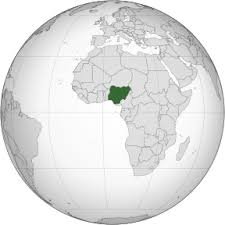
NIGERIA: STILL STRUGGLING FOR INDEPENDENCE

Nigeria

Which will be the first modern, post-colonial Black African country to become independent?
– To stand as a First World country in the midst of global leaders.
– To take the leap from extractive economy to highly productive, manufacturing, innovative and invention-leading economy.
– To develop and run a nation-wide, all-encompassing and unconditional Social Security scheme.
– To become an Export world champion, exporting not just natural resources, but finished products.
– To take its place at the cutting edge of technology and information technology.
– To become a favoured global destination for medical tourism and university education.
– To have a currency that rivals USD, EUR, GBP, JPY, CNR.
– To develop and take a leading role in the building of a new economy and new industry around the concept of sustainability. Because that is the future.
– To entrench legally protected civil and human rights.
– To engender independent institutions of democracy.
– To defeat the evil of tribalism.
– To stop begging, taking and being dependent on foreign aid.
– To stop allowing foreign religions to drive it to hate, exploit, oppress or kill its fellow Africans.
– To stop producing economic Refugees in droves.
– To hold regular free and fair elections, free of rigging, where votes count.
– To hold its richest and most powerful accountable.
– To fight corruption impartially, and stand without exemptions under the Law.
– To eradicate extreme poverty, and democratise and ensure education and opportunity for all.
– To work tirelessly for peace and unity on the African continent.
– To push, power and perfect intra-African trade, tourism and transport to the same levels as on other continents and in other world regions.
– To have a modern, disciplined military focused on defense of borders and values, as well as upholding of peace, and not full of megalomaniac dreams of coup d‘etats and executive power all the time.
– To have a depoliticised Police Force that serves the people rather than being used against the people.
– To maintain a hardworking, well-functioning, digitalised, detribalised, highly educated Civil Service.
– To own its own narrative, with its own independent media, on the global stage.
– To become a global lender, instead of a global borrower and beggar.
– To export technology and new technology to the rest of the world.
– To have a power, economic and civil infrastructure that matches every other First World country‘s.
– To become one of the decision makers in the UN, in WEF, in the G8.
– To break the culture of waste, squander and exhibitionism.
– To support and grow small and medium-scale enterprises all over the country.
– To develop a large and economically virile middle class.
– To feed itself independently.
– To power itself independently.
– To ensure electricity 24/7.
– To become a center of future-birthing research and development.
– To become a part of the space community.
– To find its own local solutions to its own local, as well as global, challenges.
– To be a part owner, and controller, of the global market.
– To produce proud citizens who have greater opportunities in their own Black countries than they would in foreign countries where they are never fully accepted.
– To turn around the historical burden of slavery and colonisation, and transform it into global leadership.
– To stand as a First World country in the midst of global leaders.

Which will be the first Black African country to become REALLY INDEPENDENT?

This is the silent question that hangs unanswered in the global imagination of all humankind, and floats inchoate through the heart of everybody of Black African extraction anytime another Black African country celebrates its annual so-called Independence Day.

Today’s it’s Nigeria’s turn. Country of my birth. 1st October.
Happy Independence Day, Nigeria.
Or should I rather say:
Happy Future-Independence Day.

Because only Self-dependence, Self-reliance, is truly Independence.

Che Chidi Chukwumerije

OF QUEENS AND KINGS AND INDEPENDENT NATIONS

The Queen is dead. Long live the King.
The best payback against Colonialism is not to throw powerless insults at their monarchy and blame them for all your self-made failings, but to develop your nation until you rival them – and surpass them.
China did it. India is doing it. African countries, when are you going to do it too??? Surpass them and you will shut them up without you even saying a word. What is holding Africa down is in Africa. It is not in Europe.
Build your perfect system and you will live forever as Kings and Queens in the circle of nations. The British monarchy can continue to live and exist – why should that matter to me? Their existence or non-existence, their happiness or sadness, won’t change a thing in Africa or the condition of Africans. Instead, what the world needs now, and desperately, is a productive and highly developed New Africa. The dream of our Nkrumahs. And it can only be done FROM WITHIN.

Che Chidi Chukwumerije

MANDELA, LEARNING FROM OTHERS’ MISTAKES: 4 – (Sudan and South Sudan)

(Lessons from the first (mis)steps following modern Africa’s independence)

Those who have a knowledge of post-independent Africa will, sadly, not be surprised by the turn of events in South Sudan today. Macabre, but true. Indeed, they would have expected it and, like Mandela and his team, and they would have prepared for it, to try and avert it. South Sudan’s road to independence has been long and winding. She began her life in the modern African world as a region of an arab-dominated Sudan which was herself the joint colonial property of Egypt and Britain. Even before their first modern independence – that of Sudan from Egypt and Britain – Sudan was divided into an arab-speaking islamic north on the one hand, and on the other hand a south full of a myriad black tribes speaking different tongues, mainly Christianised, partly adherent still to ancient African religions, and basically lacking a sense of united nationhood amongst themselves. What united them was their wariness of the north in the face of a long history of slavery and jihadic wars; whereas the north itself was focused on achieving independence from its external colonisers. And independence indeed eventually came, but it did not bring peace with it. Acrimony between military and politics, disputes between Marxists and non-Marxists, moslem-christian religious animosities, and the distrust between north and south, ensured that years of coups, civil wars, genocide and violent disunity would follow. Decades after independence, seemingly unable or unwilling to find a lasting workable peace between north and south, in 2011 they parted ways acrimoniously. Soon after, in the newly independent and sovereign South Sudan, the very same quarrels, accusations and maneuverings that had plagued newly independent African countries five decades earlier, reared their stubborn heads here too and South Sudan degenerated into a hydra-headed civil war. Finally, the tribes of the South, lacking any other external adversary, seemed all too willing to turn their guns on each other and destroy what it now seems that they never had nor ever really tried to cultivate during the decades of tribulation: internal Oneness, inter-tribal political unity. And, unfortunately for them, it seems that they, too, have no Madibas amongst them.

Take any African region, north, west, east and south, and study its collective post-independent or post-liberation history. Examples abound, enough of them. The wound cries out like a disjointed pack of scattered wild voices screaming from a burning house: the lack of reconciliation; the lack of representative, inclusive democracy, of socio-political unity. Some will call it the lack of national common sense. In Africa, for some reason, political office is not voluntarily terminal, whether or not the constitutions stipulate such, and power is not shared. Leaders seem to love only the concept of their country, the fact of having a country, but do not also love all the peoples of the country, their welfare, their liberties and their peacefully united future – not if it requires that the rulers and their support groups themselves equalise themselves with the rest of the country and subject themselves to a rule of law that stands above everyone. Instead, everybody wants to grab the crown, and sit on the throne, and then ostracize, under-develop and punish his enemies. No matter what effects this has on the country in the long and short run.

– Che Chidi Chukwumerije.

… continued in Part 5 of 11:
MANDELA, LEARNING FROM OTHERS’ MISTAKES: 5 -(Ghanaian Black Holes & Ivorian Time Bombs)

Preceding Chapters:
MANDELA, LEARNING FROM OTHERS’ MISTAKES : 1 – (Preamble)
MANDELA, LEARNING FROM OTHERS’ MISTAKES : 2 – (Egypt’s Modern Pharaohs)
MANDELA, LEARNING FROM OTHERS’ MISTAKES : 3 – (Tunisian Troubles, Libyan Losses, Ethiopian Woes)