DAWN BEFORE DAWN

The light that comes
Comes from within –
Sun, moon and stars
Are stars in your own inner film
Morning comes with distant murmurings
Trains and cars and birdsongs gurgling
Silence broken by the rain
And swallowed up in silence again.

– Che Chidi Chukwumerije.

MANDELA, LEARNING FROM OTHERS’ MISTAKES : 3 – (Tunisian Troubles, Libyan Losses, Ethiopian Woes)

(Lessons from the first (mis)steps following modern Africa’s independence)

In Tunisia, in the so-called French Maghreb region of North Africa, Habib Bourguiba endured imprisonment and persecution, bravely kept up the struggle for liberation, and eventually led the country to independence in 1956, pushing the French out of the political helm of affairs in Tunisia. He applied himself to the economic betterment of his country, experimented with socialist models and, when they did not yield the desired results, switched to more liberal economic strategies. Internationally he was very concerned about securing an Israeli-Palestinian peace deal. In the mean time, however, politically he set about instituting himself as the sole authority and system in Tunisia. He pushed through a constitution that gave him near dictatorial powers, and was eventually elected “president for life”. He maintained an authoritarian regime until, after more than three decades as president, a doctor declared him medically unfit to rule any longer. Ben Ali, his minister, succeeded him and he too applied himself to Tunisia’s economy, more than tripling its GDP within a twenty-year period. Politically, however, he too went down the road well trampled. He spent the next twenty-four years refining and perfecting his control over state and government, stage-managing elections, persecuting opposition, blocking free speech and incessantly perpetuating himself in power. But the long arm of the people’s fury, come to fruition in the Jasmine revolution, eventually caught up with him and his cohorts, at long last, in 2011.

Apart from in Egypt, the Tunisian revolution also triggered a similar revolution in neighbouring Libya, which historically has also not fared better, plunging that country too into riots, bloodshed and conflict, leading to the overthrow and death of their own once-liberator turned lifetime-dictator, Gadddafi. Today, more than five decades after modern independence, the present generations of these countries have to struggle desperately and painfully in a volatile, polarised, changing world, to attain what their Independence-generation failed to do: to motivate all sections of their populace into finding, anchoring and practicing a sustainable self-rotating form of representational constitutional democracy, one in which tolerance and reciprocal respect of differing wishes, inclusion, reconciliation and rule of law, within the context of a global modern world, hold sway.

In Ethiopia, Emperor Haile Selasie enjoyed the reputation of being the head of the only nation in Africa that was never successfully colonised. In the 1930s he courageously resisted Mussolini and the Italian invasion and then continued to rule Ethiopia, as Emperor, for many more decades to follow – until in a 1974 coup he was overthrown and dethroned, and then imprisoned in his own Grand Palace by his own people, where he died a few months later, a lonely old man. In his many long decades as leader of the Ethiopian Empire, he had fired the imaginations of Africans and Blacks all over the world, and hosted and reigned as founding chairman of the Organisation of African Unity. He inspired religions and movements, stood as a bastion of global racial equality and dignity, abolished slavery, and pumped much time, effort and the scarce financial means available to Ethiopia into a forward-thinking infrastructural modernisation and industrialization effort. Only one thing he did not do: show any interest in a political game-changer that would replace the monarchy with a true representational democracy in which all the different peoples, classes and sections of the nation would have, and unitedly administer, a joint stake. Civil wars with Eritrean, Oromo and Somali liberationists destabilised the state; a state in which Selasie ruled over and decided everything – administrative, adjudicative, financial, military and ministerial – an autocratic monarch. After the Wollo droughts and the famine came in the late sixties and early seventies, the disconnect between the leaders and the peoples tore the old establishment down. The army mutinied, popular revolts tore through the streets, and strikes and demonstrations paralysed the land. Emperor Haile Selasie was eventually deposed – after almost six decades as Ethiopia’s leader – and a new dictatorship under Major Mengistu took his place. Post-Selasie Ethiopia was then plunged into years of coups, dictatorship, Red Terror, uprisings, dispute, war and violence – all compounded by drought and famine. The Emperor had never built or championed a political system that could harness the patriotic, broad, representative efforts of the whole country’s peoples towards peacefully and constitutionally finding and executing a joint self-sustaining, rotational solution to their problems. He left a divided, politically adrift nation behind. Ethiopia was thus cruelly and ironically sent back to square one, despite its great history and iconic leader.

Che Chidi Chukwumerije

… continued in Part 4 of 11:
MANDELA, LEARNING FROM OTHERS’ MISTAKES: 4 – (Sudan and South Sudan)

Preceding Chapters:
MANDELA, LEARNING FROM OTHERS’ MISTAKES: Part 1 (Preamble)
MANDELA, LEARNING FROM OTHERS’ MISTAKES: PART 2 (Egypt’s modern pharaohs)

CLASS DIVIDE (II)

It’s called the hardworking middle-class
Let’s call it the narrow mountain-pass
For it keeps nervously thinning out

The underworld is getting crowdy
And impatient and restless and rowdy
Getting ready for a bout

The top one percent noiselessly feeds
Off the profits, the interests, the proceeds
No sound, no word, no whisper, no shout.

– Che Chidi Chukwumerije.

MANDELA, LEARNING FROM OTHERS’ MISTAKES: 2 – (Egypt’s modern pharaohs)

(Lessons from the first (mis)steps following modern Africa’s independence)

History is the teacher of the wise, and Mandela himself proved to be a good student – for he had many dramatic examples to learn from. Long before South Africa’s struggles for liberation from apartheid yielded fruit, other African nations had shot out of the starting block, propelled forward by the momentum of independence and freedom, to grapple each with the daunting task of forging a modern nation-being. It reads like a soap opera, one unresolved episode after another, with dependable repetition. A few examples suffice:

In newly independent Egypt, the leader of the revolution Colonel Nasser, despite his political victories against Britain, his Suez heroism and his Sinai vicissitudes, despite his enduring popularity at home and abroad, his inspiring effect on colonised nations worldwide, his influence on the afro-arab stage and the cultural boom that his tenure occasioned, was reluctant – when it came to internal affairs – to allow or foster the blossoming of a political system in which his personal power was anything less than absolute. He crushed all opposition parties, be they communists, capitalists, muslim brothers or any other grouping critical of him. He imprisoned thousands of opponents, including some who had been his comrades in the revolution. He centralised the planning of the economy, nationalised industry and everything he could nationalise, controlled both state and government, and placed a tight grip on all types of unions and institutions, from academic, to religious, the media, to the youth. He became, in effect, the modern-day pharaoh. By the time he died, in office, in 1970, after fourteen years as president, he had written his name eternally into the history books of not only Africa, and had attempted to industrialise and modernise Egypt; but also, portentously, he had practised largely only political repression during his reign. He did not use the momentum of liberation to propel all sides of the country into the forging of a political culture of unity and inclusion. Very simply, he had omitted to lay the foundation for a balanced political system of representative, rotational, shared democracy – an omission, the after-effects of which still plague a restless, internally unreconciled Egypt to this day. Nasser was succeeded by another military veteran, Sadat, after whose assassination many years later another soldier, Mubarak, took over. In 2011 the people arose in a popular revolution against him. The Revolution culminated in the election of the Muslim Brotherhood’s Mursi who, after more violent protests, was ousted in a coup-d’etat by his own head of Armed Forces Abdel Fattah el-Sisi who in turn a year later transformed from Military leader to civilian president in an election boycotted by most other political parties. Despite being one of the most ancient civilizations of mankind, and an independent modern nation, Egypt is today still struggling to find internal reconciliation, peace and socio-political harmony.

– Che Chidi Chukwumerije

(Continued in Part 3 of 11:
MANDELA, LEARNING FROM OTHERS’ MISTAKES : 3 – (Tunisian Troubles, Libyan Losses, Ethiopian Woes)

Preceding Chapter/
MANDELA, LEARNING FROM OTHERS’ MISTAKES: Part 1 (Preamble)

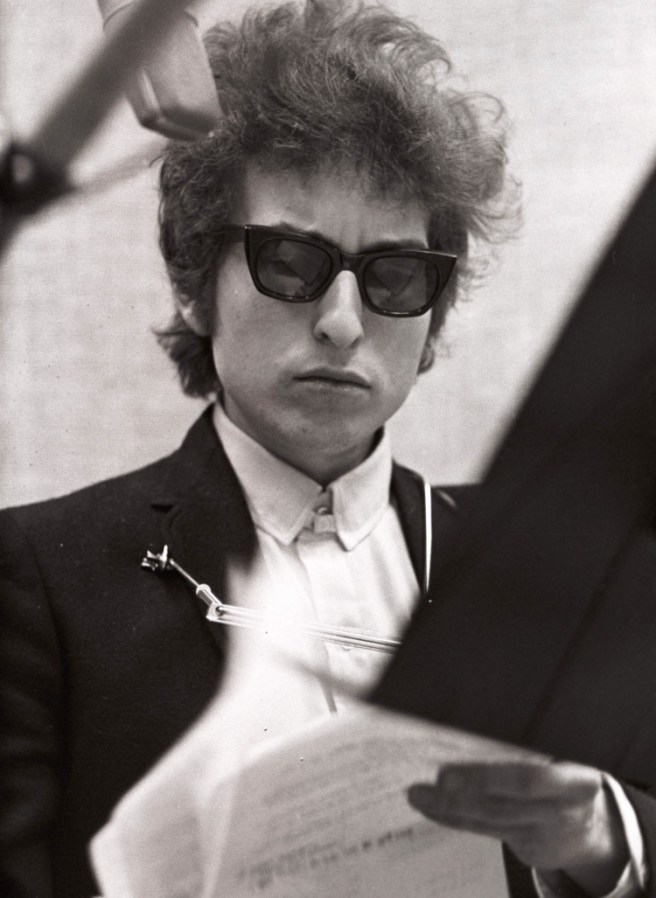
Dylan’s Nobel Prize for Literature

image
Astounding. Some people are upset, but me I like this VERY MUCH. This puts a big lie to all the establishment thinking and imitation literature. Some people spend their entire life trying to write in certain “intellectually respected” styles and to publish in many “proven” ways, in the hope of being counted one day among the literature greats. But they not only never find their own true style, they also forget what Literature and Poetry are really ABOUT:

Using your unique voice and your unique language – in whatever form is native to you – to express your consciousness in a way that makes a deep impression on others or sparks something new. Poetry is the deepest mystery in language form.

Kudos to the Nobel Committee for having the courage and insight to perceive beyond the box. Other “literature award institutions” should borrow a leaf from them and look anew and a-deeper into the role and expression-forms of Language, as mankind moves forward.

And for all those establishment-style writers and readers that are so upset, all I can say to them is:
The answer is blowing in the wind…

Che Chidi Chukwumerije.

YOUR HONEY TONGUE

I love you when you speak
The language of peoples gone;
Your mind, if you don’t mind, is antique;
Your honey tongue is on the run,
Breathlessly chasing a people’s dream
Gently up the stream.

You were my lover in hot dark nights
And you just couldn’t keep still;
Your tongue was restless as those kites
That circle and circle the forbidden hill,
And you taught me the language that lovers speak
When the spirit is willing and the flesh is weak.

Coo like a dove, my sweet love,
The sounds that you make are never enough.

– Che Chidi Chukwumerije.

MANDELA, LEARNING FROM OTHERS’ MISTAKES: 1 – (Preamble)

(Lessons from the first (mis)steps following modern Africa’s independence)

It sounds like a myth now. They say South Africa was on the brink of civil war after the release of Mandela and the collapse of apartheid. Civil war? Really? The Zulus and the Xhosas were heading for tribal war? And, simultaneously, the blacks against the whites in racial massacre? Well, it is true that it all sounds a bit far-fetched to some people now… because it did not happen. Because Mandela opted for reconciliation and spearheaded an intense drive to find a common basis for all to live, share power and face the future together. But, as far-fetched as all this may seem today, it was actually the most likely turn that events would have taken, based on the history of African so-called independence. This is a history that Mandela, and those who thought like him, knew all too well and, like wise people do, gravely feared. It is a history replete with the educative one-two punch of the strong heady wine of independence, liberation and freedom, eventually followed by the bad-tempered and moody hangover of disorientation, destabilisation and crisis.

Independence, all too often, is followed by civil strife and civil war. On all continents, in different eras, there abound records of great and small nations who have been unable to avoid this cliff in the arch of their history. When a nation-space has been oppressed or suppressed for a long time, it exhibits the properties of a socio-political pressure cooker. Once the lid of suppression is lifted, tumultuous explosions sooner or later follow as the various agendas and sensibilities of its component parts push to the fore, each demanding fulfilment. It requires strong-willed, knowing, conscious leadership to harness the liberated energies and channel them into constructive upbuilding. The opposite would mean a repetition of the same wild implosion into self-destruction witnessed after independence in many African countries, and as is happening right now in South Sudan. It is a pity that more than two decades after the fall of apartheid, Mandela’s example has not been understood and internalised by many other African peoples, personalities and groups still trying to find the most conducive forms of post-independent co-existence.

– Che Chidi Chukwumerije

Continued in Part 2 of 11:
MANDELA, LEARNING FROM OTHERS’ MISTAKES: 2 – (Egypt’s modern pharaohs)

UNQUIET STORM

Often, upon many an unquiet storm
Seeking calm exits through rough unfriendly seas
I have longed for death, and then
Quickly corrected myself, for even then,
Deep within, I sensed
That death would be no end.

And I have given kindness, even though
I knew that kindness would be a signal
To those who sail the dark waters
To come in and take advantage of me.
And I have kept many a dark secret silently inside
Just to protect some people, that they be not exposed.

And I have kept my peace
So that others may have their piece
And when they did not turn around
To say thank you, I have continued
To be that way still
For I know no other way to be.

– Che Chidi Chukwumerije.

HIGH PRICE

Is the price
Of life
Too high?
Experiences that break you
And rob you of the desire
To carry on living.

Is the price
Of knowledge
Too high?
Experiences that teach you things
Which in the end you wish
You never came to know.

If the price
Is this high
Then the prize
Had better be worth it
What ever it may be.

Some say it’s eternal life
Some say it’s finding yourself
But what do they know?
All these wiseacres
Just as lost as you are.

– Che Chidi Chukwumerije.

CAPTIVATION

I used to call you petal
Each time I pulled your lobes
And read your thoughts
Discreetly from far away in my personality
The way the farmer reads the clouds
Early in the morning

And thus you told me, without words
When to sow and when to reap
When to prune and when to weed
And when to wait with the patience
Of a farmer waiting for the harvest
Of his labour of love…

Those were the months you thought I was cruel
For the mystery of mirrors is this
The mirror cannot show you what’s
At the back of your mind. Only your lover can
When he breaks your heart
In order to get into it and conquer it

And thus did I imprison myself
For the conundrum of conquests is this
The king is the captive of his own kingdom
And when you let me break your heart
Little did I realise that you did it
Just to make sure you got me in

I came in for the kill
And never made it out again.

– Che Chidi Chukwumerije.