MANDELA, LEARNING FROM OTHERS’ MISTAKES: 5 -(Ghanaian Black Holes & Ivorian Time Bombs)

(Lessons from the first (mis)steps following modern Africa’s independence)

There is a brief moment of opportunity, in the hour of freedom and liberation, when the momentum that is presented by the formation or regeneration of a nation-state gives to its chief policy-makers, its opinion-shapers and its mass-leaders the rare chance to hammer a brave new impulse deep into the orientation-seeking psyche of the nation and shift it unto a path of mutually supportive and constructive upbuilding. It is a moment in time, a window of opportunity. If missed, a sequence of events is set into motion which makes it progressively difficult to recapture the momentum and the opportunity. If grasped, however, the same occurs, in the opposite, positive, direction. Nelson Mandela and South Africa recognised it and took a chance on it. The leaders of South Sudan, so far, seem blind and immune to it. South Sudan has simply joined the long list of African nations in which independence was followed by disorientation, dis-unification, breakdown and destabilization. Examples, as I said, abound.

In Ghana, Africa’s black star, Kwame Nkrumah weathered hefty colonial resistance and, even from within the walls of his unjust imprisonment, forced and triggered Ghanaian independence, and then came to power in a blinding blaze of glory that inspired nationalistic fervour all over the continent, further fuelling the thirst for independence in Black Africa. Nkrumah’s impact on the socio-political psyche of Black Africans then and now cannot be over-emphasized. No other African independence leader so charismatically inspired, articulated and harnessed revolutionary zeal, Black intellectual nationalistic self-confidence, and absolute disdain towards all forms of dependence and imperialism like Nkrumah did. He championed the search for innovative solutions to Africa’s economic problems and went ahead trying to implement his. He recognised the danger of tribalism and put forward policies to reduce its detrimental effects. He was the very spirit of pan-africanism, a driving force behind the forming of the OAU. But, while calling for pan-african unity on the continental stage, in his own country he banned opposition political parties, nationalised as much of industry as he could, put price controls in place, centralised power and placed his faith, like his friend Nasser did, in his own indigenous socialism hybrid. The toast of praise-singers and sycophants, he trusted no-one and placed the entire country under his personal control. He sunk huge sums into forward-looking industrialization schemes, but most got mismanaged by a dizzying number of state corporations that sprung up like mushrooms. Convinced that these and other unilaterally decreed measures would lead Ghana to the promised land, he never wavered in his fervour. The speedy decline of the Ghanaian economy which followed in the ensuing years was staggering and painful to all lovers of Africa and Ghana. Six years after independence, Ghana’s reserves stood at a shocking £500,000. Patronage and corruption flourished, discontent, division and internal resistance grew, the unwanted was ostracized, opposition elements imprisoned and silenced. There was no blueprint for an alternative solution or for a reshuffling of executive responsibilities. In Ghana, all roads led through Nkrumah. Less than ten years after his triumphant entry, in a country that had become riddled and debilitated by corruption and poverty, Nkrumah was unceremoniously overthrown in a coup d’etat, which was followed by another coup d’etat… then eventually by another… and Ghana was spiralling down a pit of retrogression unimaginable as at the time of her trail-blazing independence in 1957. It took decades before Ghana understood the painful lesson of the bitter pill of militarism and one-sided pseudo-democracy, and gradually began to build anew a new truer democracy, a wasteland of wasted decades scarring its history.

In Cote d’Ivoire, Félix Houphouët-Boigny, feeling himself to be ideologically superior to Kwame Nkrumah, made a bet with Nkrumah as to which of their two nations would be better developed within the decade that was to follow. And, at first he might have seemed to have won the bet. He avoided communism like the pest and predicted, already way back in the sixties, the Chinese invasion of Africa. He was one of the few independence era leaders who went the way of economic liberalism. Spurning nationalistic zeal, he stayed in close contact with the French, his country’s former colonial masters, and gave French capitalistic endeavours a freehand in the Ivory Coast. Apart from that, he did nothing different from all the rest. The self-acclaimed Crocodile kept a steely grip on government, permitted only a one-party state, devoid of democracy. He made no attempt to anchor democratic principles of equity, opinion-sourcing, power-sharing and broad engagement. No empowered participation, rotation of responsibility, the sharing of leadership responsibilities, socio-political unification of differing tribes and religions, the internal blending of a nation into one people. For twenty years no elections were held in Cote d’Ivoire, as Houphouët-Boigny cleverly left the country under the hypnosis of French economic control while perfecting the art of neutralising his opponents and critics by giving them tantalizing little morsels of pseudo-power in a system utterly dominated by him and him alone. For over two decades it seemed to work. When the collapse came, it was swift, brutal and sobering. Global prices of Ivorian exports like cocoa and coffee plunged. Oil prices shot up. French businesses repatriated their money to France. The Ivory Coast was bankrupt. Inspite of all his efforts, Cote d’Ivoire’s economic self-reliance never materialised; and now that the bubble had bust, the missed opportunities in true political and democratic maturation became apparent. As Houphouët-Boigny’s health declined, “heirs” to the throne began to jostle for position. By his death, in office, in 1993, as the third longest serving leader in the whole world as at that time, the long ignored internal chaos and disharmony was all he left behind. What had once seemed like a model became exposed as a mirage. It was simply a case of delayed reaction. Cote d’Ivoire too eventually went the way of Nigeria, Ghana and so many others – coups, corruption, unrest, civil war, militant dictatorship, ethnic enmities, religious rancour, and division. Neither Cote d’Ivoire nor Ghana was better than the other. They were in the same boat.

Che Chidi Chukwumerije

… continued in Part 6 of 11:
MANDELA, LEARNING FROM OTHERS’ MISTAKES: 6 – (Nigerian Nightmare & Congolese Chaos)

Preceding Chapters:
MANDELA, LEARNING FROM OTHERS’ MISTAKES: 1 (Preamble)
MANDELA, LEARNING FROM OTHERS’ MISTAKES: 2 (Egypt’s Modern Pharaohs)
MANDELA, LEARNING FROM OTHERS’ MISTAKES: 3 (Tunisian Troubles, Libyan Losses, Ethiopian Woes)
MANDELA, LEARNING FROM OTHERS’ MISTAKES: 4 (Sudan and South Sudan)
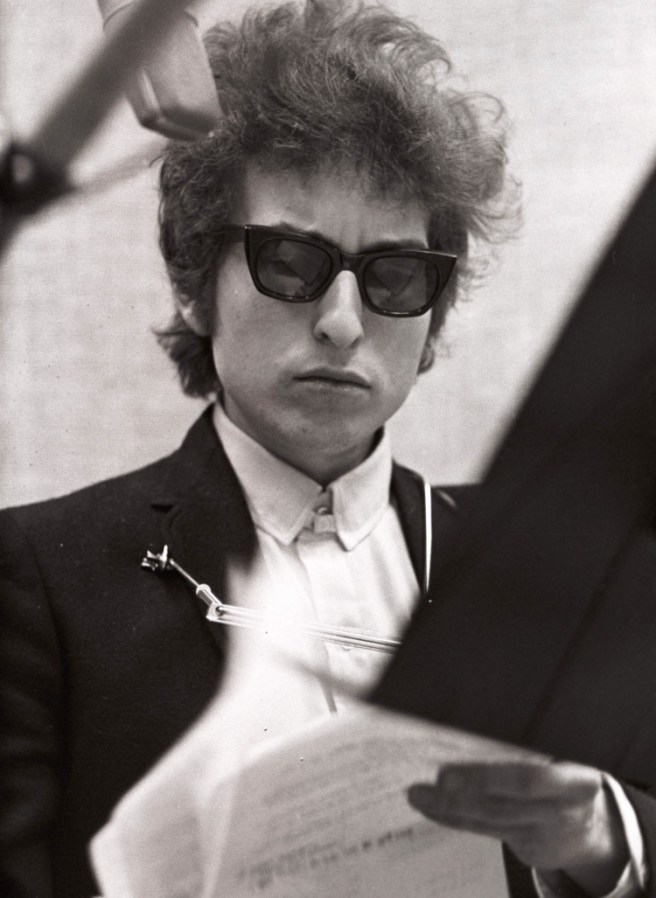
Dylan’s Nobel Prize for Literature

image
Astounding. Some people are upset, but me I like this VERY MUCH. This puts a big lie to all the establishment thinking and imitation literature. Some people spend their entire life trying to write in certain “intellectually respected” styles and to publish in many “proven” ways, in the hope of being counted one day among the literature greats. But they not only never find their own true style, they also forget what Literature and Poetry are really ABOUT:

Using your unique voice and your unique language – in whatever form is native to you – to express your consciousness in a way that makes a deep impression on others or sparks something new. Poetry is the deepest mystery in language form.

Kudos to the Nobel Committee for having the courage and insight to perceive beyond the box. Other “literature award institutions” should borrow a leaf from them and look anew and a-deeper into the role and expression-forms of Language, as mankind moves forward.

And for all those establishment-style writers and readers that are so upset, all I can say to them is:
The answer is blowing in the wind…

Che Chidi Chukwumerije.

SOME WILL LOVE YOU TO THE END, AND SOME WON’T –

If you love someone, give them a Chance to hurt you. It’s not whether they hurt you or not that matters – they will – but the way and manner – how – they hurt you or try to hurt you.

This is what will tell you everything you need to know about the Person in relation to yourself, and about the nature and future of your relationship.

Only those who will love you to the end deserve to have the right to hurt you.

Che Chidi Chukwumerije.

BEING GERMAN IS MORE THAN BEING WHITE

Being German is more than being white – as hard as this may be to grasp for someone who is fully genealogically descended from the whites of the Germanic and other European tribes. And – this is more important – also as hard as this might be to conceptualise for someone who is descended from the black tribes of the African continent. Children of migrants however, in the second and further generations, may sometimes – but not always – be in a better position to more easily perceive the self-evident and natural truth of this reality. Being German is more, deeper, then being a colour or a name. The nation has a heart, and it pulsates with the love of those who call it, intimately, Home, each in their own way; who identify with it; who carry within themselves the urge to protect it, it’s history and its values, to develop it and move it forward, to interpret it from the depths of their own personal authenticity.

One of the most incisive challenges that face people who do not seem to be fully descended from the white stock of the teutonic tribes – as impossible to measure as this may be – is to experience their German-ness being questioned, the authenticity of their citizenship being attacked, their loyalty and love for their home being subjected to scrutiny, and their sense of belonging being trampled underfoot or conditionalized. It takes many forms – be it divisive politicians who publicly try to awaken resentments against german footballers of a different background, or be it cowardly citizens who shoot on darker-skinned germans, or be it the encountering of a glass ceiling in the corporate world. Eventually it all crystallizes into experiences that make the so-called ‘german of migrant origin’ feel that he or she is systematically or instinctively excluded from certain opportunities or from deeper degrees of appreciation and acceptance, either due to distrust or dislike.

Some people react to this challenge by succumbing to the temptation of going through extra lengths to prove and justify their right of belonging, either by demanding for acceptance or struggling to be twice as good in everything. Some other people’s reaction to this subtle wall of rejection might be in turn to mirror this wall by transmitting the negative experience inwards into an exercise in self-rejection. And then there are those whose radical reaction may be a partial or even total rejection of their host nation, Germany, leading to the curious instances of children or grandchildren of migrants – in a kind of cultural trauma – suddenly reverting back to the cultural background, the seat of which their parents once left behind. This creates the impression of a desperate scramble for an illusion, because inspite of everything, they still find it hard to totally detach from Germany in form and in attitude.

If being German is then not about being white or bearing a certain type of name, what then does it entail to be German? Some will tell you it is about an ascribing to and a living of certain ‘Values’. You will hear of ‘punctuality’, ‘hardwork’, ‘tenacity’, ‘exactness’, ‘discipline’, ‘perseverance’, ‘straightforwardness’ and similar things. Unfortunately, or fortunately, it is not as simple as that. True, these values and virtues are highly priced in the german soul from time immemorial, but in truth they cannot be germanized and apportioned to only one people. They are human qualities that can be lived by all peoples who so desire, each in their own way. Conversely, within our german societies you will also find those who do not embody these but rather other characteristics – and yet they are german too. Apart from that, following this line of thinking is what often leads to the ‘herrenmenschen’ mentality, the sense of superiority over others, a poisonous inchoate emotion that carries in its heart the seed of future defeats or disappointments of those who hold this mentality. For Values are goals that are continually striven after and served, never owned and mastered.

The global mixing of races and cultures that began hundreds of years ago with the self-propulsion of white peoples and white cultures into all the corners of the earth, continues in its ramifications to press organically forward, irreversible, and keeps on surprising mankind in every new century with the challenges and demands, opportunities and mysteries, and reciprocal developments, it presents us with. And also for the German of part or full African origins, the challenge is not in trying to be like others, or in making a contrived effort to be what you already carry in your soul. For what we carry in our soul is the true essence of being German – it is our love for Germany, our deep inner connection with her, her values, history, language, nature, culture, mentality, mystery, her basic law. It is one of the many puzzles that the global dispersal of races has produced. Just as the white South African is at home there, so is the Black German here. And our most special contribution is exactly that which makes us, to some, so seemingly different: our Blackness.

We should not hide it, we should show it. We should not denounce it, we should celebrate it. We should not deny Germany our uniqueness, we should share it with her. Don’t wait for anybody to accept you as a german; you accept yourself as a german. We accept ourselves as germans. There is that beautiful saying: if no one will give you a seat at the table, bring your own chair along – and enough food for all. Sharing is learning, is refining. We have a role to play in the upholding and further upbuilding of this society, it is a duty. And what we need to accomplish that will be awakened in us by the society itself, if we are bold and innovative and refuse to allow our spirits to be broken. Thus we grow and acquire new parts, by sharing of our origin. Change is happening fast and no one knows what’s coming next, but we can be a part of it. And by claiming and asserting and living our German-ness in the process of transformation, we stop being people waiting to be accepted and acknowledged, and become part of those acknowledging and ushering in the future.

Being german is more than being a colour. It is being a type. It is being a part-bearer of Germany and Germany’s future within you. It is a love you cannot describe.

Che Chidi Chukwumerije.

Published in the August/September 2016 edition of The African Courier.

THE RE-PRIMITIFICATION OF POLITICS IN THE WEST

Once upon a time, Politics was your village against my village. It was that simple. And whoever won, got to have sole Access to the stream, the forest, the fertile land, or whatever else it was we needed to possess in order to survive.

And then gradually came thinkers and philosophers who over time invented concepts like “liberal” and “conservative”, “Democracy” and “theocracy” and “monarchy”, “left” and “right”, and isms to add to the schisms. And suddenly some People in Village A realised that they were more homogeneous with some People in Village B than they were with some others in Village A.

Mankind began to define and unite itself by and alongside abstract concepts and deep inner values. Friendships became rooted primarily not in geneological connections or regional nativity, and eventually not even in nominal adherence to religion; but in “mentality”, “inner characteristics and qualities”, “opinions, views, aspirations”, “outlook on human life”, “convictions about the future”, and such like.

From this point, it was natural that the political understanding and feelings grouped themselves around, or emerged from, these core abstract thinking patterns. Thus did Civilization, originally an agricultural exercise, also find political and ideological expression. As people unite outwardly into groups, they also inwardly divide into political inclinations based on ideological conviction. Partisan politics was simultaneously ideological politics.

And then came the 21st century with its pinnacling of the internet and globalization. The flight of technology pushed mankind into new peaks of the explorability of pleasure, and made strong strides in the social and educational equalisation of mankind. Globalization continues to flatten the earth, spreading the dividends and characteristics of the different civilizations to all corners of the globe. Transportation and communication brings all to all now. And this has awakened new tensions and fault lines.

Suddenly the Earth has become a global Village again, struggling for orientation, looking for direction. And then it begins to dawn on certain people: “Democracy”, “Liberalisation”, “Dictatorship”, “Theocracy”, “Republicanism”, “Fascism”, “Socialism” and all these other concepts are just words which by themselves will not automatically guarantee them what they want. What they want is simple. They want to be at the Top, all others at the bottom. To achieve this, they must find a more primitive, sub-intellectual, emotional level on which to draw supporters around them.

And so new Political Parties begin to spring up which are neither “Right” nor “Left”. They are simply tribal, ethnic, nationalistic, religious, sexually oriented, and – deepest of all – Racial. The concept of self has slipped into the rigid corridor of the primitive group self. “Our primitive group-self against their primitive – and alien – group-self.” Partisan Politics has fallen from the high spheres of objective idealism. What Europe seemed to defeat almost a 100 years ago has reawakened. This is the era of the Re-primitification of Politics.

Don’t expect the newly emergent parties – the AfDs, the UKIPs, the Trump Movements, the PVVs, the National Fronts, and so on – to have, at their core, any deeper message than simply this: “Our race, our nation, our civilization, is greater than every other. So let us come together and make the enthronement of our Own our sole political ideology.” They are the political counterpart of the military version of religious extremism as exemplified by ISIS, Boko Haram, Killer Fulani Herdsmen, and modern day Islamic Terror. They have thereby reduced politics to the level on which it has hitherto been bastardized mainly in the third world and in developing countries, as well as in the dictatorial and less democratic parts of the world.

This re-primitification of politics in the West has brought the high-flying West down to Earth, to the level of the rest of mankind, and compromised the spirit that once strove to be the best. It spells the capitulation of the West.

– Che Chidi Chukwumerije.

SELF-ACCEPTANCE

My whole life has been a long series of attempts to destroy my unworthy self. Only after I succeeded, did I realise what I had lost.

Love yourself. Yourself is not just ALL you have, it is WHAT you are. There is nothing else you can ever be. Don’t waste your life. You become better by growth, not by psychological self-mutilation.

Che Chidi Chukwumerije.